
Building Damsel
Inside London’s first women-only creative hub—and the model reshaping who gets space, funding, and power
Elizabeth Collins
April 12, 2026
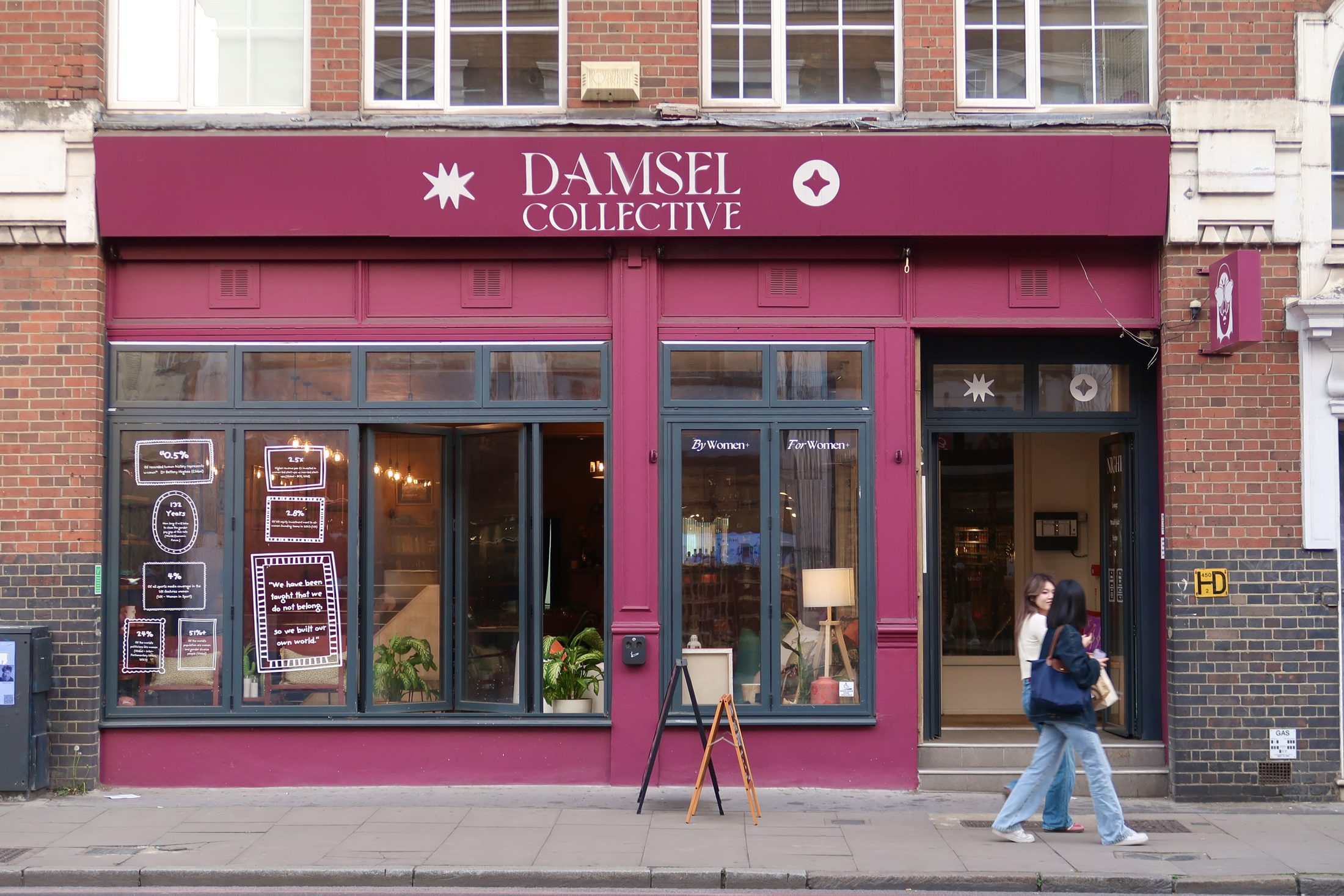
Nestled in the young and trendy neighborhood of Shoreditch, known for its street art, hip crowd, and industrial feel, is the Damsel Collective, London’s first “women-only” creative hub and bar. The Collective stands on Kingsland Road, with its hibiscus-colored storefront announcing itself amongst its neighbors as something unique and proud.
The top floor of Damsel is lit bright by wall-length windows and offers bohemian sofas, movable tables, and a full walk-up bar, complete with coffee, tea, snacks, alcohol, and no-or-low options. It has the vibe of a shared living room; it’s welcoming, warm, and makes you want to settle in for a while. The downstairs space, on the other hand, feels cool and ambient, like stepping into an exclusive underground club. A sunken bar anchors the room, while the rest functions as a flexible, multi-use layout for performances, DJs, fashion shows, or any number of events you could dream up.
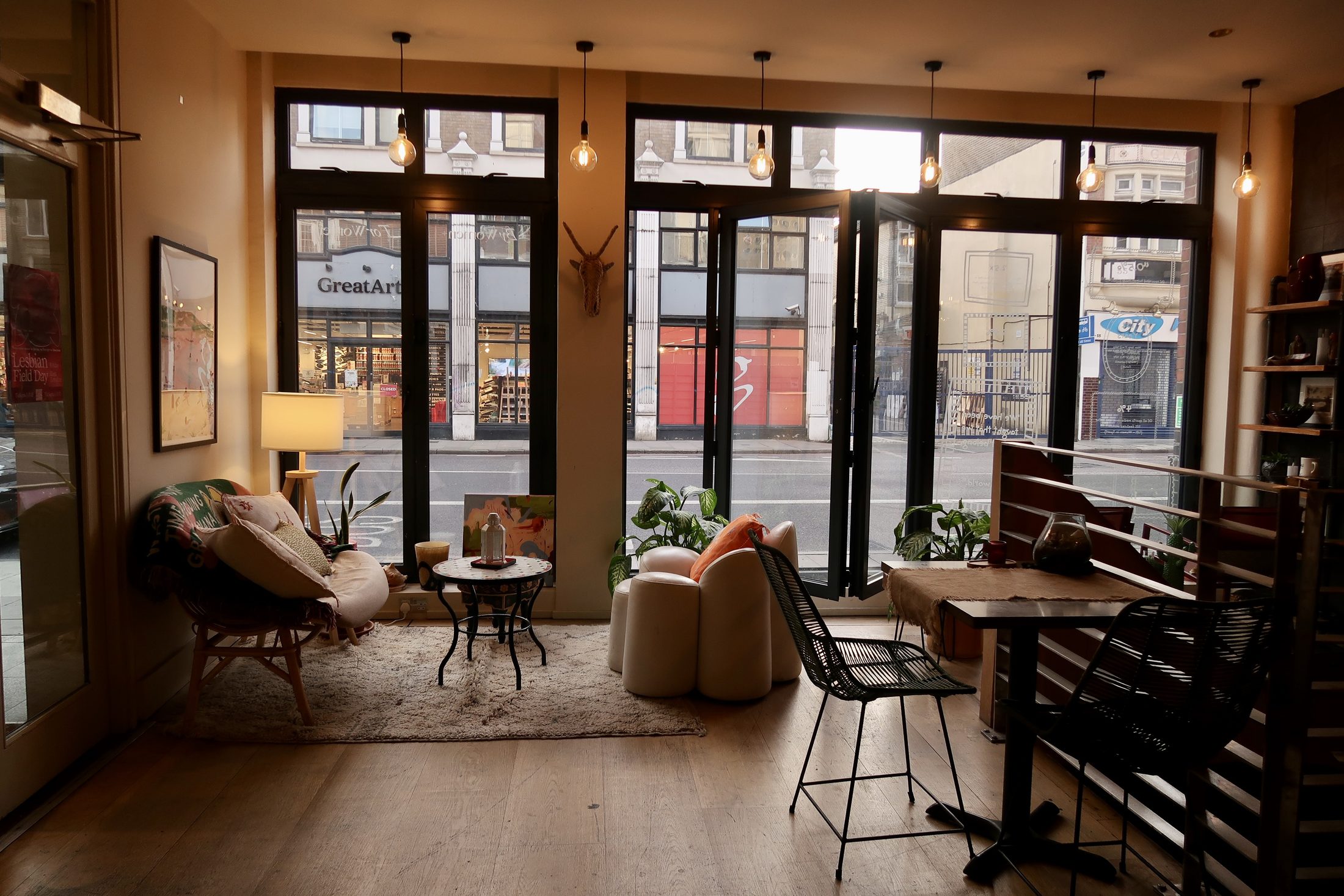
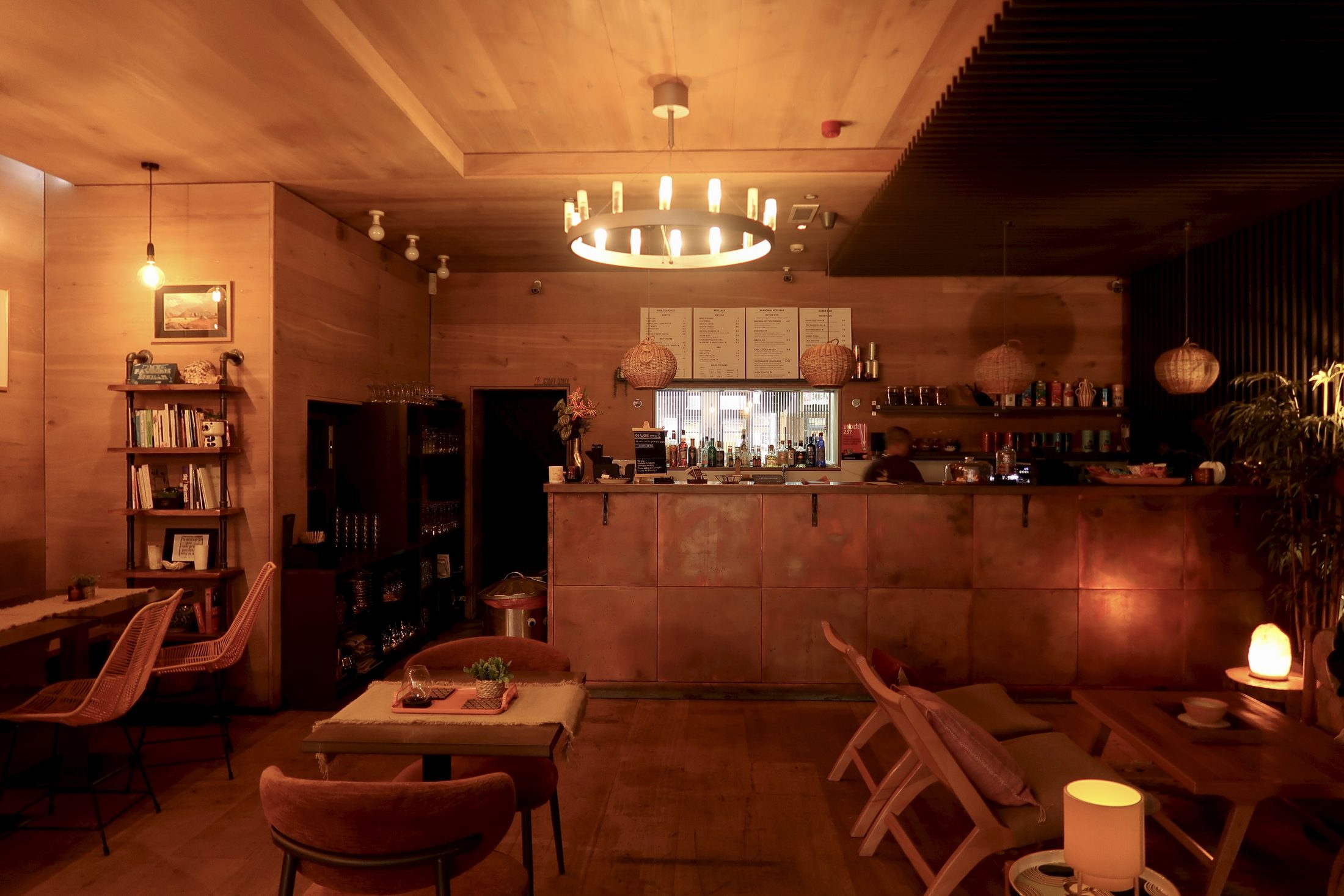
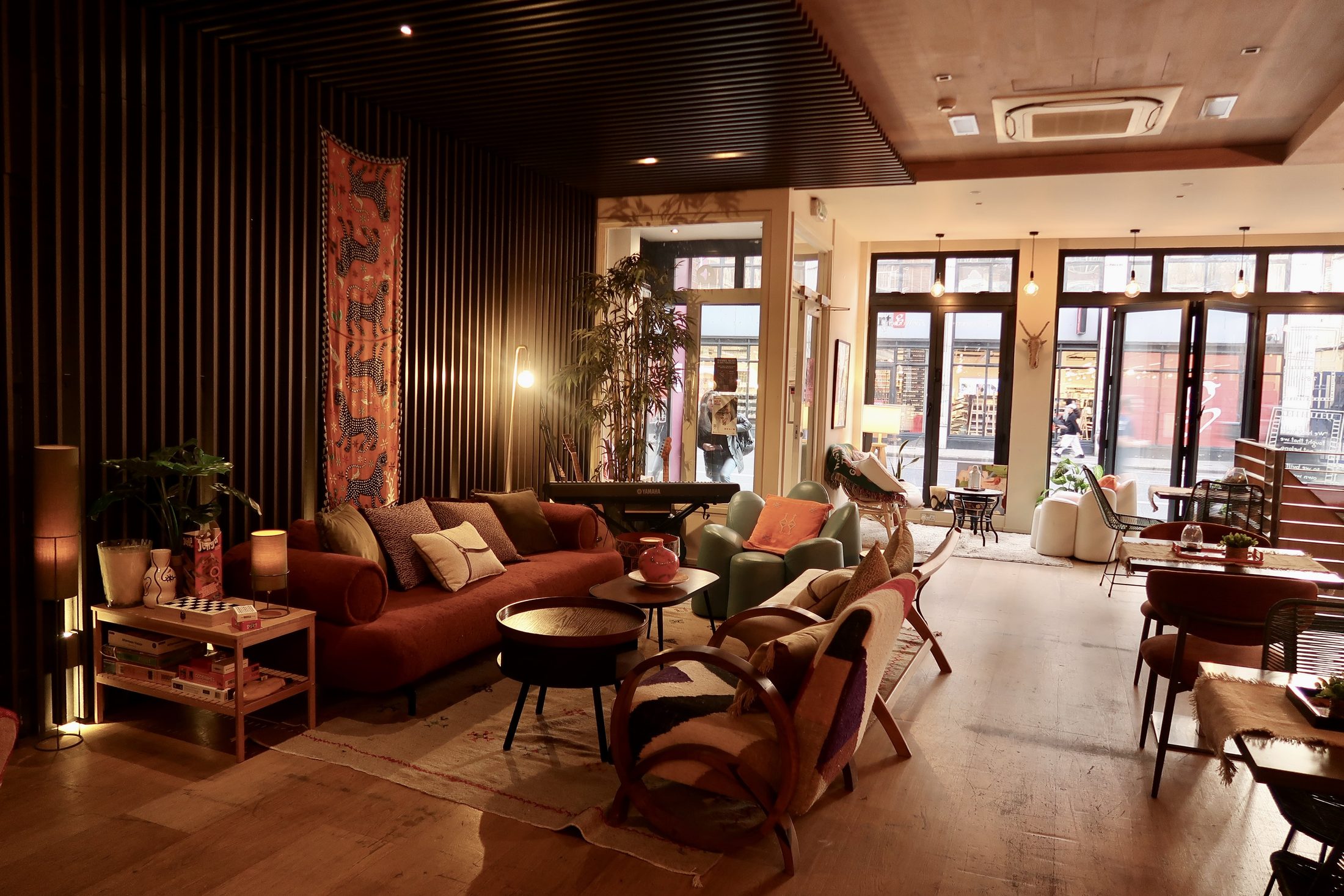
On its face, Damsel is a fashionable new spot in the already buzzing neighborhood. Its physical venue provides a third space for women and queer community alike. Still, the heart of Damsel Collective isn’t merely its walls as an inclusive venue, but its model and ethos of change-making action.
Founded by Leyla Edwards and May Slaoui, Damsel Collective was created because spaces like it didn’t exist. Rooted in collaboration, creativity, and culture, the Collective is “by womxn+, for womxn+.” By day, the venue is a cafe and co-working space; by night it becomes a bar and venue for events. At all times, though, its business model functions as a platform and framework for change that focuses on representation and visibility for “womxn+” in arts, business, and culture.
Inspired not only by the energy of the physical venue but also the design of Damsel, I sought out a chat with Leyla and May in order to dive deeper into the development of the Collective, and the stories of the women who created it. In true small business, boots on the ground fashion, I spoke with the two of them on video call while they were in a car, in between running to-and-fro their daily to-dos. Both were smiley and excited, despite their obviously tight schedule.
Building the Model
Leyla and May began developing the idea that is now the Damsel Collective nearly four years ago. At the time, Leyla had been working as a creative director and May was studying architecture. The idea came as much from need as from inspiration. As young women and part of the LGBTQ+ community themselves, Leyla and May were craving a space and social scene that wasn’t centered on underground nightlife, like much of queer culture tends to be. They found none, even in a city as diverse as London. When they looked into it, they realized that there were over 44 dedicated men’s spaces in London, but zero women-only spaces outside of charities or NGOs. My jaw visibly dropped at this. In retrospect, I’m not all that surprised.
Ultimately, the symbiotic nature of women and queer communities clicked. “As women and as queer people,” Leyla said, “so many of our rights and our lived experiences cross over, and they go hand in hand. When queer people lose rights, so do women; when women lose rights, so do queer people. And they fought together throughout history to get where we are today, and nowhere holds that, and nowhere fosters a relationship between that.” So, they decided to create that very space themselves.
Neither of them had any experience in hospitality, or background in feminist or queer theory— but they did have lived experience, and “the audacity”. They imagined an inclusive place to exist in, as well as a network to be part of. They wanted resources that would serve them and those like them, and they wanted to challenge the structures that had for so long shut themselves and their communities out.
In turn, they developed a quadrant model of function and purpose for Damsel: The Collective would be an accessible space for daytime hours, a social atmosphere for evening hours, a resource for creative and professional workshops and networks, and an organization that works to support their community through funding and opportunity.
This wide sweeping structure of Damsel was integral to their vision. When asked about the balance between the social and creative purposes of Damsel and their framework for empowerment and support, they admitted that they didn’t see any separation between them. The essence of the structure rested on it being all “very much intertwined,” and in that sense, “very reflective of how women are, how women operate, because you are so many things at once.”
They themselves reflect the all encompassing nature of women, too. To bring Damsel from an idea to a reality, they each contributed their own unique skills and experiences. Leyla’s experience in creative direction covered marketing, visual identity, event planning, and content creation, and May’s education in architecture provided a strong basis for research methodology and the politics of inclusion/exclusion that went into shaping the design of their space’s ethics.
Support independent journalism
Enjoy reading The Parlor?
Become a paid subscriber to get full access, early releases, and subscriber-only extras.
Become a paid subscriberAt the same time, they were both learning to navigate running a business and the technical considerations that go into it. One of these was how Damsel would bill itself as a women-only space, when the reality would be a little more nuanced, and deliberately so. As a public venue, Damsel cannot legally turn people away at the door; doing so would require registering as a private institution, which would mean additional funding burdens and, ultimately, membership fees. Leyla and May chose not to go that route. Keeping Damsel free and open to all was more important to them than enforcing exclusivity on paper— and they'd rather redirect that funding toward their community directly.
In practice, the ethos does the work: Damsel is built by and for “womxn+,” and that intention shapes everything from who runs the events to who stocks the bar. Damsel exclusively partners and works with women-owned and queer-owned businesses, “basically building a matriarchal structure” that redistributes wealth within their own community. With their belief that one of the realest forms of power an individual has in our modern times is “where we spend our time, energy, and money,” Leyla and May posit Damsel as a “necessary intervention” that can actively reshape the landscape of who gets seen, who gets funded, and who gets to lead.
From Community to Empire
Of course, even that comes with challenges in reality; Leyla and May described how it is “virtually impossible” to stock 100% women/queer owned brands in alcohol and across all industries due to systemic barriers. “It seemed really unattainable at first… like climbing an impossible mountain,” they confessed. With no funding, and no experience, they questioned why they even thought to build Damsel in the first place.
Despite their self-doubt, since its opening in June 2025 the Damsel Collective has proved itself as an environment that connects, uplifts, and empowers its community. Their curated event lineup has something for everyone, almost every day of the week— from artisan markets, to crafts and board games, movie nights, yoga flows, supper clubs, jewelry making, writing workshops, open-mic night, DJ sets, speed-dating, and more. They consistently offer opportunities for visitors to build new skills, share knowledge, and connect.
Throughout the highs and lows, Leyla and May credited their relationships with other leading members of their community as the force that underpinned their sense of purpose and helped to break down the illusion of that impossible mountain. Of the many, they named the organization Buy Women Built, and other local businesses like Butch, Please!, Queer House Party, Aya & Suki and L.A.B. at A Portuguese Love Affair, to have been points of support, reference, and friendship, making their spot in the neighborhood feel like it was a “village of friends with support down the road at any moment.”
Going forward, Leyla and May are focusing on launching their Damsel Residency program, which will be a 3-month platform for artists, entrepreneurs, and cultural leaders to showcase their work through a wide range of mediums such as exhibitions, events, panels, and media. They are also working on their Damsel Fund, which will be an annual grant given to support women or queer led businesses, creative projects, and initiatives.
Leyla and May acknowledged that these initiatives have taken longer to get running than expected because they’ve tailored the programs to fit the feedback they’ve received from their network and patrons. They knew the residency and grant was something they wanted to offer, but had to be in the “live environment to see how it needed to exist.” Indeed, it seems that Damsel’s biggest differentiator and strength as a collective is that it both exists within and serves its community at the same time.
While Damsel is certainly the first of its kind, Leyla and May have big visions to ensure that it’s not the only. They have a global vision for Damsel, which rests on their developed business model being reactive and adaptable. Ultimately, they want Damsel in different cities all over the world, always holding the same model and values of opportunity and empowerment, but also allowing it to “take on a different life depending on the community that it's built alongside, by, and for.”
The global expansion, of course, might take some more time. But Damsel as a singular entity still announces itself proudly, and the action behind it feels as strong as ever when you're in the room. It is not just a café, not just a bar, not just a workshop, not just a resource— it's a campaign of change. When I asked what the future looks like, Leyla and May smiled at each other with a cheeky, hopeful laugh: "We're building an empire!"
About the author
Elizabeth Collins
Elizabeth Collins is a writer and performance study scholar based in London, U.K.. She holds a BA in English Literature and Creative Writing, and an MA in English Literature and Performance Theory from King’s College London, where her dissertation explored the mediatized nature of the Black Lives Matter movement. Across her academic and professional experience, her work engages with the intersections of arts, culture, and human connection. When she’s not engaging with academia, you can find her writing poetry, instructing theatre workshops, teaching yoga, or re-watching The Big Bang Theory.
Conversation
A space for Parlor members. Be generous, be real.
Loading…