
The Battle for the Southwest
The Esencia Megaproject and the Defense of Life in Cabo Rojo

Iñaki Estivaliz
November 11, 2026
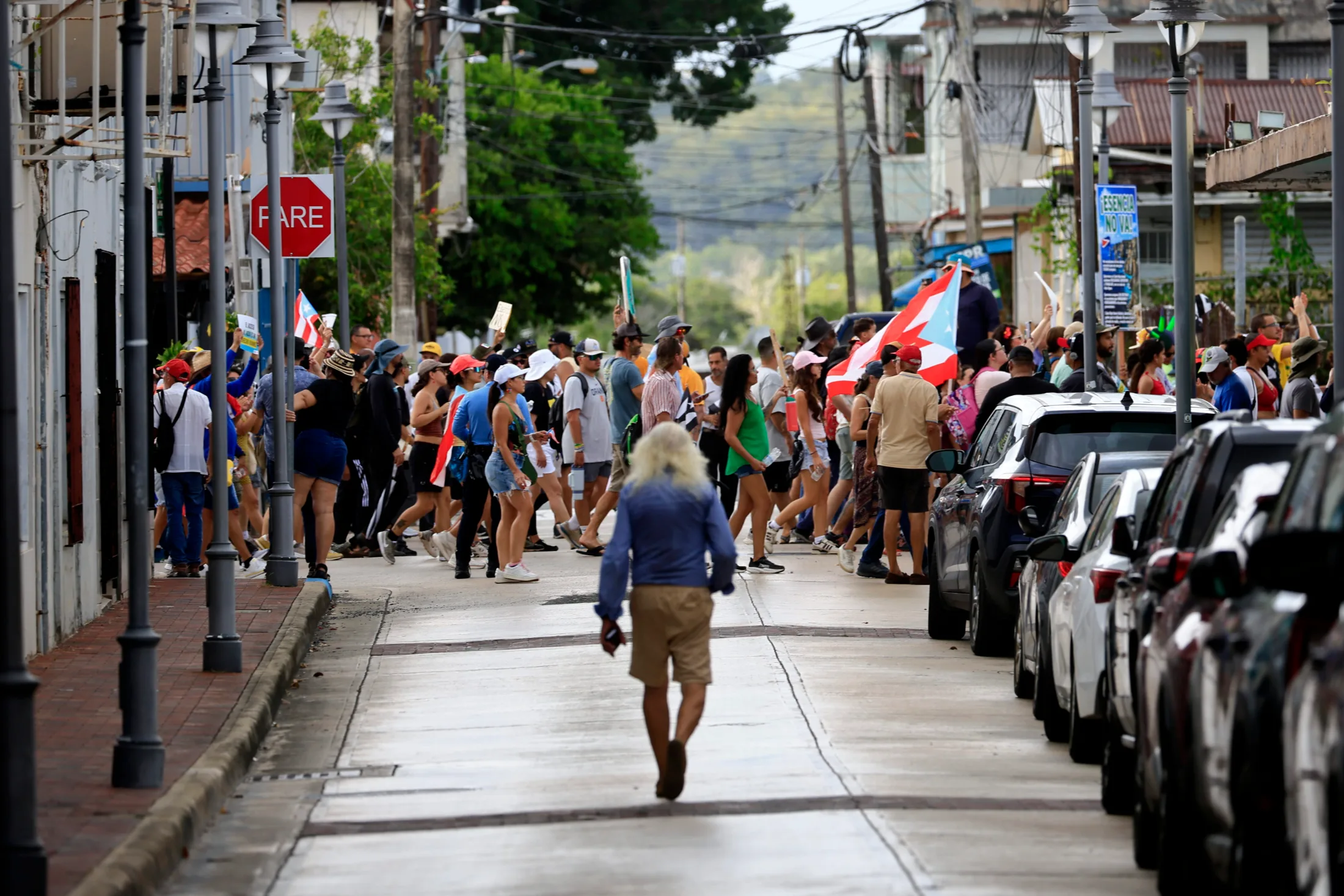
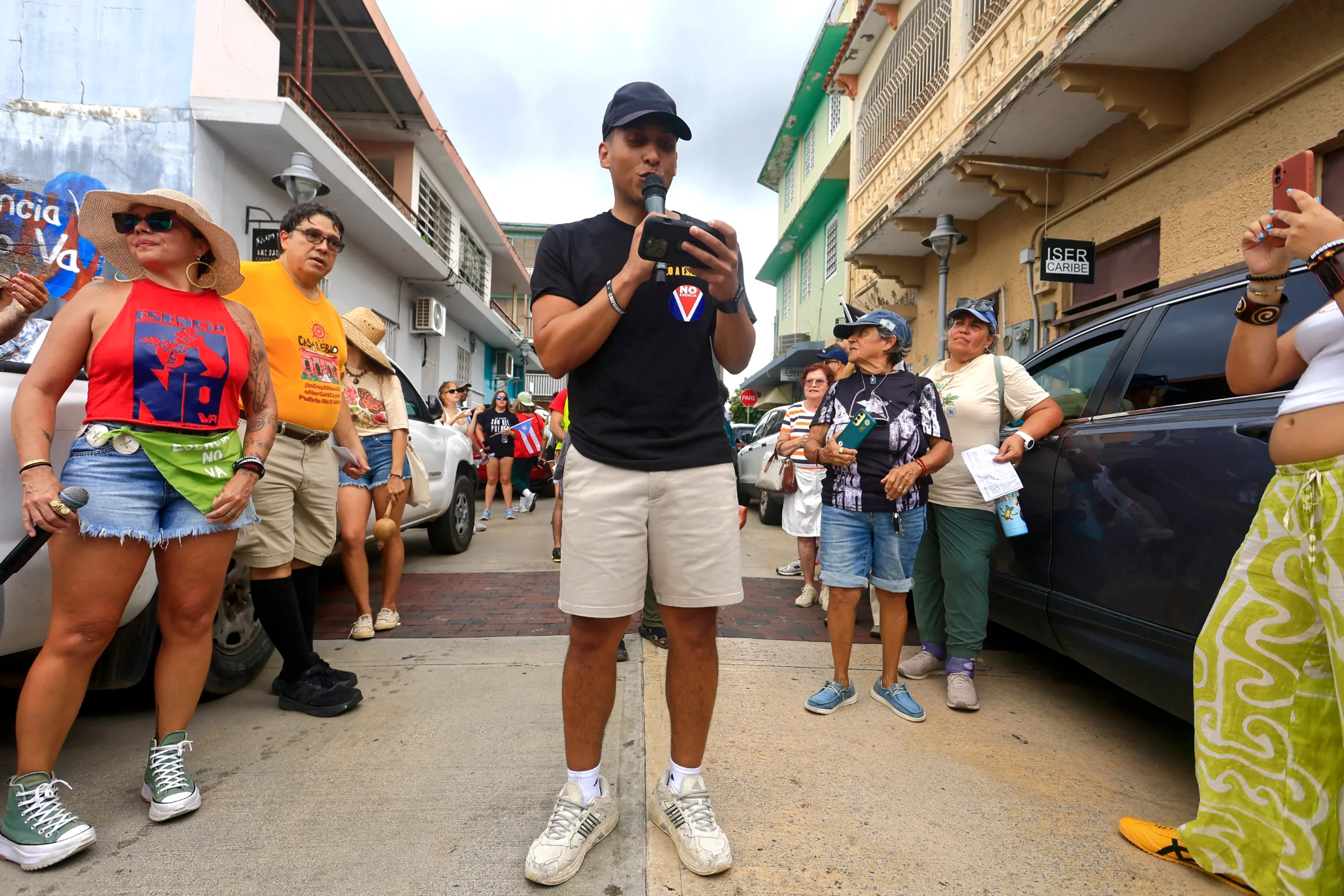
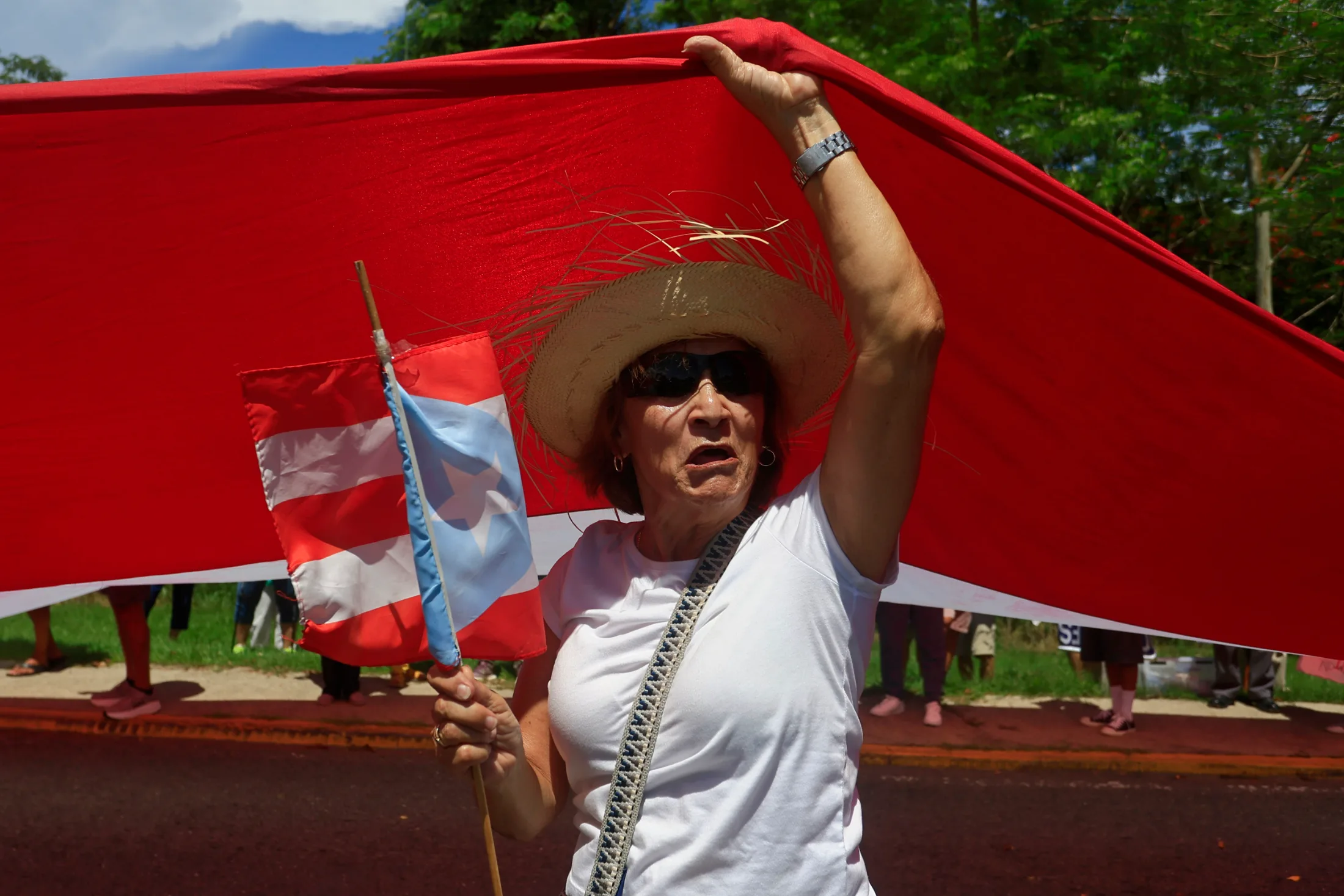
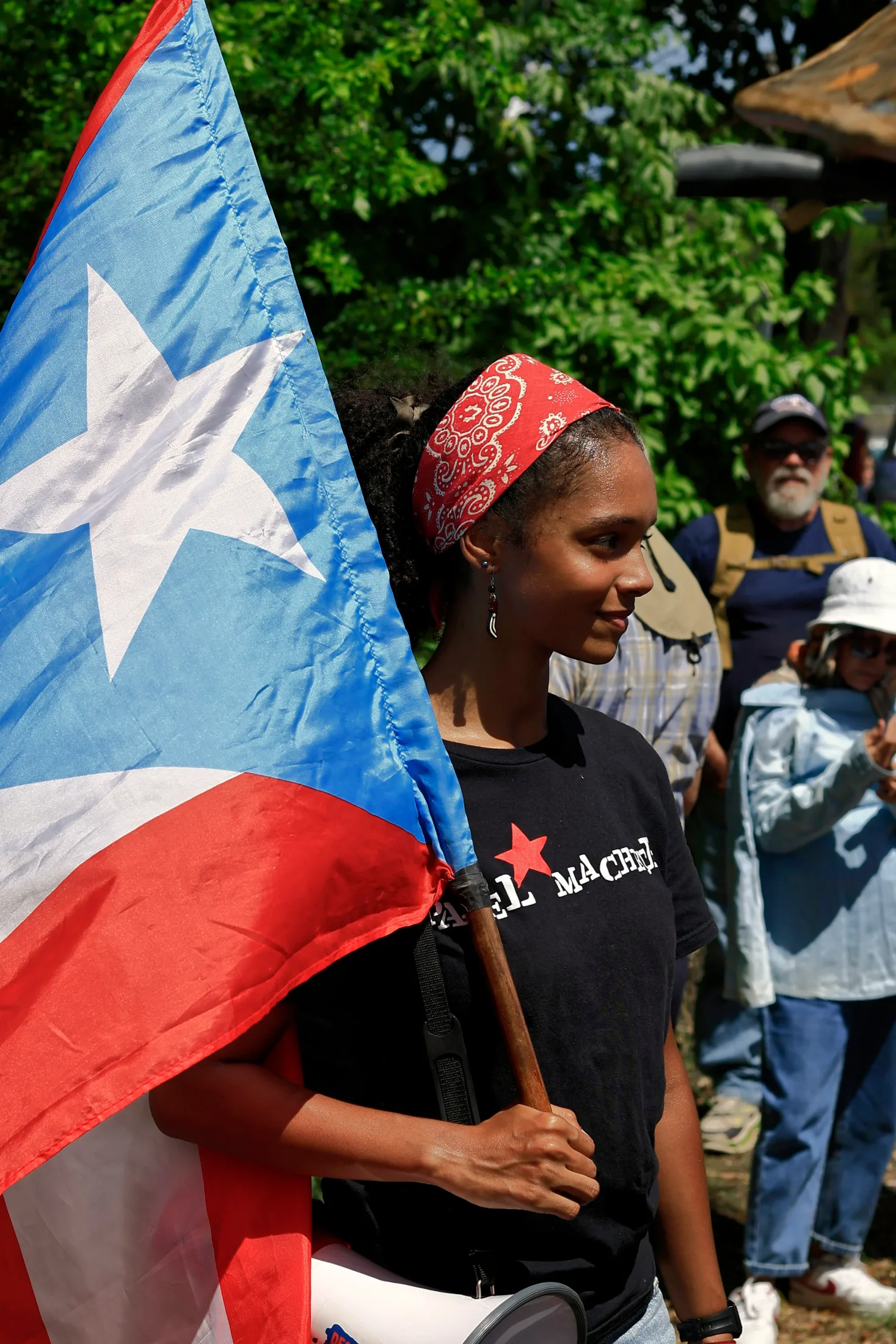
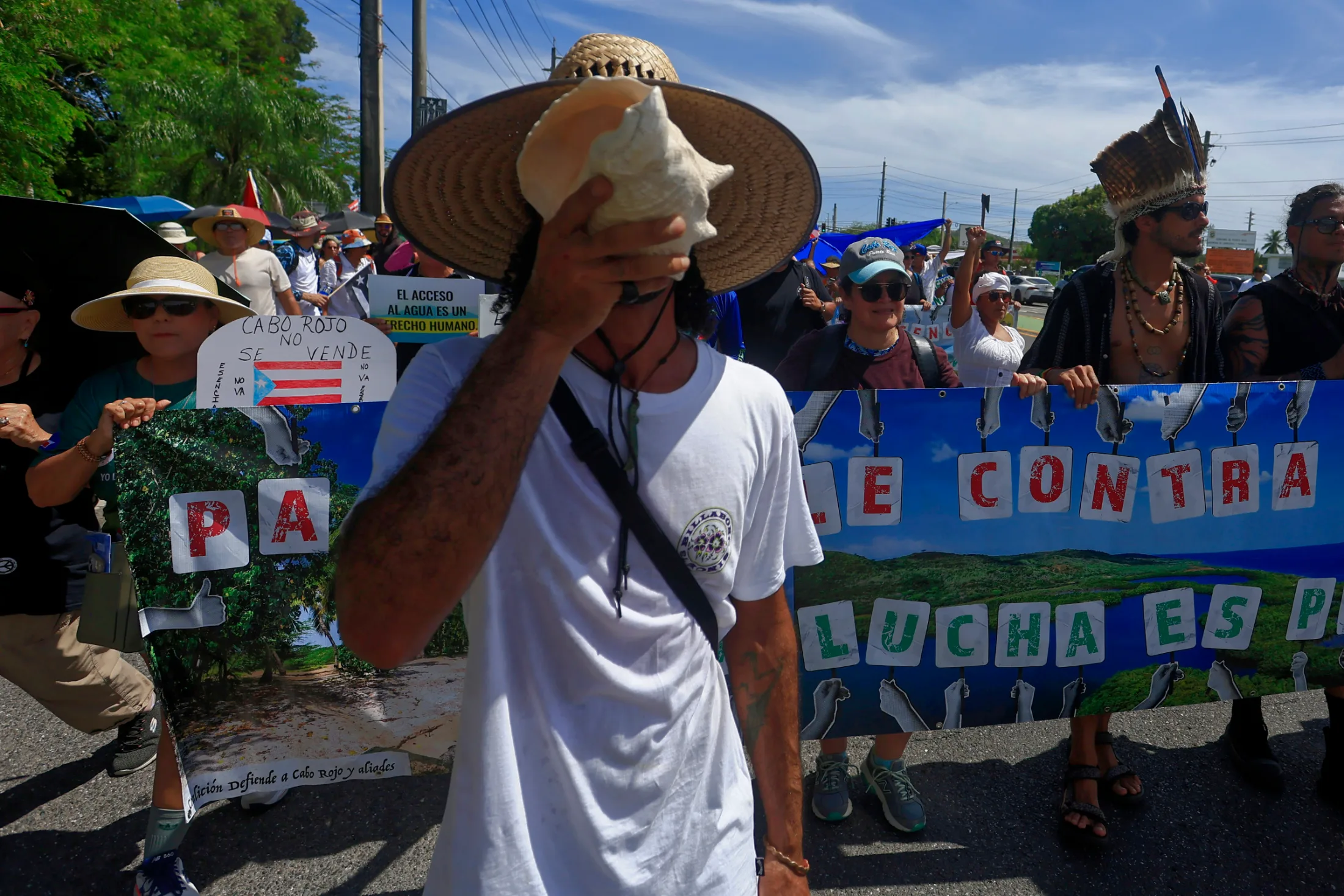
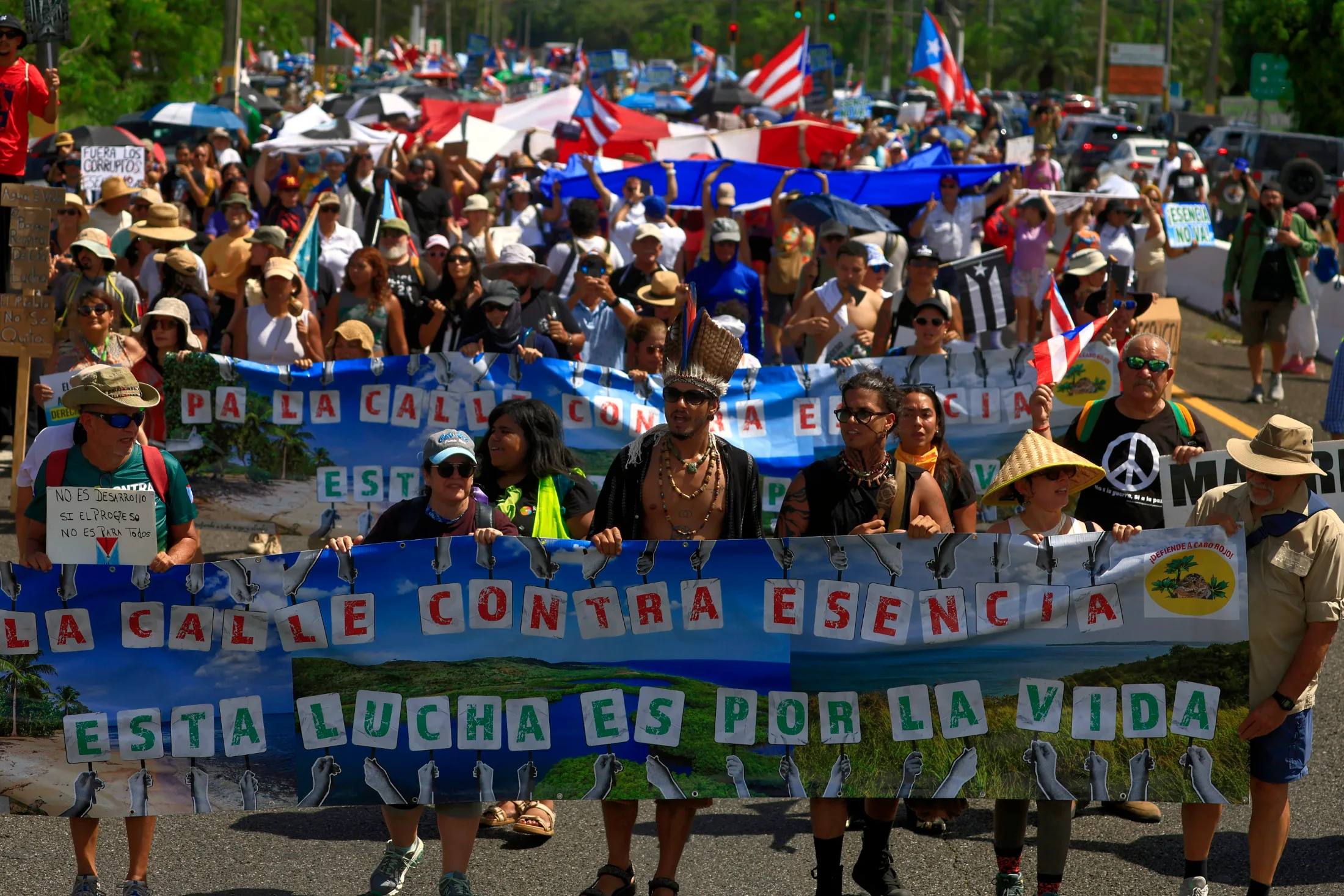
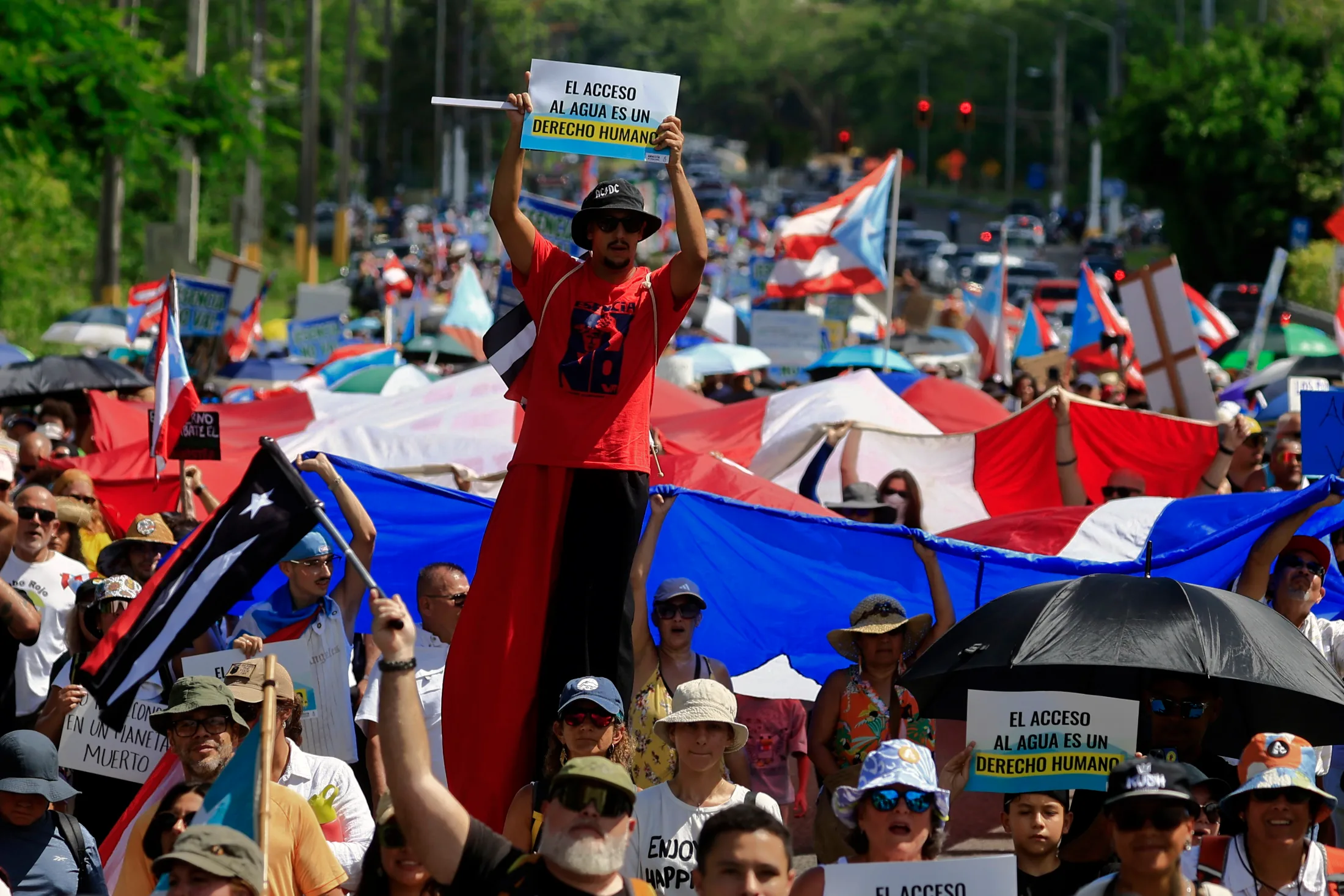
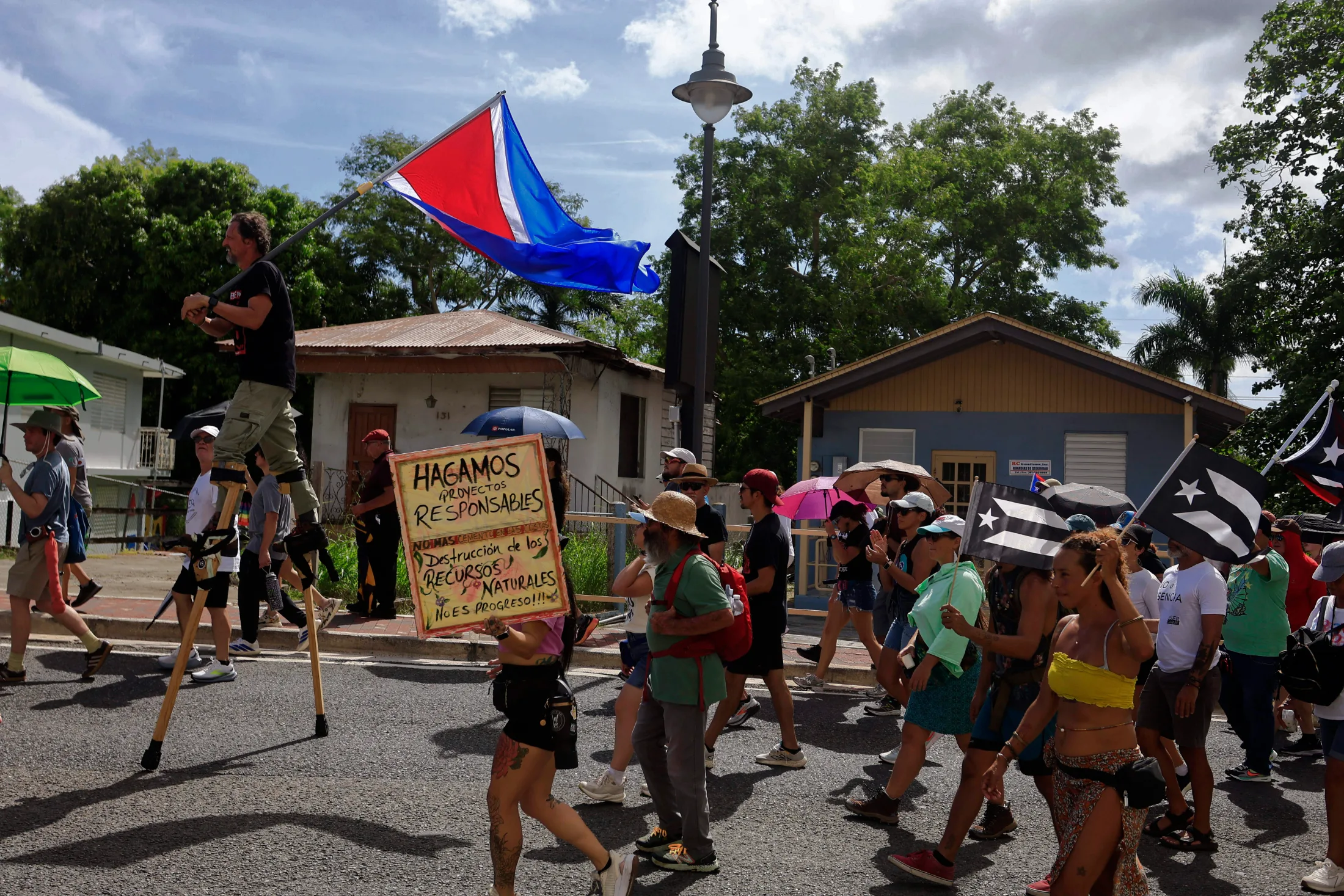
Demonstrators march through the streets of Cabo Rojo, Puerto Rico, on September 10 in opposition to the proposed Esencia megaproject. Photograph by Thais Llorca for The Parlor Magazine.
The wind off the southwestern coast of Puerto Rico carries the scent of salt and the dry fragrance of the low-lying scrub forest. In this corner of the island, the land is not merely a geographic map; it is a tapestry of fragile ecosystems, Indigenous memories, and communities that have learned to resist the tides of extractive capital. However, over more than two thousand cuerdas of land in the Pitahaya sector of Cabo Rojo, the threat of the most aggressive mega-tourism development proposal of the 21st century in the Caribbean looms large: the Esencia project.
Proposed by the investment firm Realtylink and the developer Ballyhoo Experience, Esencia envisions a radical transformation of the landscape. The project contemplates the construction of ultra-luxury hotels, thousands of exclusive residences, golf courses, commercial centers, and private airstrips. Under a narrative of "sustainable development" and "economic progress," the proposal intends to intervene in an area of extremely high ecological value adjacent to the Cabo Rojo National Wildlife Refuge and the Bahía de Sucia Natural Reserve.
Faced with the imminence of bulldozers, civil society has reacted with a massive mobilization that brings together scientists, historians, artists, farmers, and activists under a single banner: the unyielding defense of life, water, and community sovereignty.
The Hidden Architecture of the Subsoil: Ecology, Geology, and Memory at Risk
To understand the magnitude of the threat, it is necessary to look beneath the surface. Southwestern Puerto Rico harbors one of the most unique geological formations in the archipelago: a karst limestone plateau that serves as a natural sponge for filtering fresh water and as a refuge for endemic species.
The karst in this area is not just stone; it is a dynamic labyrinth of sinkholes, caverns, and underground aquifers connected directly to the marine ecosystem. At the heart of this plateau, where the footprint of the project intends to pour tons of concrete, lies a biological enclave virtually unexplored by commercial science: the Sal si puedes cave.
Speleologist Miguel Martínez González told The Parlor Magazine that "caves are the balance of the forest," noting that "they are practically the home of the architects of the forest, which are the bats." Martínez González, originally from Guánica and a deep connoisseur of the region's subterranean topography, warns that Sal si puedes is a collapse sinkhole that has remained pristine thanks to an impregnable natural barrier: the presence of approximately 17 colonies of Africanized bees nested within its interior walls. This natural sanctuary not only houses crucial biodiversity for the pollination of the dry forest, but it also contains pre-Columbian Indigenous petroglyphs created by the populations that once inhabited the area.
Destroying or paving over this limestone plateau to build tourism infrastructure would not only mean the collapse of the habitat for bats and bees, but also the erasure of an invaluable archaeological heritage and the contamination of runoff that feeds the Wildlife Refuge, located little more than 1,500 meters from the projected area.
The Thirst of the Countryside: The Irreversible Impact on Food Sovereignty and Water
If beneath the ground the threat is geological and biological, on the surface the conflict acquires a tone of basic survival: access to drinking water. Cabo Rojo and the southwestern region of Puerto Rico historically endure prolonged periods of drought. The infrastructure of the Aqueduct and Sewer Authority (AAA) in the area is notoriously deficient, suffering from constant service interruptions for resident communities.
The Esencia megaproject would require millions of gallons of water daily for the maintenance of its golf courses, private pools, and hotel complexes. This unbridled demand would compete directly with local communities and the region's agricultural valleys, threatening the precarious stability of local food production.
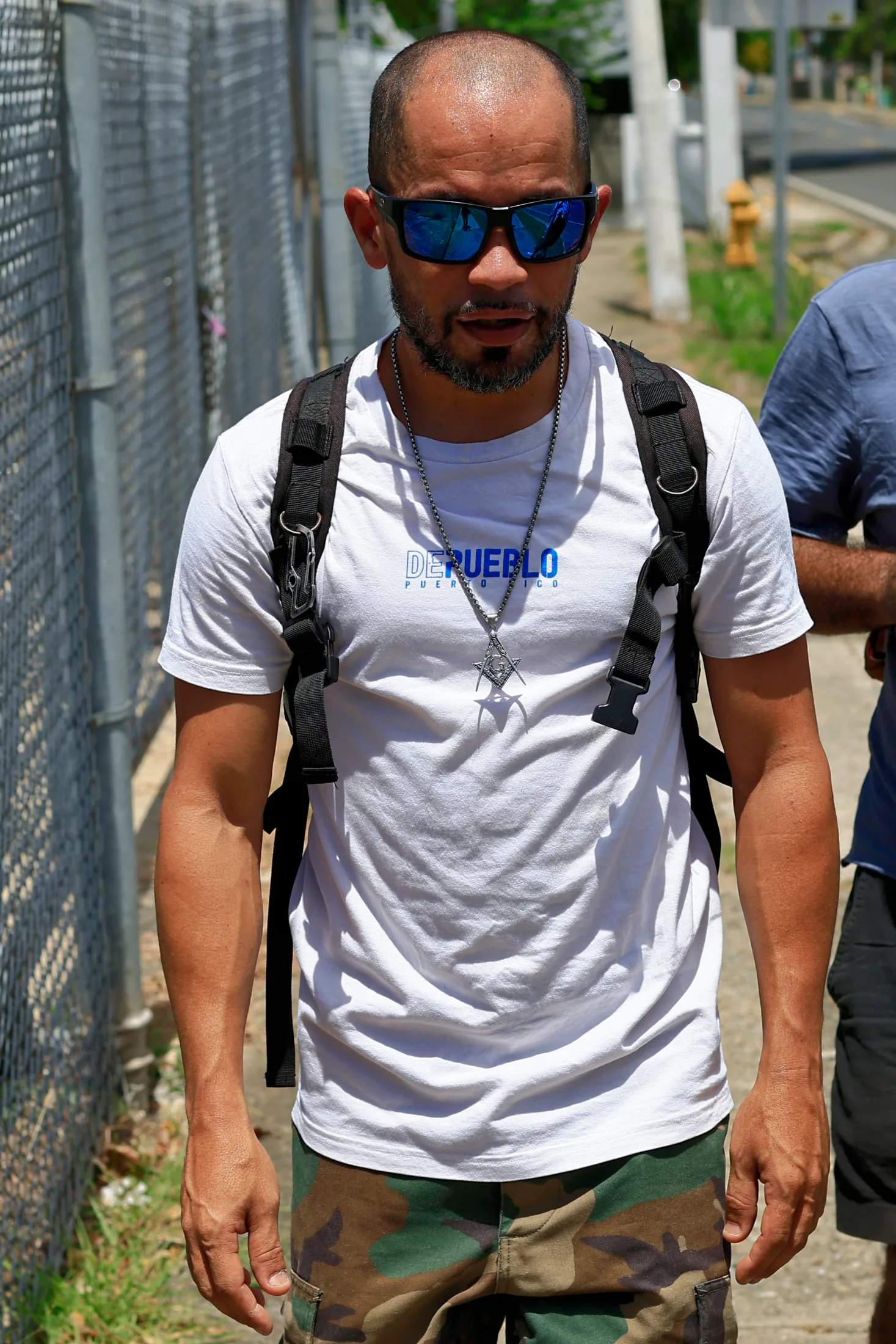
Agronomist and farmer Javier Otero Torres emphasized that "we are fighting to stop this project because this project is going to impact us negatively, affecting both fauna and flora as well as the water resource," adding that "we need to protect the water resource in order to engage in agriculture." Otero Torres was joined by a group of local farmers who gathered with a few of their tractors to make their presence felt at the start of the demonstration.
The presence of agricultural machinery in the demonstrations symbolizes the tension between two irreconcilable models for the country: one that views the land as a commodity for the enjoyment of wealthy minorities, and another that works it to guarantee the sustenance of the population. Without clean, accessible water, the fertile soils of the southwest are condemned to aridity and forced abandonment.

The Fallacy of "Development": Economic Extractivism and Tax Exemptions
Proponents of Esencia argue that the multi-million dollar investment will generate jobs and stimulate the local economy. However, independent economic analyses reveal that the proposed model follows a purely extractivist logic, sheltered by legal frameworks like Act 60 (formerly Acts 20/22), which attracts foreign investors through near-total tax exemptions.
Rather than creating redistributive wealth, these megaprojects inflate the cost of living, drive up property values, and increase the cost of basic services, displacing native populations through gentrification and indirect dispossession.
Ricardo Puentes Ramírez, Professor of Economics at the University of Puerto Rico, Mayagüez Campus, maintained that "they want to take our water, they want to take our resources, they want to take away our right to remain," asserting that "Esencia is not development, it is plunder." Economic critiques point out that the revenue generated by these types of complexes does not remain in the municipalities; it flows back to the accounts of multinational corporations while environmental and social costs—the deterioration of roads, solid waste accumulation, and the strain on the power grid—are borne by local taxpayers.
The Homogenization of the Landscape: Aesthetics, Spirituality, and Scenery
Beyond financial balance sheets and environmental measurements, there is an intangible yet fundamental dimension under attack: the landscape. Cabo Rojo is distinguished by its golden sunsets, historic salt flats, cliffs, and a coastline open to the public for use and enjoyment. The Esencia project contemplates privatizing visual and physical access, replacing native vegetation with the generic architecture of international luxury resorts.
Support independent journalism
Enjoy reading The Parlor?
Become a paid subscriber to get full access, early releases, and subscriber-only extras.
Become a paid subscriberThis process of aesthetic transformation erases the cultural specificity of places, turning territories with their own history into interchangeable stage sets for high-net-worth tourism.
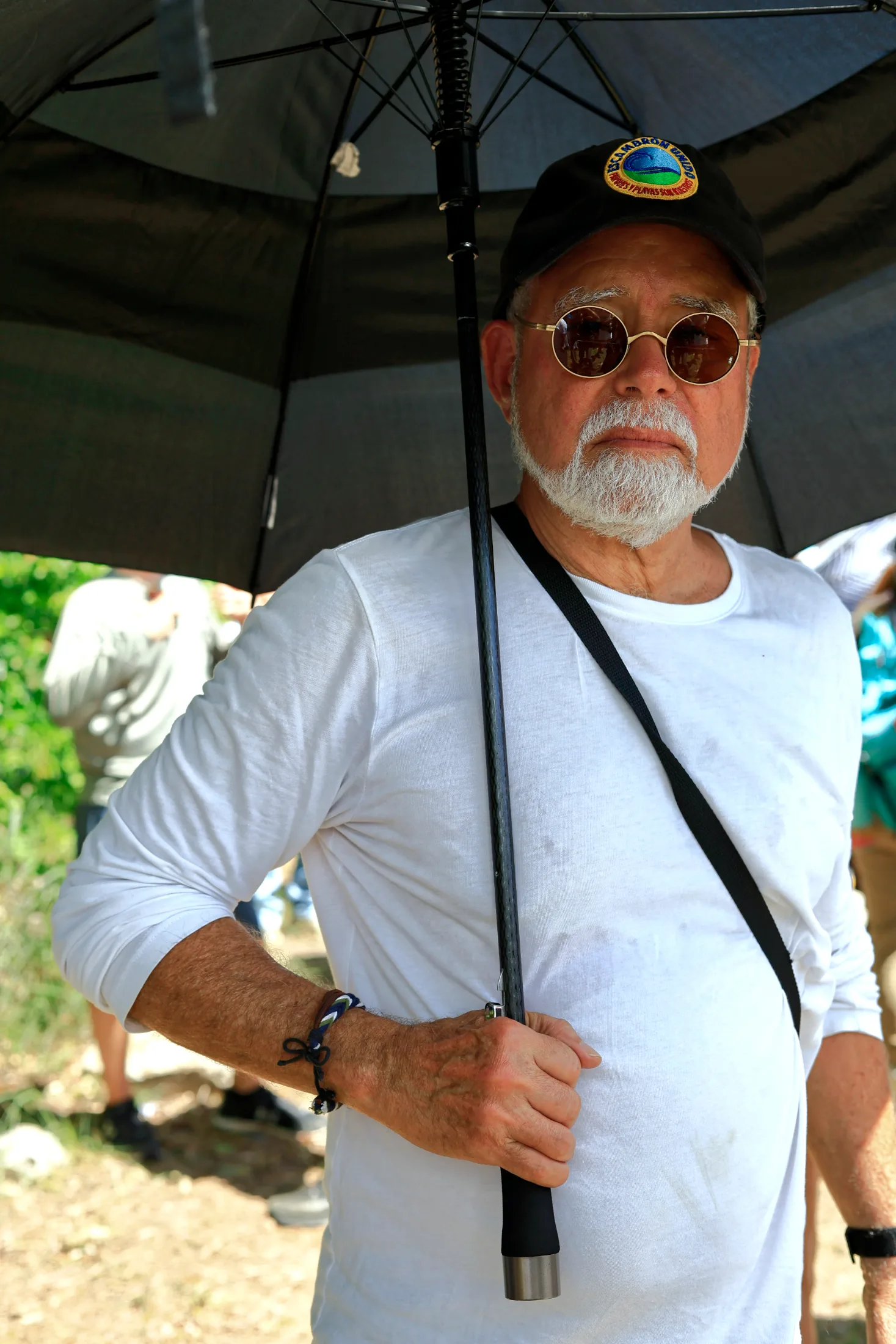
Visual artist Rafi Trelles expressed that "I as a visual artist can tell you that I am here in defense of the landscape," explaining that "what they intend to do there is homogenize the landscape; they are going to convert our landscape into a resort landscape." Trelles highlights that the landscape is not an aesthetic luxury, but a collective heritage in which a people's memory, poetry, and mental health are deposited. The loss of the natural environment alters the affective relationship that inhabitants maintain with their land, eroding their sense of belonging and historical continuity.
The Erasure of Identity: Population and Cultural Displacement
The impact of Esencia transcends the physical boundaries of the land to be built upon; it spreads like a wave that threatens to alter the social fabric of the southwest. Cabo Rojo has historically been characterized by a fishing economy and domestic tourism, where Puerto Rican families gather to connect with the sea and tradition.
The arrival of a resort designed for foreign millionaires creates a rift in community dynamics. The steep rise in property taxes and the shift of local commerce toward high-cost goods and services ultimately force the exodus of native residents.
History teacher Guarionex Padilla pointed out that "Project Esencia would represent one of the projects with the greatest impact in terms of its magnitude, completely disrupting the identity not only of Cabo Rojo, but of the entire southwestern region due to the displacement it would imply." Padilla emphasizes that displacement is not only physical, but also linguistic, cultural, and technological. By altering the scale of the local economy, the project imposes logics alien to the needs of the area's people, converting locals into a precarious workforce at the service of a visiting elite.
Infrastructure Crisis and Collapsed Planning
From an urban planning and resource management perspective, Esencia represents an unsustainable anomaly. The municipality of Cabo Rojo faces severe challenges with solid waste management, wastewater treatment, and the vulnerability of its marine ecosystems to climate change.
Adding thousands of residential and commercial units to a road and utilities system that is already beyond its critical capacity is, according to experts, a recipe for ecological and municipal collapse.
Ariam Torres Cordero, Professor at the Graduate School of Planning, University of Puerto Rico, Río Piedras Campus, stated that "I stand in opposition because of the environmental destruction, the impact on marine ecosystems, on fishing, on agriculture, and the management of solid waste," noting that "there is nowhere to put the garbage." Torres Cordero notes that the overload on marine ecosystems will directly affect artisanal fishing, destroying the coral reefs that serve as a barrier against hurricanes and altering marine breeding grounds that sustain the food supply and economy of coastal communities.
Ethical Resistance: The Struggle Against Global Dispossession
The conflict surrounding Esencia fits into a broader global context of struggles against land dispossession. In various parts of the world, financial capital seeks to grab land with high environmental and recreational value to convert it into private enclaves, isolating local populations and stripping them of their traditional livelihoods.
For social movements in Puerto Rico, the defense of Cabo Rojo has become a cause that transcends municipal borders: it is an affirmation of dignity against government policies that prioritize corporate profit over the human rights of citizens.
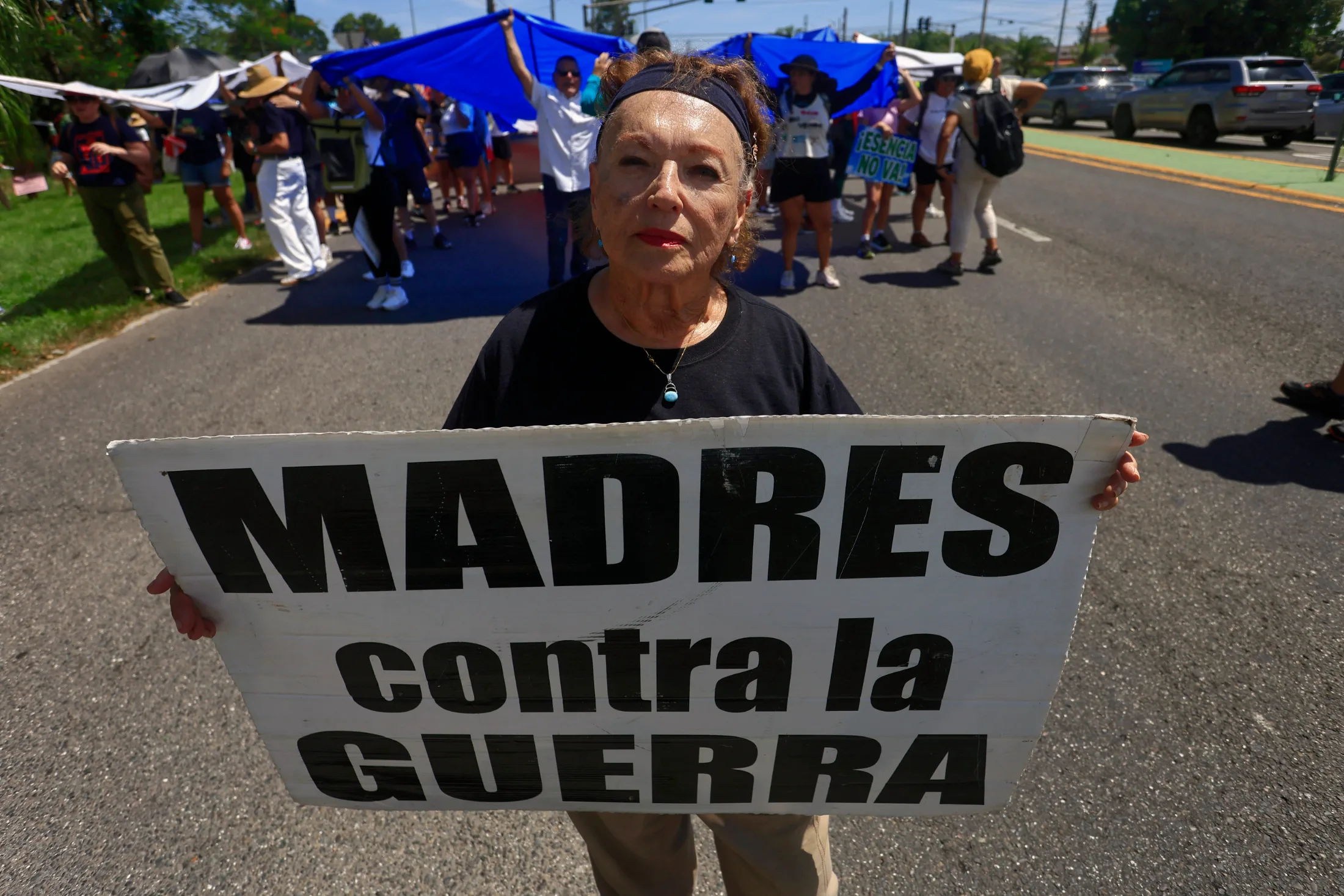
Sonia Santiago, founder of Madres contra la guerra (Mothers Against War), defended that "what is happening with Esencia is that this government has declared war on our people," declaring that "Mothers Against War say we are present defending our youth, our ecosystem, and our people." Santiago connects the struggle against the megaproject to a broader framework of civil disobedience and resistance against forced displacement. The determination of community organizations indicates that mobilization will continue in the streets, the courts, and the fields until the project is permanently canceled.
A Territory at the Crossroads
The Esencia project is not an isolated development proposal; it is the manifestation of a vision for the country that subordinates nature, history, and communities to private accumulation. In response, the people of Cabo Rojo and Puerto Rican society are articulating an alternative rooted in conservation, sovereignty over their resources, and the right to remain in their own land.
In the limestone caves of Sal si puedes, in the furrows carved by farmers' tractors, in classrooms, and in resistance on the streets, the message is clear: the value of land is not measured in dollars per square meter, but in the continuity of life and the dignity of those who inhabit it.
Scenes from the protest



About the author
Iñaki Estivaliz
Iñaki Estívaliz is an independent journalist with 25 years of experience publishing in both major and alternative media across several continents, focusing on stories of human interest. He lived in Puerto Rico for 17 years, writing for a wide range of media outlets on the island. His reporting has taken him to border regions in Panama and Colombia, El Paso and Ciudad Juárez, Standing Rock, and Iceland, as well as to elections and conflicts in Venezuela, Bolivia, and Mexico. Over the past year and a half, he has reported from Libya, Syria, and Palestine.
Conversation
A space for Parlor members. Be generous, be real.
Loading…