
The age-old adage tells us: sharing is caring. We learn it young, and practice it on playgrounds over toys and books and paint colours. In adulthood, off the playground, sharing looks and feels different. Now, we share photos, rides, homes, clothes, our time, our skills— mostly through a screen, mostly for a fee, and mostly mediated by a company standing between us and the person on the other end.
At surface level, it looks like we share more than ever. But when nearly all of it runs through a platform built to extract value from the transaction, the question worth asking isn't whether we're sharing, but how we’re sharing, and who actually benefits when we do.
Across the world, people are also building something entirely different from the apps: object libraries, toy exchanges, book-sharing boxes, tool cooperatives — grassroots infrastructure that makes resources accessible at little or no cost, run by volunteers, and created from practical need. This is the sharing economy institutions failed to build, so communities built it themselves.
Now, more than ever, sharing is political.
What Sharing Isn’t
The term “sharing economy” traces back to the 1970s concept of “collaborative consumption” to describe an economic mode based on trading, swapping, sharing, or renting. Today, most people hear it and think of platforms like Uber, Airbnb, and Nuuly. That’s not a coincidence of language, it's a deliberate co-opting of a phrase that lacks specific definition but still evokes eco-consciousness and community connection.
When these companies took off, they borrowed the vocabulary of peer-to-peer generosity to describe something much more conventional: "home sharing," not short-term rental arbitrage; "ride sharing," not an unlicensed taxi dispatch network run on contractors; “clothing rental,” not a subscription pipeline to a parent company. The framing worked, and people started associating these companies with a “progressive” collaborative consumption movement, rather than corporate entities built to prioritize profit.
Scholars now name this kind of sharing "platform capitalism," because "sharing" implied a mutuality that was never structurally there. Uber and Airbnb weren't cheap because they lowered costs; they were cheap because venture capital was absorbing costs the business couldn't. Once that subsidy dried up, prices climbed toward their real cost, and what was left wasn’t “sharing,” but a platform that sets its own terms and takes a cut on every transaction.
The other sharing economy — the one this piece is about — looks almost nothing like any of these. It's run by volunteers and small nonprofits and created to serve local community needs in real time. There's no venture runway subsidizing its growth, and no acquisition waiting at the end of it. So while two things wear the same name, one was built to be exploited, and the other was built to serve.
A Short History of Lending
The grassroots sharing economy has deeper history than most people assume. The roots of this sharing economy go back to World War II, when materials that normally went into household tools were redirected to the war effort, leaving Americans with shortages. In response, communities began pooling tools into informal, shared stockpiles. In 1943, one of those stockpiles found a permanent home at the Grosse Pointe Public Library in Michigan, now recognized as the first formal tool library in the country.
Once the war’s aftermath had dissipated, consumer culture rebounded, cheap imports flooded the market, and owning things became a marker of middle-class status — tool libraries faded with it. This gap held until the 1970s, when a new wave rose to serve budget-conscious homeowners and college students.
A large third wave arrived with the 2008 recession: millions of Americans out of work and strapped for cash drove a twofold increase in the number of libraries offering tool loaning services for the next decade.
A fourth wave has come with the internet and smartphones, and libraries’ declining role as the primary source of information. In response, libraries have built unique collections of art, toys, plant seeds, and other objects in order to fulfill the material and social needs of the communities they serve.
The pattern across all four waves is consistent: this kind of lending infrastructure surges exactly when the wider economy fails people, and recedes when it doesn’t— reframing sharing not as a lifestyle trend, but as a recurring, practical response to scarcity institutions were supposed to prevent.
Community Need
In the summer of 1933, at the height of the Great Depression, a dime store manager in California caught two boys shoplifting toys. Instead of turning them in, he asked why. The local school reported the boys were in good standing; their families simply couldn't afford the extra expense. The manager decided to do something about it, and with his community's help, opened a toy loan "center" in his own garage. Two years later, that effort became official: the LA County Toy Loan Program, now the oldest and largest free toy lending program in the United States.
Today it operates across more than 45 centers throughout LA County, serving over 30,000 children a year. Community-run and volunteer-funded from 1935 onward, Toy Loan didn't gain formal government backing until the Department of Public Social Services and the LA County Board of Supervisors began supporting it in the 1970s. Despite that growth, says Liliana Ramirez, manager of the Toy Loan Program, the design has remained the same: free toy loaning, prioritizing low-income and underserved communities, run like a library with a free membership application, and weekly toy loans.
Ramirez confirmed to The Parlor the toy inventory is built entirely from donations, and the centers are staffed almost entirely by volunteers. It is in this sense very much a community-run program. Even where a center opens depends on community demand; organizations submit applications, and Toy Loan partners with groups that already serve their community, like "schools, parks, community centers, resource centers, charities, or 501(c)(3)s."
While this community-headed model works and has merit, of course, it has a limit worth naming. While partnering with an existing community hub all but guarantees a center will get used, it also means the program's reach depends on a hub already existing. If "underserved" means a community is already short on resources, it may also be short on the very institutions Toy Loan needs to plug into.
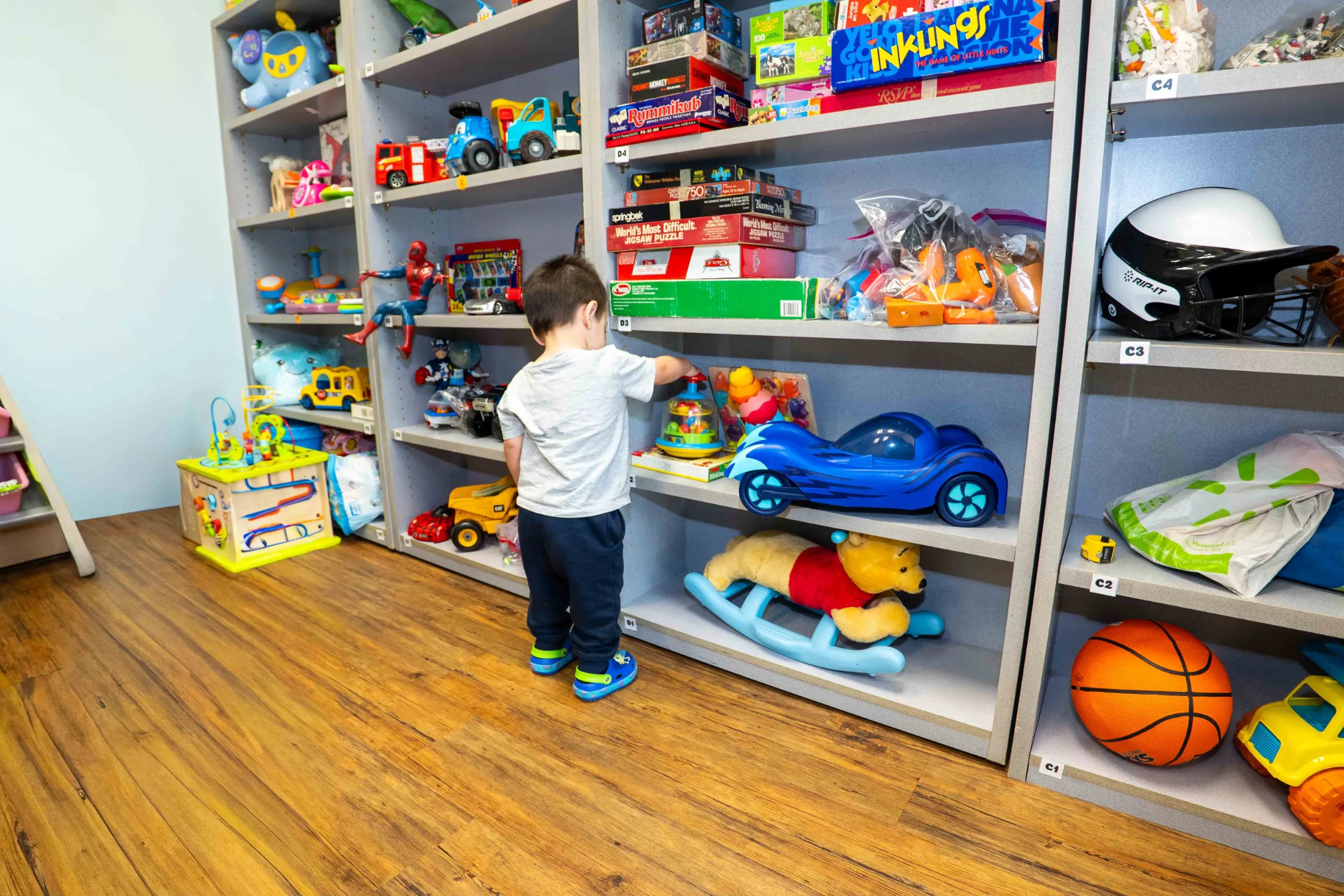
The program has found one way around that limit: building a center rather than finding an existing one— though that, too, depended on support from larger organizations like the DPSS. In 2022, that partnership built a center in Lincoln Heights: the first run by the Toy Loan Program and DPSS itself, with no community hub attached.
Ramirez says the Lincoln Heights center has taught the program more about the centers it doesn't run directly. Without a community hub, she admits, it's harder to get people through the door. But the position has changed something else, too. "I'll be honest, it's a little humbling, because we're used to giving direction or policy, and now we're there on the same side of the table," she says. "It's good, because it makes us more of a team on how to move forward, how to work together to do things differently."
This seemingly small admission points at something the whole program and larger grassroots sharing movement depend on: the gap between the institutions that fund community infrastructure and the volunteers who actually run it doesn't close on its own. It closes when the people setting policy are willing to sit on the same side of the table as the people carrying it out.
The Library of Things
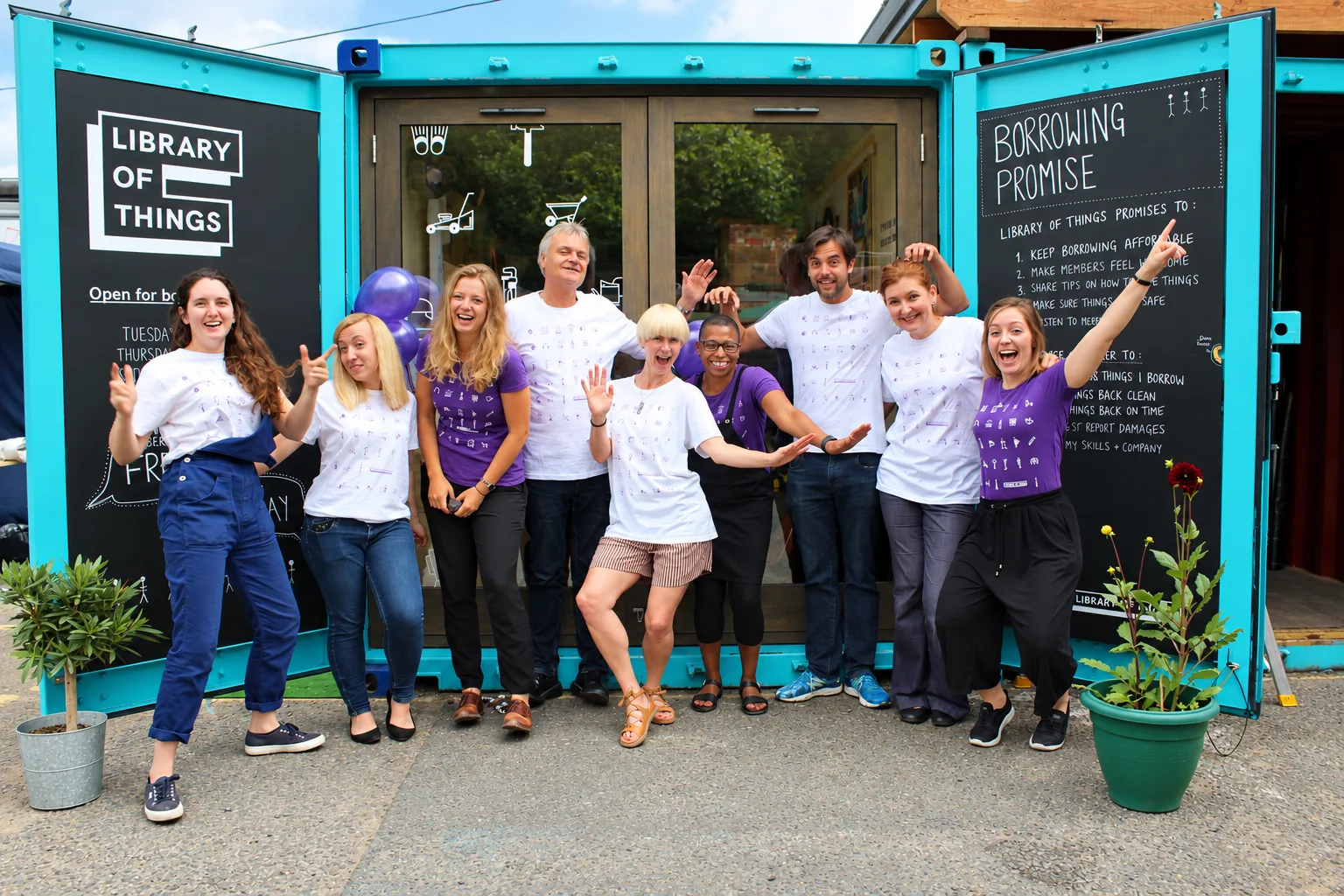
In London, three women have created something where they both set the policy and sit on the same side of the table as the people carrying it out. The Library of Things was founded in 2014 by Emma Shaw, Rebecca Trevalyan, and Sophia Wyatt. Frustrated by the waste they saw around them and wondering why anyone needed to personally own a drill they'd use twice a year, Trevalyan describes the organization's beginning less as a business plan than a set of practical questions: how can we live sustainably, and how can we justify owning tools we rarely touch?
Like Toy Loan, it started with community volunteers as a grant-funded lending library operating out of a shipping container in a parking lot. It's since grown into a network of 22 locations across the UK with almost 40,000 members— a scale Toy Loan took nine decades to approach and Library of Things reached in ten years.
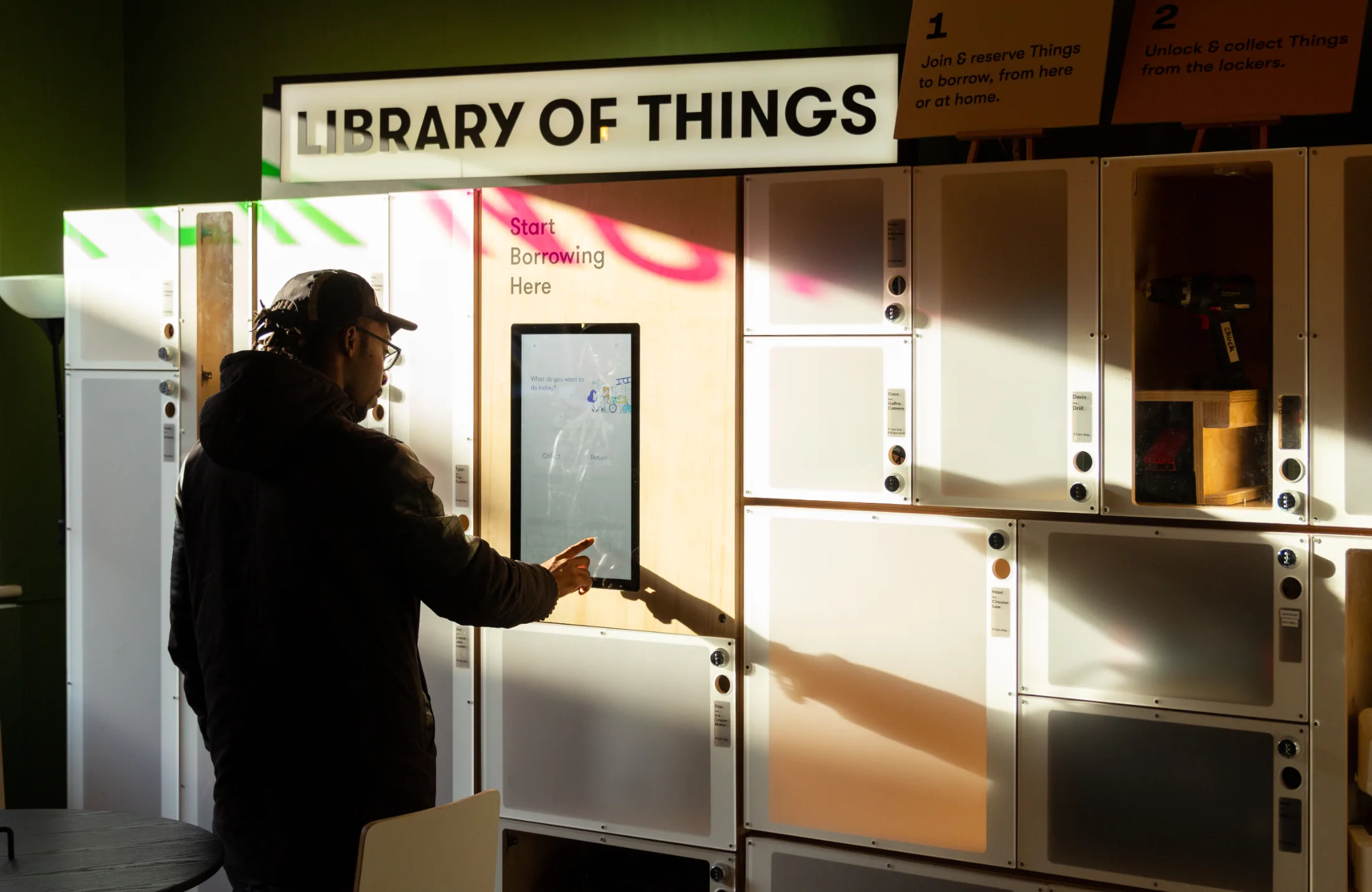
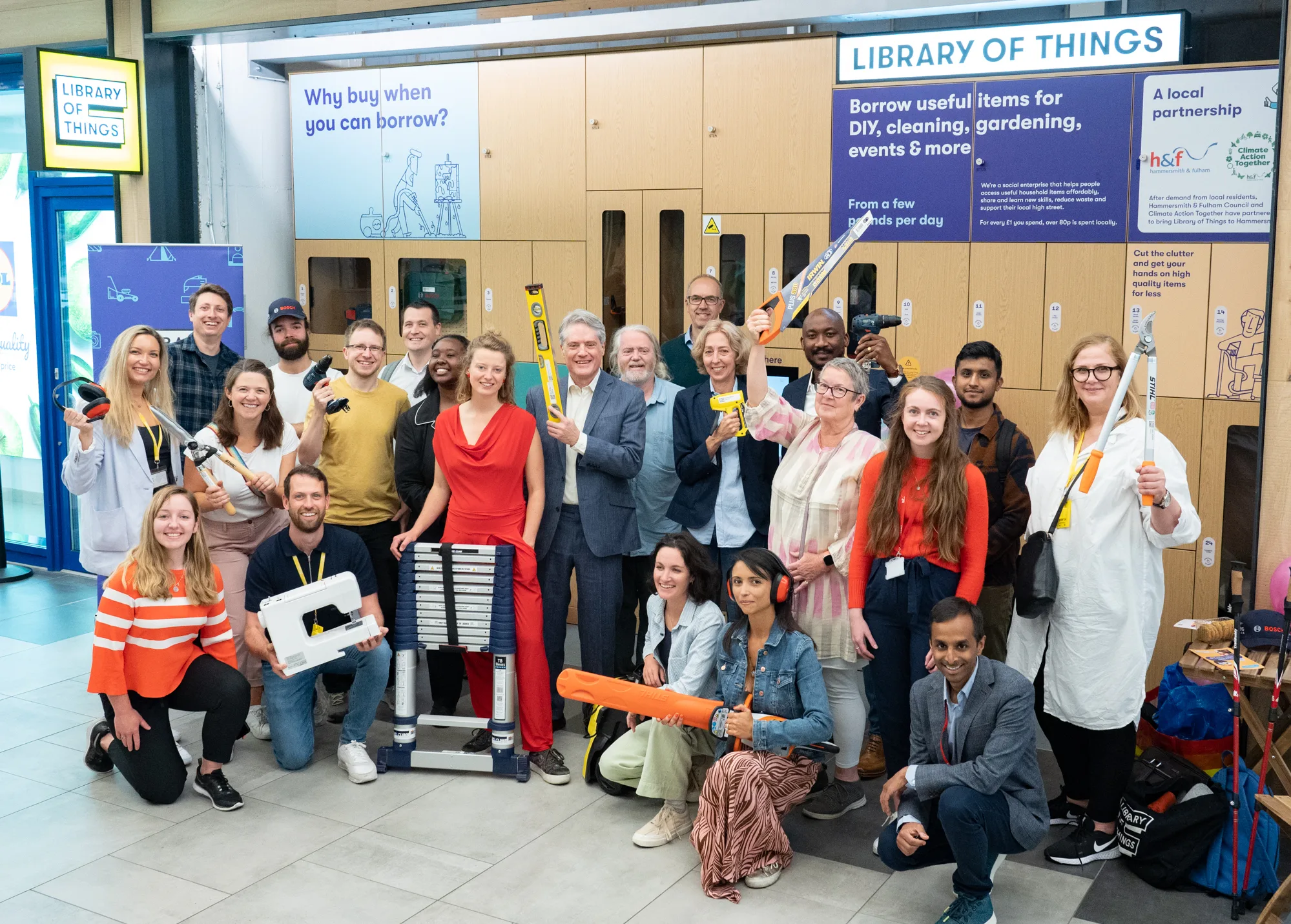
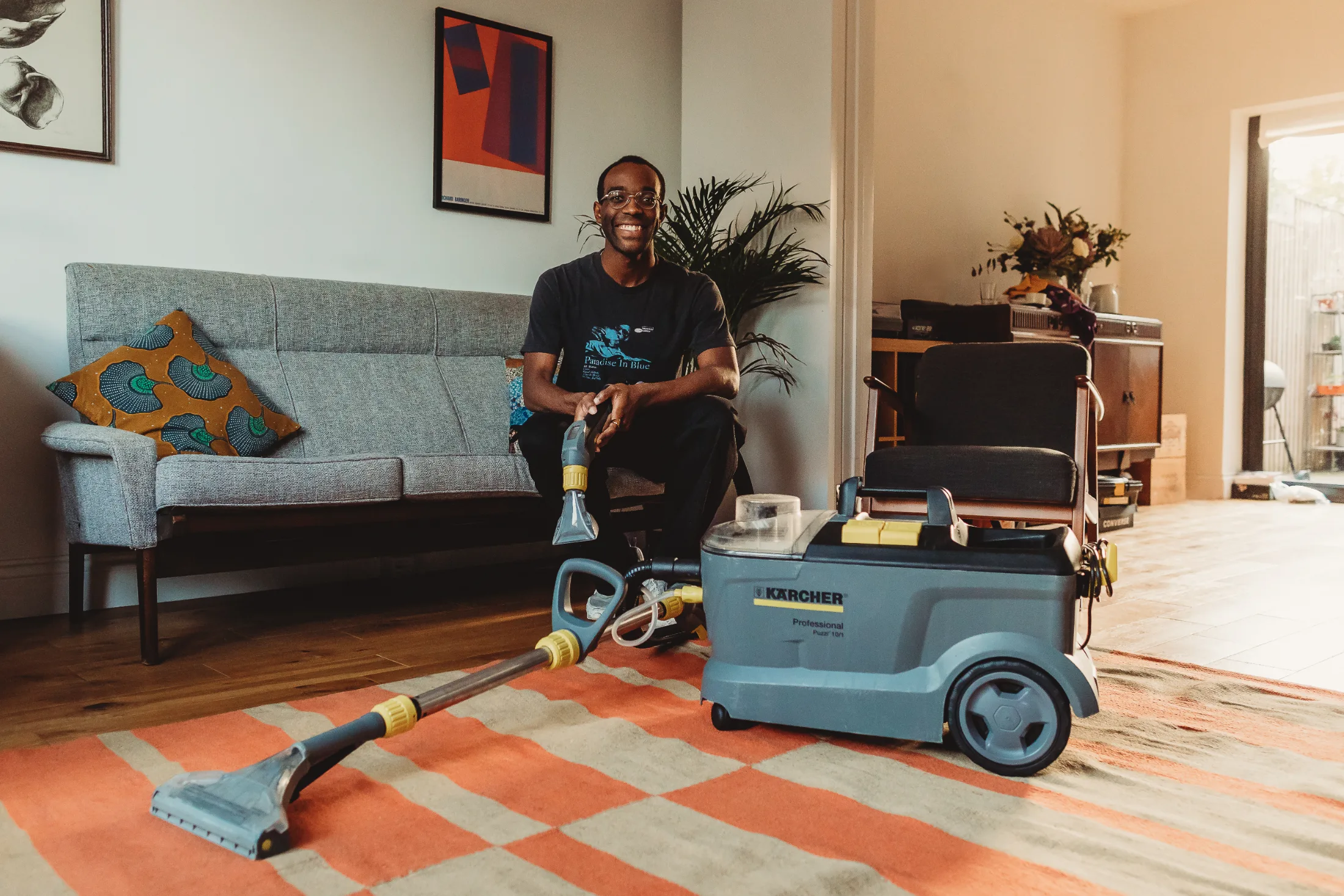
That speed brought its own complications. As a nonprofit, the organization relied heavily on grants and philanthropy, and that state of dependency made it hard to compete with, in their words, the "consumerist culture of easy-online one-click buying." To meet growing community demand while still functioning as an organization, its three founders decided they needed to operate as an invested team with real resources, not volunteers managed by a board; they were on one side of the table, doing the work, but they also wanted to set the policy.
In 2018, they restructured from a nonprofit into what the organization calls a "steward-owned" social enterprise. Trevalyan and her co-founders have described the decision candidly: "It's a bit bonkers, but UK company law— and culture— says that the primary purpose of companies is to create value for shareholders. So we had to tinker with legal norms to create a company structure that legally requires directors and shareholders to put our mission first.” Because of this, the organization measures its own success not by growth, but by money saved by borrowers, visits to community spaces, and carbon emissions avoided.
It's an unusual answer to a common problem: how does an alternative to consumer capitalism survive without becoming dependent on the goodwill of grants, or on the priorities of investors who don't share its mission? While the Toy Loan Program chose partnership with government resources, Library of Things' answer was to rewrite its own legal DNA rather than choose between the two. Both options keep sharing alive but not without cost; staying true to its mission means Library of Things still runs as a small, busy team.
Who Shares What
Not every organization maintains consistency with its mission statement. Little Free Library is the global book-sharing phenomenon that now counts more than 200,000 book-sharing boxes in 128 countries, with over 500 million books shared since 2009. It has a grassroots origin story as sincere as any in this piece, started in a Wisconsin yard with the explicit goal of building community and improving literacy, particularly in low-income and rural areas.
As the phenomenon grew, the Little Free Library (LFL) became a nonprofit and, in 2012, trademarked its own name so that only registered, fee-paying "charter" locations could officially call themselves a “Little Free Library.” Recent research has since critiqued the LFL for “performative philanthropy” after uncovering that private individuals who install boxes on their own property tend to do so in already book-rich, well-educated neighborhoods. The research goes further, arguing the organization represents "the corporatization of a grassroots phenomenon"— professional but not equitable, organized but not especially effective, and ultimately not accountable to the communities it claims to serve.
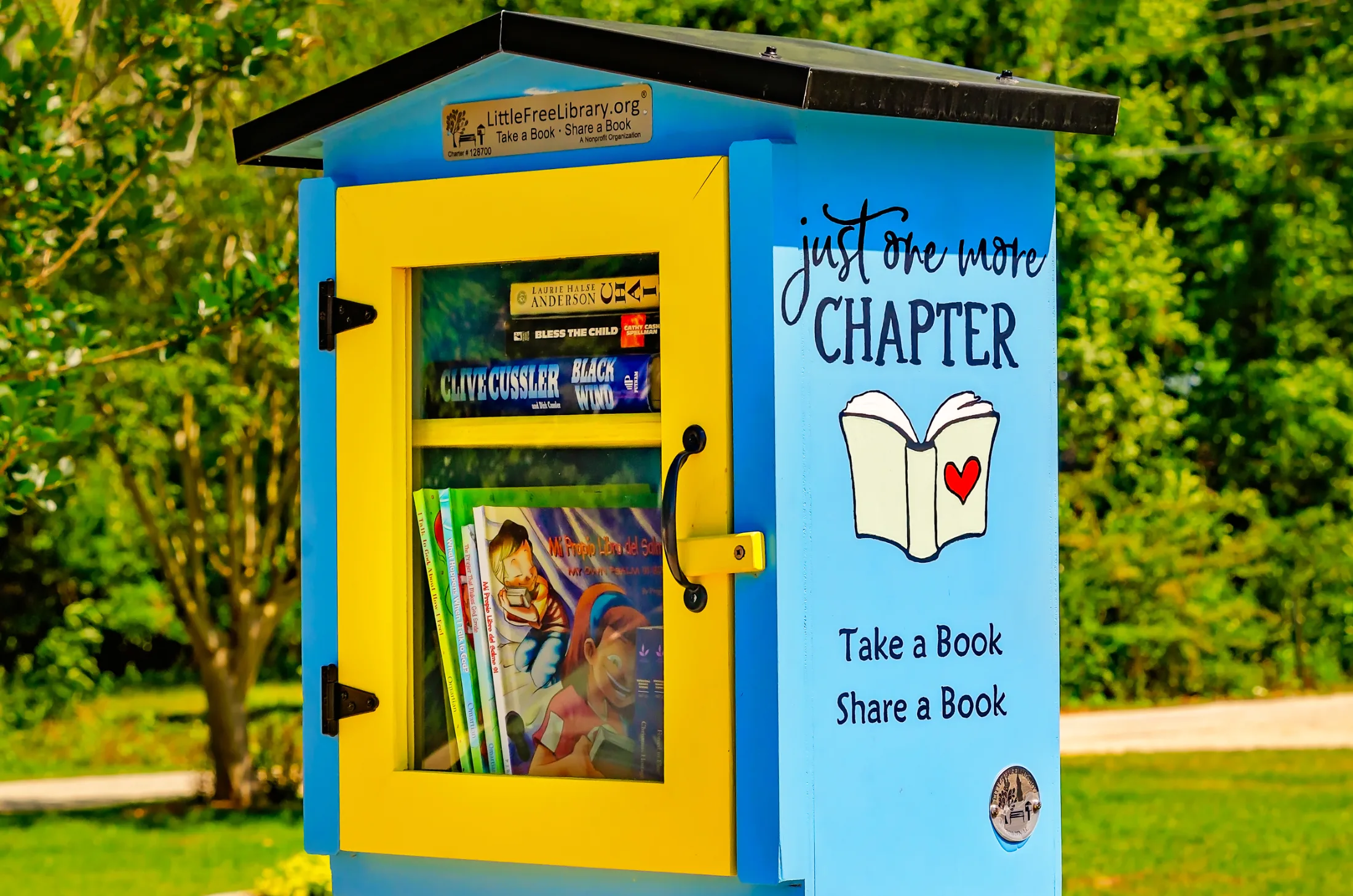
Little Free Library's own leadership has largely conceded this point. Executive Director Greig Metzger has acknowledged that the organization is "known for being on White suburban lawns," framing the group's newer Impact Library Program— which places boxes specifically in under-resourced neighborhoods with more culturally relevant titles— as a direct response.
Yet there is something larger in this failure: its role in the neoliberal pattern of replacing publicly funded institutions with private philanthropy. Not only does this collapse what a library does into simply providing books, but the model also reinforces the idea that libraries are book warehouses rather than the active, communal spaces they actually are. Still, the biggest risk isn't public misunderstanding, but that policymakers, looking for a cheaper solution for a defunded public library, might mistake this one for a real solution.
Library of Things built a legal structure specifically designed to resist being scaled into something unaccountable, while Ramirez is still negotiating, center by center, how far reach can extend before it requires infrastructure that isn't there. Little Free Library cautions what happens when a genuine grassroots instinct gets scaled without either safeguard— a branded, licensed version of sharing that never had to answer to the communities it claims to serve.
Who Does the Work of Sharing
In Poland, researcher Zofia Łapniewska found that women made up roughly 80 percent of participants in the country's pandemic-era mutual aid groups— the neighbors sorting donations, running errands, keeping lists of who needed what. It's a pattern that shows up wherever this kind of infrastructure exists, like the Library of Things.
Political theorist Nancy Fraser argues that capitalism has always relied on a hidden "back-front" of social reproduction — care, cooking, the unpaid work of keeping people and households going — labor it depends on but refuses to pay for. Fraser argues that neoliberalism deepened this by privatizing care that used to be at least partly public: the welfare programs, funded institutions, and social safety nets that governments have steadily withdrawn. A toy exchange or tool library absorbs some of that withdrawal, work quietly re-socialized at the community level after the state stepped back. And it runs on a different logic than charity does.
Anthropologist Miriam Ticktin, writing about the community fridges that appeared on Brooklyn sidewalks early in the pandemic, draws the line: charity asks you to prove you deserve help. A commons— like an object library or toy loaning program— doesn't ask anything. You take what you need and move on.
Which is the actual argument buried under all the "sharing economy" branding: scarcity isn't natural, and neither is the individualism that treats every household as an island that has to own its own drill. Someone has to do the work of keeping things in circulation instead. So far, that someone has usually been a woman, doing it for free, while companies figured out how to sell the idea back to us.
The stakes here are bigger than any one object library or toy program. Automation is eroding middle-class jobs and disposable income across industrialized and emerging economies alike. Incomes are shrinking as cities grow and rents climb. Each of these pressures point toward the same risk: guaranteed, equal access to basic goods keeps getting harder to come by, not easier.
Organizations like Toy Loan and Library of Things aren't a fix for that. They're too small, too under-resourced, too dependent on people already doing unpaid work to hold up an economy on their own. But they are proof that access doesn't have to be rebuilt as a platform, a subscription, or a trademarked charter system in order to function. It can be a garage near Manchester Park in 1935. A shipping container in a parking lot in South London in 2014. A shelf of toys or tools or books, kept in circulation by people who decided that what they had access to was worth putting back into use.
Sharing is caring, the old adage says. What this piece has tried to show is that the lesson never stopped being true—it just stopped being simple.
Somewhere between the playground and the platform, sharing became a site of contest— over who gets to define it, who's expected to build it for free, and who it's actually built for. The organizations in this piece haven't resolved that contest, but they are still in it, on purpose, center by center, slowly reminding us sharing was never apolitical, and that it can be done well.

About the author
Elizabeth Collins
Elizabeth Collins is a writer and performance study scholar based in London, U.K.. She holds a BA in English Literature and Creative Writing, and an MA in English Literature and Performance Theory from King’s College London, where her dissertation explored the mediatized nature of the Black Lives Matter movement. Across her academic and professional experience, her work engages with the intersections of arts, culture, and human connection. When she’s not engaging with academia, you can find her writing poetry, instructing theatre workshops, teaching yoga, or re-watching The Big Bang Theory.
Conversation
A space for Parlor members. Be generous, be real.
Loading…