
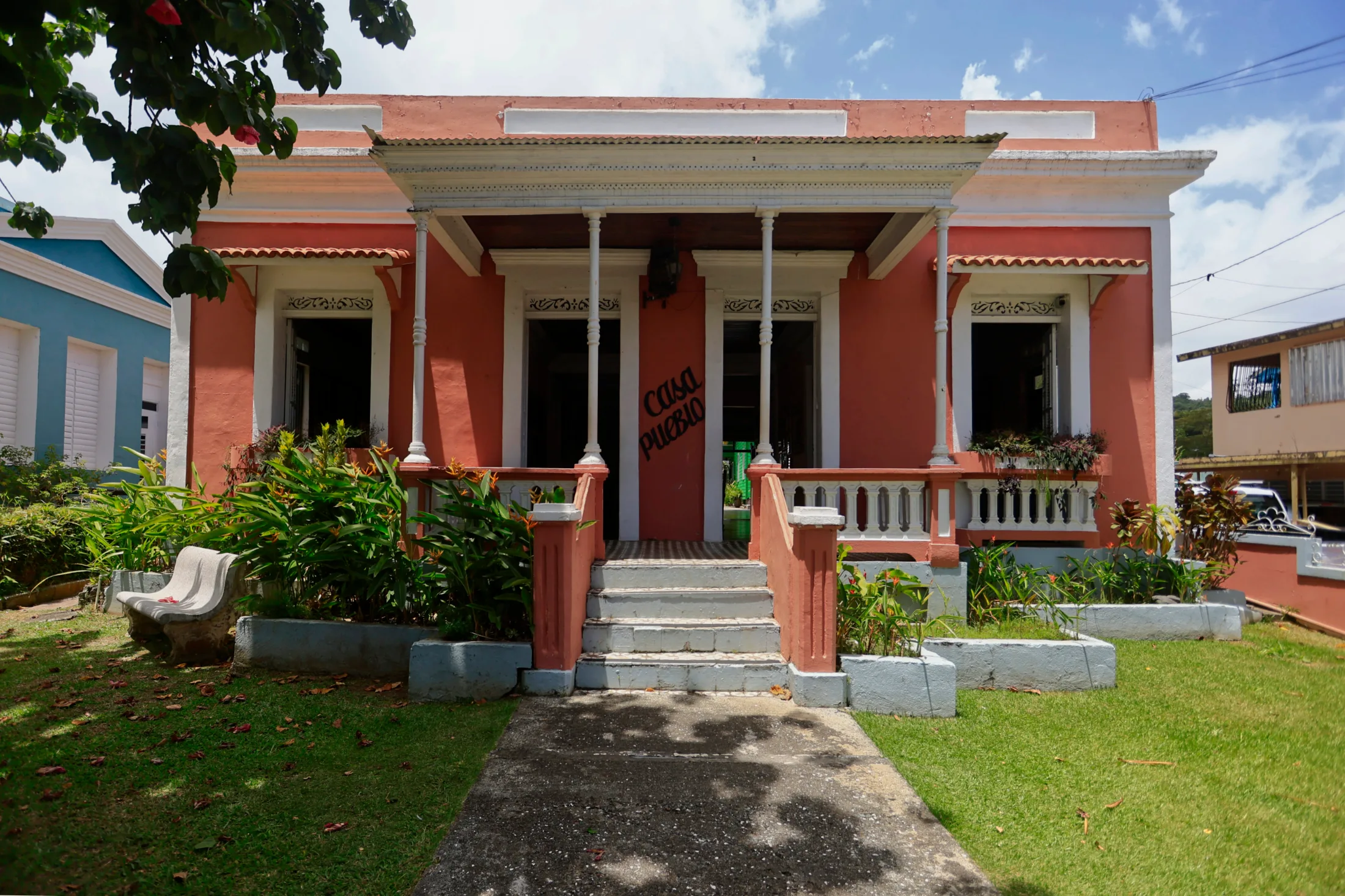
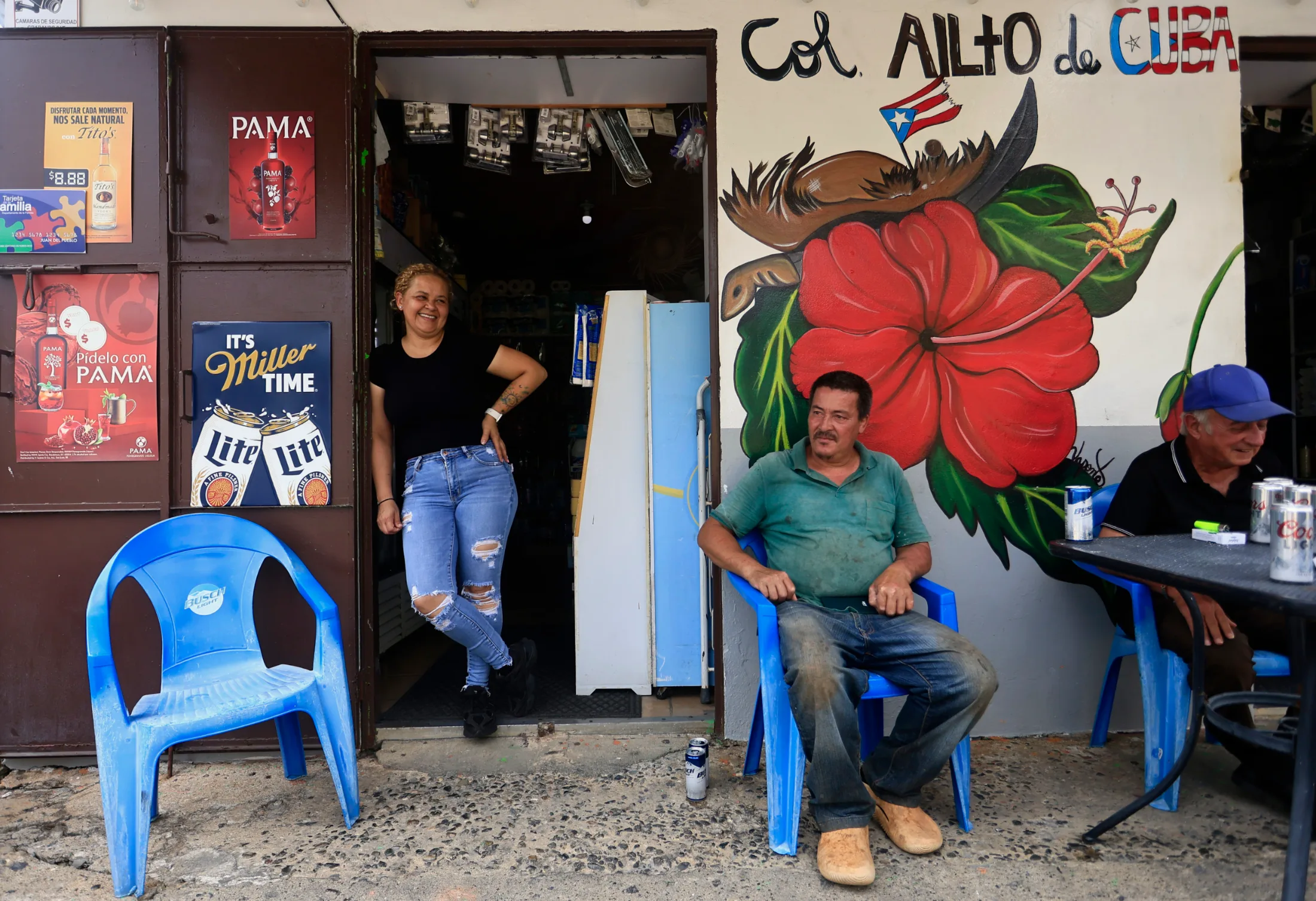
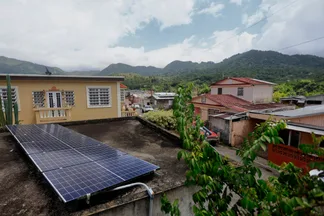
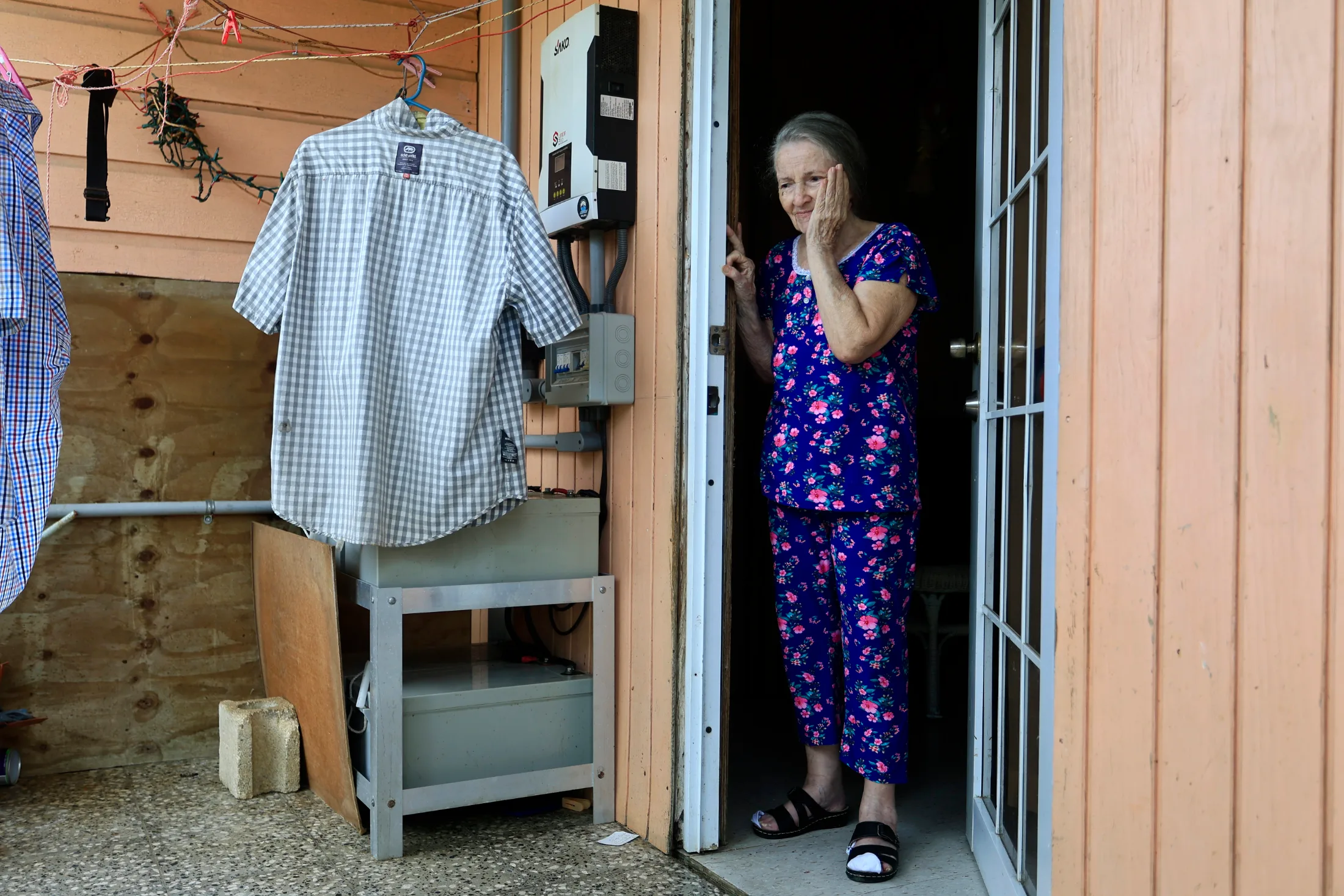
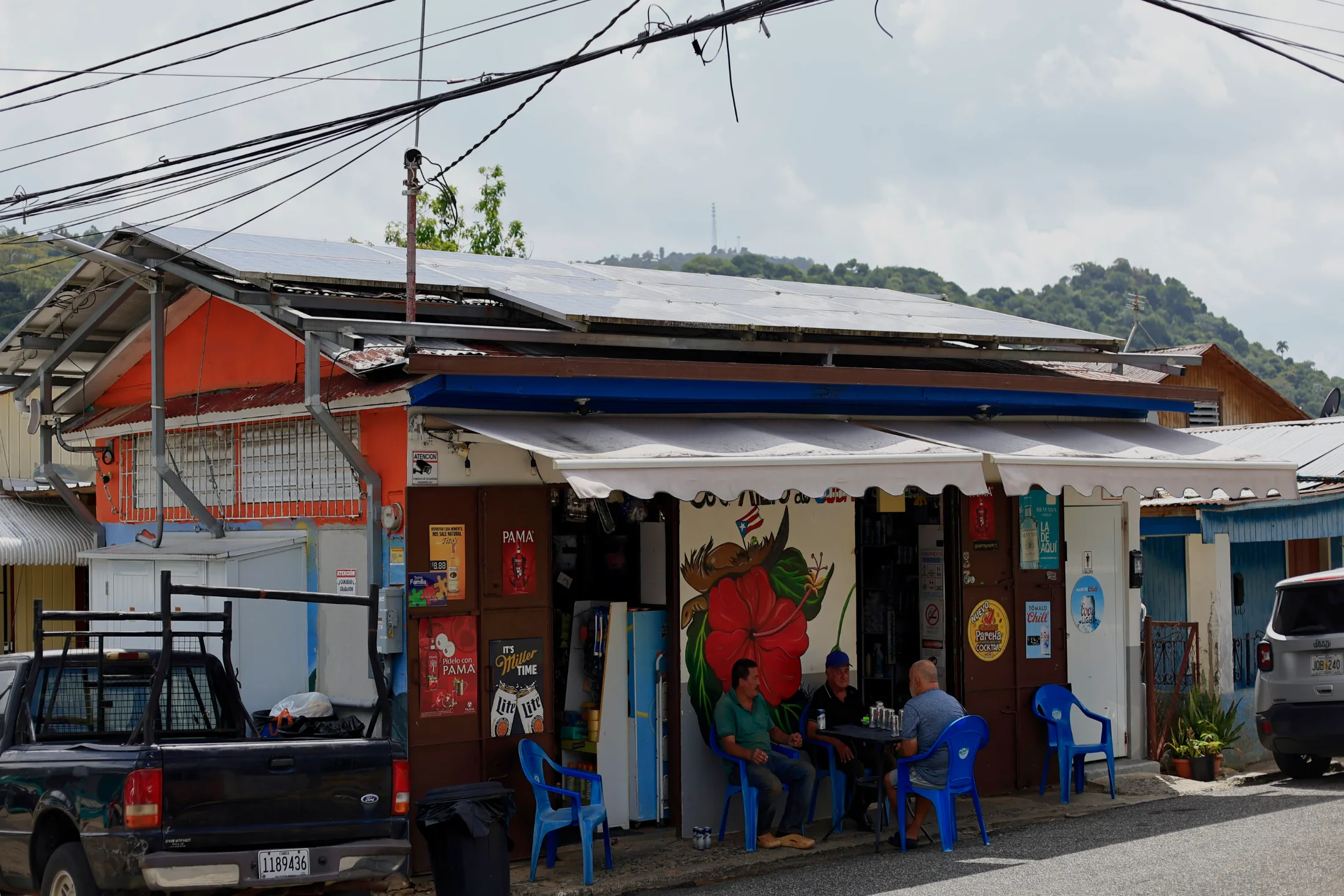
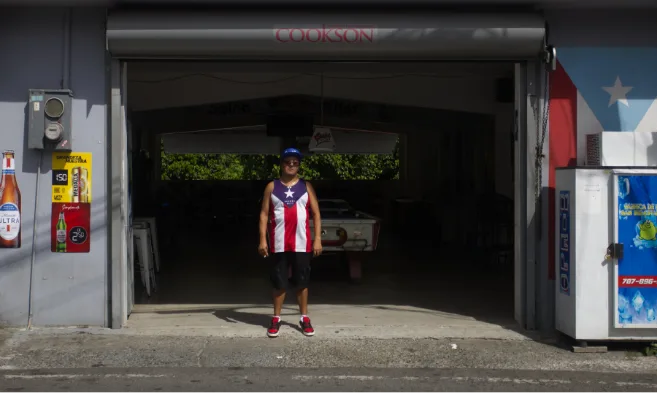
Sharon Cedeño Natal runs a colmadito– a Puertorican corner store with a bar–in the Los Altos de Cuba neighborhood of Adjuntas. Since August 2022, it has been powered by the sun, serving as a haven for neighbors to store medicine and food when the power goes out—an all-too-frequent occurrence in Puerto Rico.
The community organization Casa Pueblo installed 24 solar panels and 12 batteries to power the little store, ensuring neighbors can always get cold beers despite the blackouts.
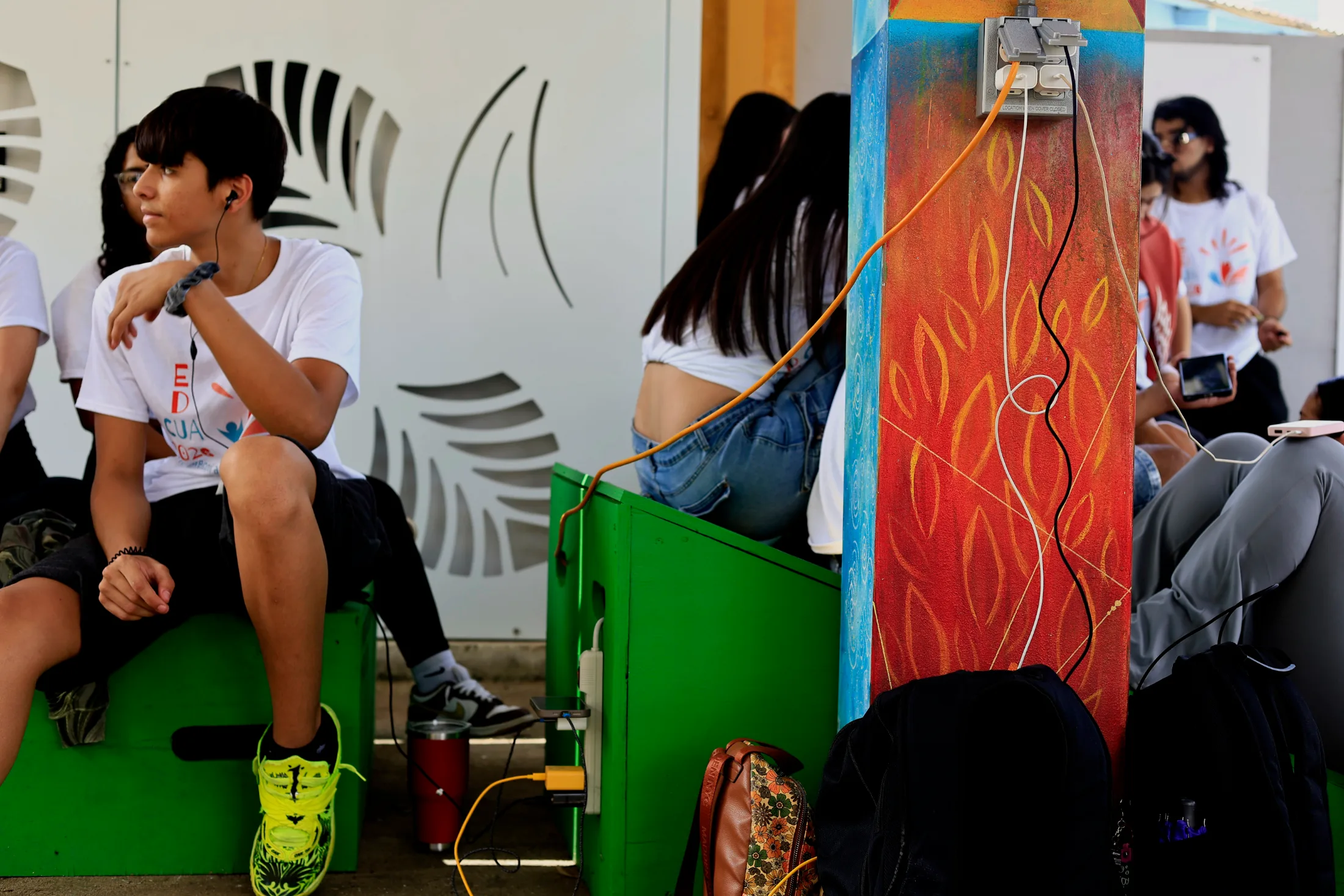
“But it’s not just for me. They belong to the colmadito, but they are for the community. It’s for anyone who needs to store their food or medicine, charge phones, or run therapy equipment. Everyone is welcome here, from within the community and outside of it,” Sharon says.
One of the customers sitting at a small table outside spending the afternoon, Elías, laments to The Parlor Magazine that “here politicians only come for elections and then you never see them again,” but that Casa Pueblo changed the neighborhood's life. Elías takes us to his house to see the rooftops of the neighborhood's humble little homes, where solar panels glint in the sunlight. He shows us the batteries thanks to which his mother has survived hurricanes.
He recalls that the first time Alexis Massol—the founder of Casa Pueblo and 2002 Goldman Environmental Prize recipient—called on neighbors to a protest against an open-pit mining project, only one person showed up.
“But Alexis didn't give up,”Elías says, instead “he began playing live music and people started coming to the demonstrations.”
Don Alexis won what is considered the Nobel Prize for Ecology for leading a historic and tenacious 15-year community struggle to protect the lands and natural resources of Puerto Rico's Cordillera Central from open-pit mining.
Howerver, what began in Adjuntas as a stand against mining has become a beacon of energy sovereignty the world now watches closely. By decentralizing power and placing it in the hands of grocery stores, homes, and neighborhood institutions, Casa Pueblo has proven that self-management is not merely an emergency response to state collapse or climate onslaught, but a viable model of environmental democracy. Its Adjuntas Pueblo Solar project has outgrown its origins as a local experiment to become an international benchmark for ecological justice — living proof, for communities across the planet, that the transition to a sustainable and supportive future isn't legislated from the offices of power, but built rooftop by rooftop, from the heart of the community itself.
For Arturo Massol, a professor at the University of Puerto Rico in Mayagüez and Alexis's son, the key to this entire effort lies in educating to achieve a higher ecological understanding, far from the logic of "individual salvation." He explained to me that having solar panels on a private house guarantees the supply when LUMA—the questioned private company in charge of transmission—fails or when storms strike, but that ends up being an individual privilege when energy should be a right for everyone.
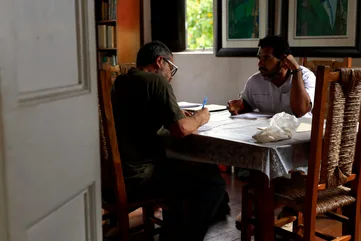
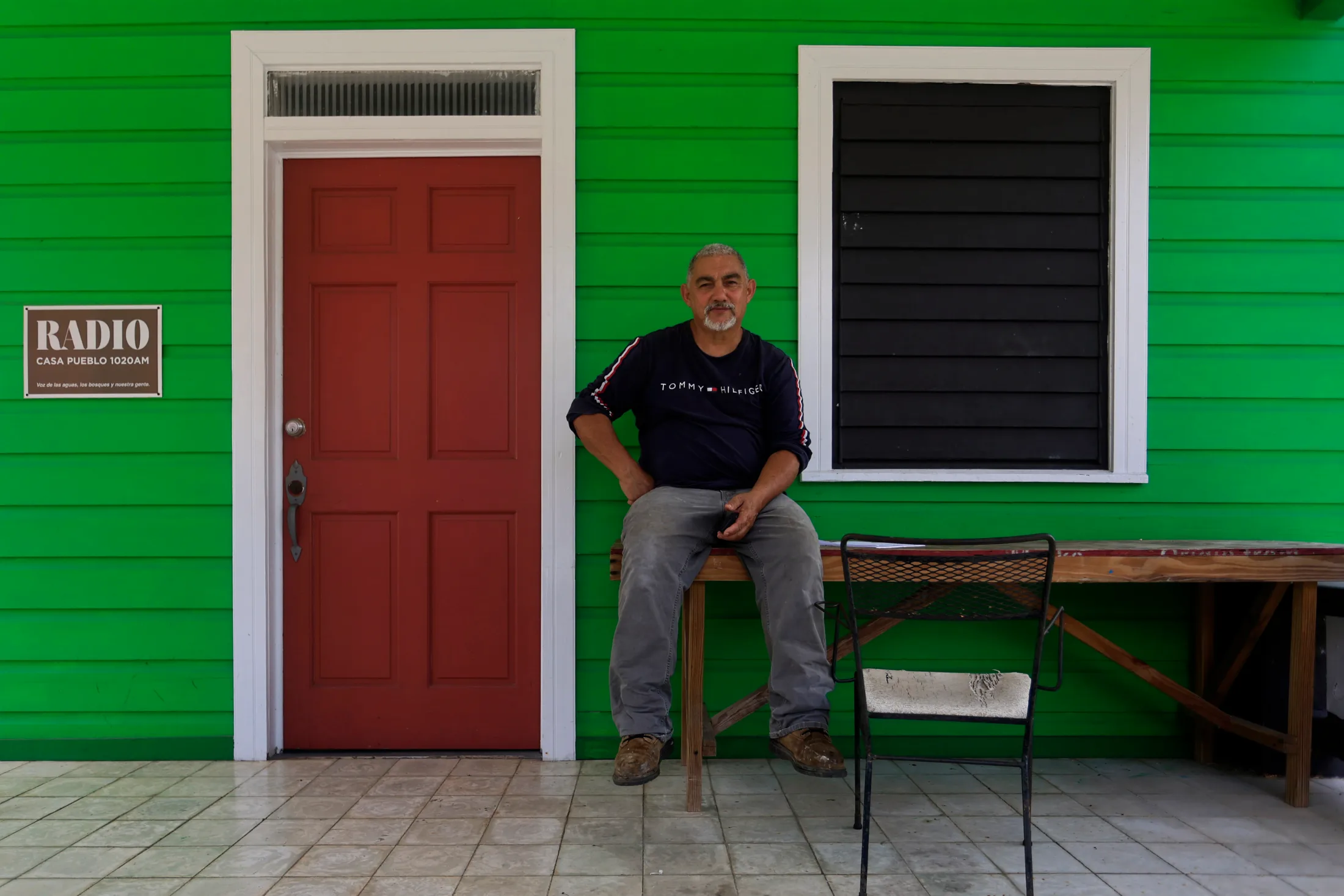
That is why his proposal focuses on the power of microgrids. Massol gave me the contrast of scales as an example: while the original microgrid at Casa Pueblo's headquarters powers three spaces—its own building, the radio station, and the cinema—this new system in the neighborhood is three times more powerful and supplies seven houses and the community's open plazas. By connecting the infrastructure to protect the entire neighborhood, Massol maintains that the benefit stops being simply "good living" and becomes an exercise in "good coexistence."
The Orchestrator
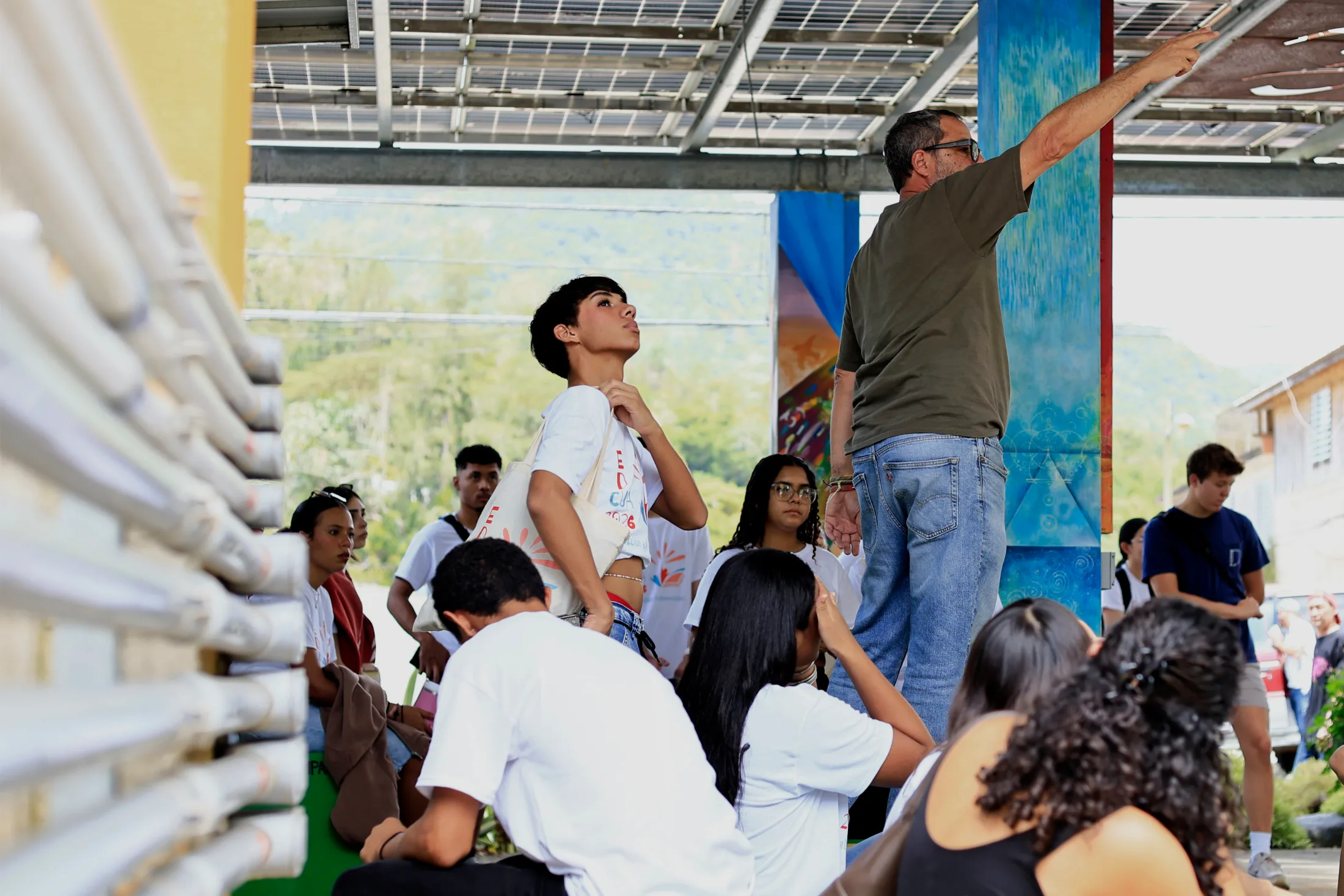
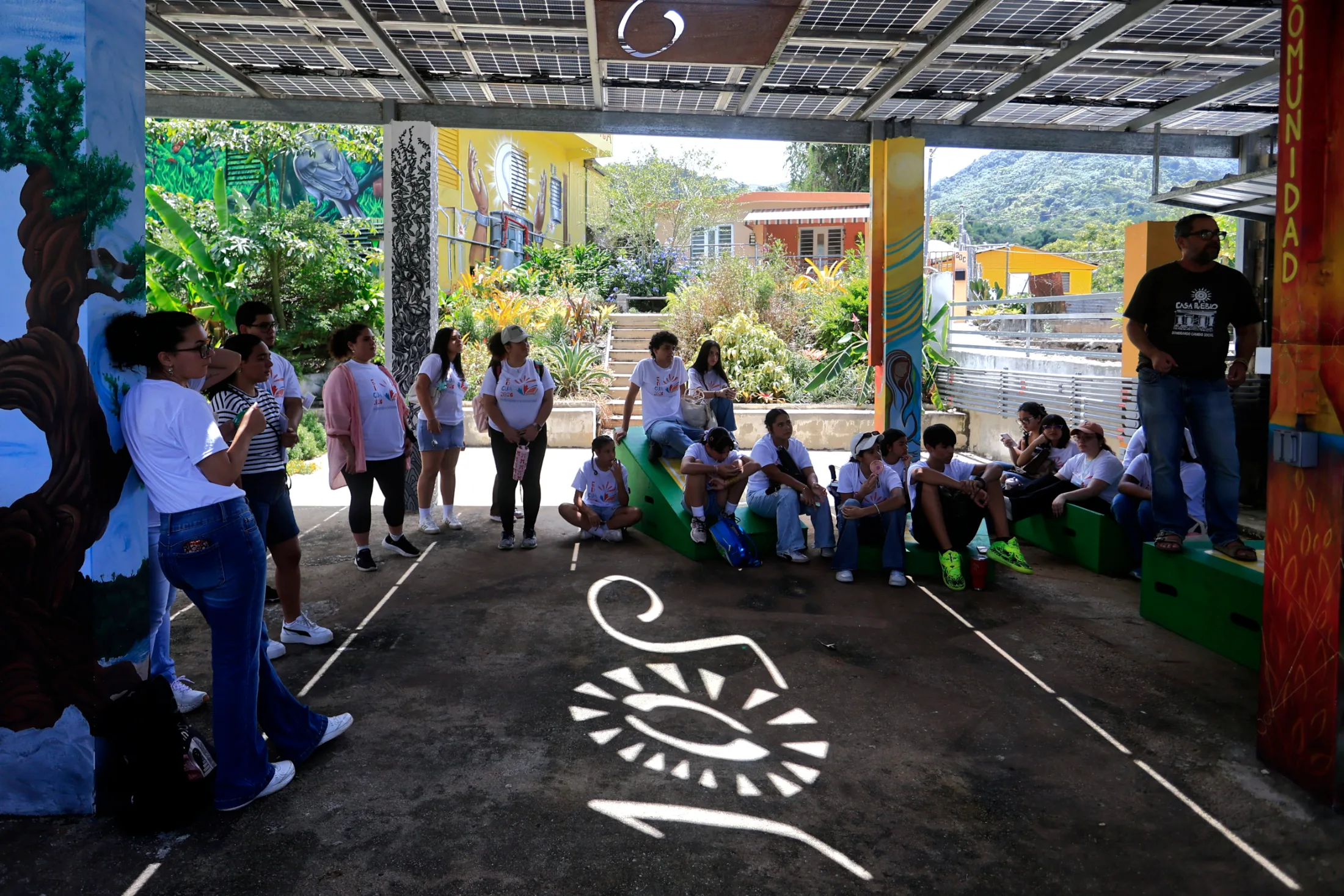
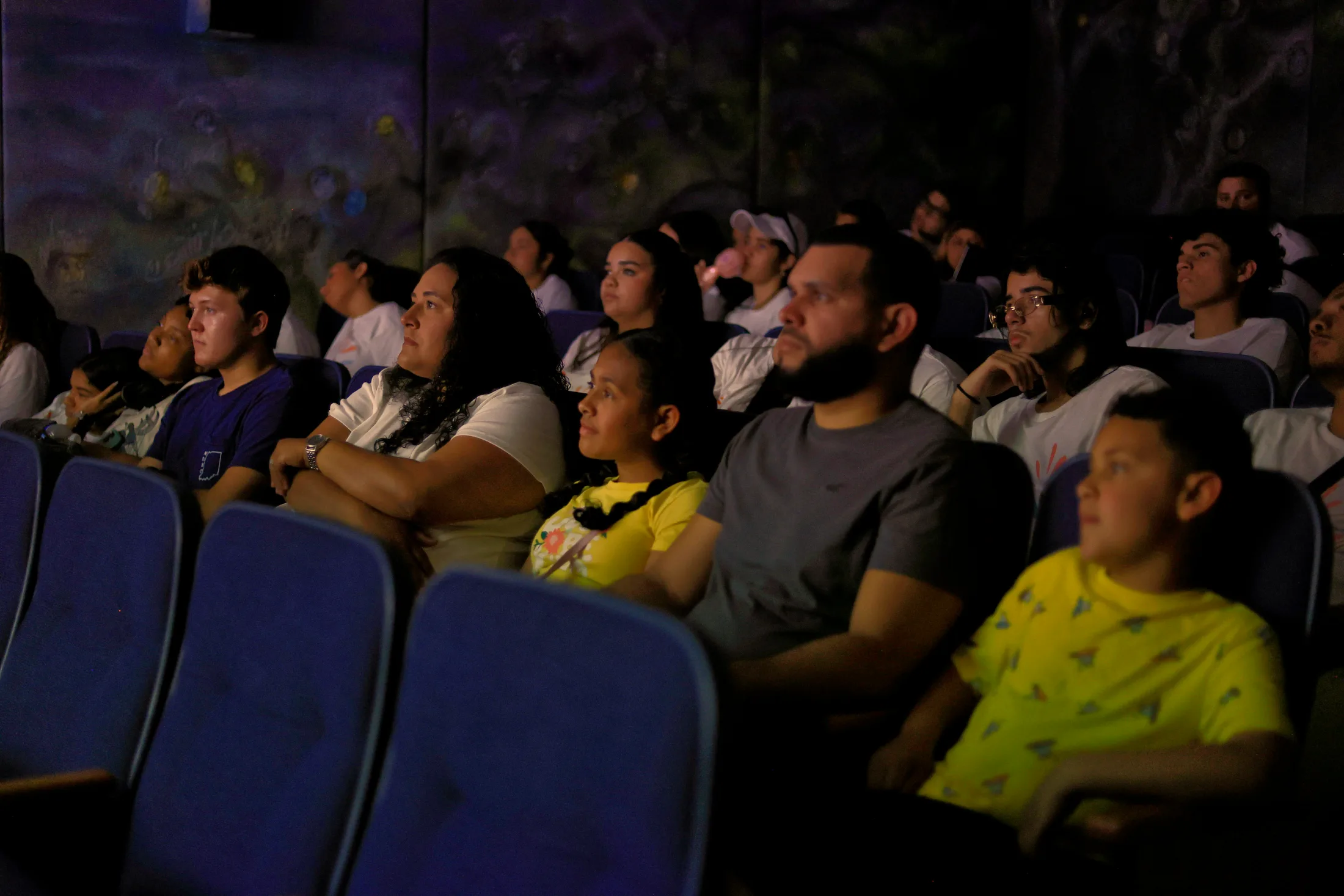
“How do you achieve full energy transition?” Massol addresses a group of university students who are visiting Casa Pueblo. “Well, it has to have something that acts as a trigger, and that trigger started with one house, Casa Pueblo.”
He advocates for uniting community knowledge with universities and scientists because governments are not doing it. But universities and scientists work with theory and simulation, while Casa Pueblo has a microgrid in practice. Now, universities and scientists go to study on the ground at Casa Pueblo.
The students leave, and he now shifts his attention to a group of community leaders from a Hispanic community in Massachusetts.
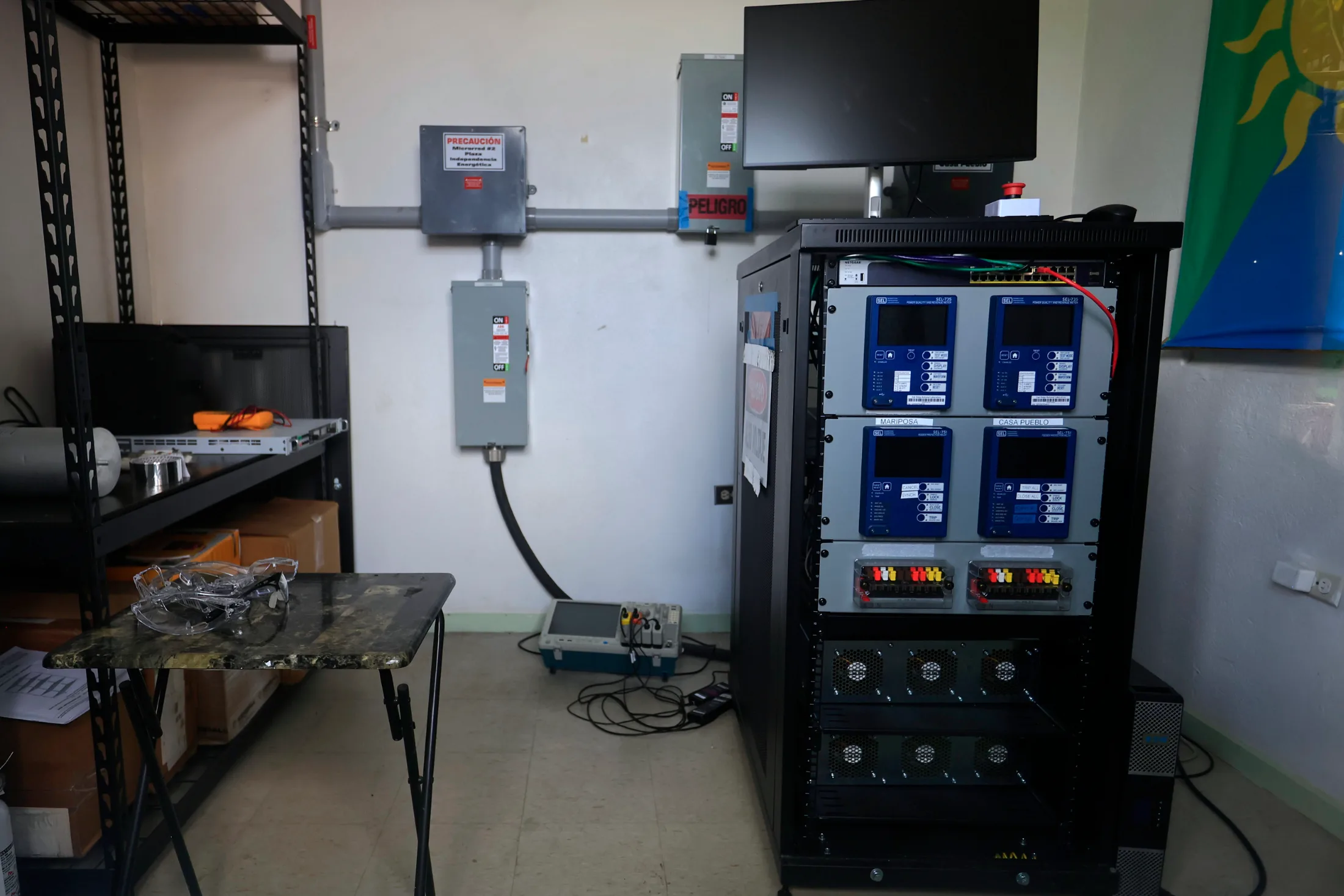
He shows them "the orchestrator," which is the equipment that controls the microgrid, which can be connected to others, creating an "interdependence."
"We are talking about a two-way street; here we can make transfers, like bank transfers, but of energy, and from over there, send energy over here," and vice versa, Arturo says.
The orchestrator, developed with Oak Ridge National Laboratory, allows Casa Pueblo to activate a system where separate microgrids support each other after damage — sharing information and giving or taking each other's electricity supply as needed, the way a larger grid's control systems coordinate solar arrays and batteries across a wider network, only here at community scale. It was validated for the first time in the field in March 2025 in Adjuntas, after three years of development, demonstrating that solar surplus from one system could supply others during blackouts. Maximiliano Ferrari, the engineer who helped build it, describes it as enabling multidirectional energy exchange between communities — the same logic Arturo is showing the Massachusetts group with his bank-transfer metaphor: energy that flows both ways, banked and borrowed as need arises.
Casa Pueblo, he insists, is a community laboratory for the energy transition, in which, among other projects, service is being given "to the people and the community, but simultaneously" they are "building our own knowledge."
Arturo maintains the importance of communities building their own knowledge, "because otherwise, whoever holds the knowledge of the technologies would be imposing themselves, as they have imposed themselves the world over" — which is why community participation is essential to a liberatory ecological transition, "because there are cultural, climatic, human, and real variables that cannot be simulated in any laboratory."
The Holyoke Delegation
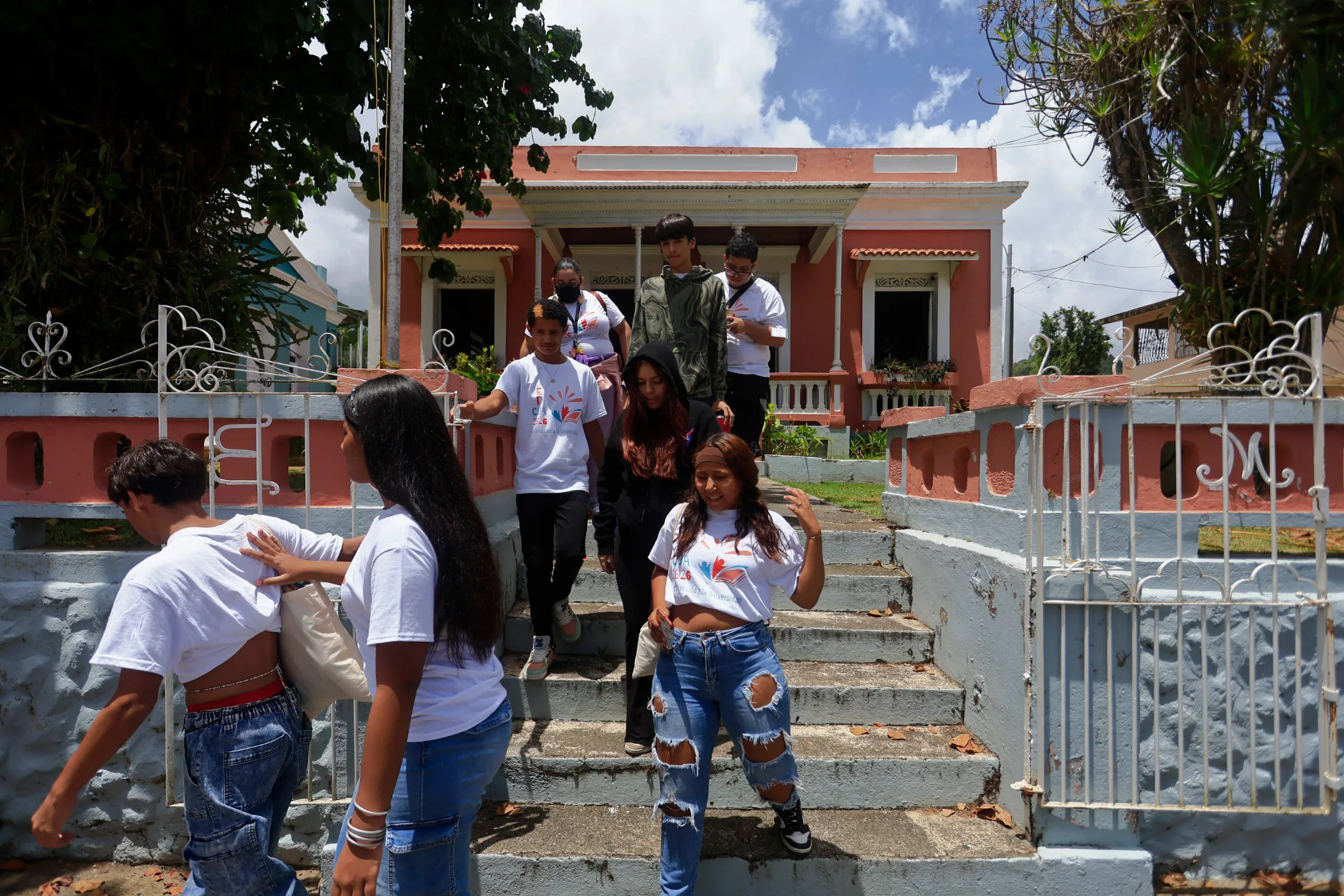
Among the community leaders from Massachusetts listening intently to Arturo Massol at Casa Pueblo's headquarters is Nayroby Rosa, the new executive director of One Holyoke CDC. Fifty-two percent of Holyoke's population is Puerto Rican, a community that has been rooted in the industrial city since the middle of the last century, when waves of Boricua emigrants — particularly from the municipality of Salinas — arrived en masse to work the tobacco and vegetable fields of the Pioneer Valley. Decades later, the bonds between the diaspora and the island remain so strong that this delegation has traveled to the Cordillera Central in search of ideas worth replicating.
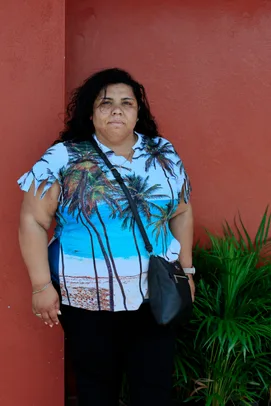
Rosa explains to The Parlor that the core of her management is civic engagement and the empowerment of residents so they understand the inner workings of municipal government and take on leadership roles. Her organization manages more than 250 low-cost apartments, some of them reserved for seniors with rents based on 30% of their income, in order to cushion the impact of inflation on the community.
"To do civic work, we first have to earn the trust of the residents,” she says. 'We are very focused on civic engagement — helping residents of Holyoke understand what municipal government means and how they can get involved."
Recently, the organization coordinated an educational project in partnership with the University of Massachusetts (UMass) focused on green infrastructure, community empowerment, and energy efficiency. Through this program, funded by a state grant, residents learned practical notions about electricity consumption and reducing utility bills. As part of the workshop, participants built homemade air purifiers using fans and filters to improve the environment inside their homes.
The purpose of the organization's trip to the island is to study local models of self-governance that could be replicated in Holyoke, where the Puerto Rican community forms a majority and maintains close historical ties to municipalities like Salinas.
Jeanette Rivera is also a community organizer, with Neighbor to Neighbor, an organization focused on building grassroots power. Her work centers on direct, door-to-door contact with neighbors to identify their priority concerns and mobilize them around issues such as rent regulation, criminal justice reform, environmental causes, and opposition to new data centers.
One of the pillars of her organization is co-governance — a process through which they identify and train leaders who have emerged from the neighborhood itself, helping them reach positions of civic representation, from the city council to the state senate. Rivera notes that the Puerto Rican diaspora makes up 52 percent of Holyoke's population, and that because this population lacks direct political representation on the island, the community in Massachusetts can use its influence and its elected officials to support local projects.
After observing the self-governance models in Puerto Rico, the organizer points to the island's deep resilience and sense of community, and says the diaspora is ready to act if it receives clear guidance on how to channel its support.
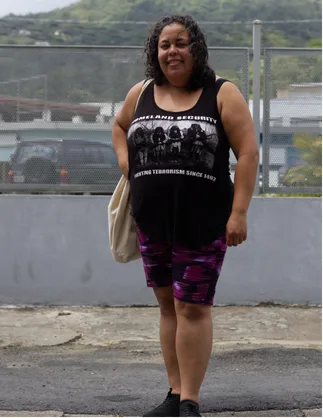
“It is important for us to build power from the bottom up, so that people do not lose their connection to their roots and continue supporting the neighborhoods they come from,” she says. “What I appreciate here is the deep emphasis on community and culture — everyone says hello. They want to know your name, your story. They want to support you, and they use the resources they have, making the absolute most of them.”
Andrea Méndez Cerame is a native of Ponce who has spent eight years in the United States studying at the University of Massachusetts (UMass), where she completed a bachelor's degree in anthropology with a concentration in political ecology and is now pursuing a master's degree in landscape architecture. Critical of her own field, she points out that traditional architecture often falls into greenwashing and operates within colonial practices, even as it invokes the language of resilience and community. In response, Méndez Cerame is interested in researching how self-governance and solidarity projects like Casa Pueblo manage to build genuine mutual power at the grassroots level.
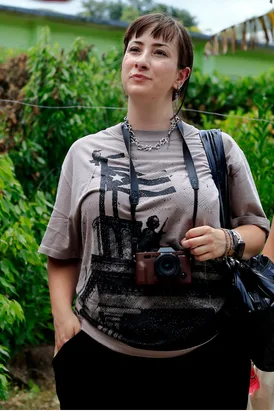
This vision led her to join the Holyoke Community Energy Project, an initiative of the UMass Energy Transition Institute in collaboration with the Departments of Anthropology and Engineering. The project researches the perception and knowledge of energy in Holyoke to drive an energy transformation that is truly just and equitable. For Andrea, the shift to renewable energy is not enough on its own, since vulnerable families often can't afford systems like solar panels or cisterns. The initiative therefore seeks to train and empower neighborhood leaders, using the space provided by One Holyoke CDC.
The project is grounded in participatory research, doing away with traditional academic hierarchies to learn alongside residents. Through methods such as participatory mapping, they identify the community's assets and support spaces to determine which infrastructure could be strengthened with renewable energy — a process that, as she explains, depends on building trust and mutual solidarity.
“We want good living, and we want good coexistence too.”
Massol has been to several countries such as Mexico and Guatemala sharing experiences, and they have installed solar panels in the Dominican Republic, with the goal of establishing a network of community organizations working on innovation.
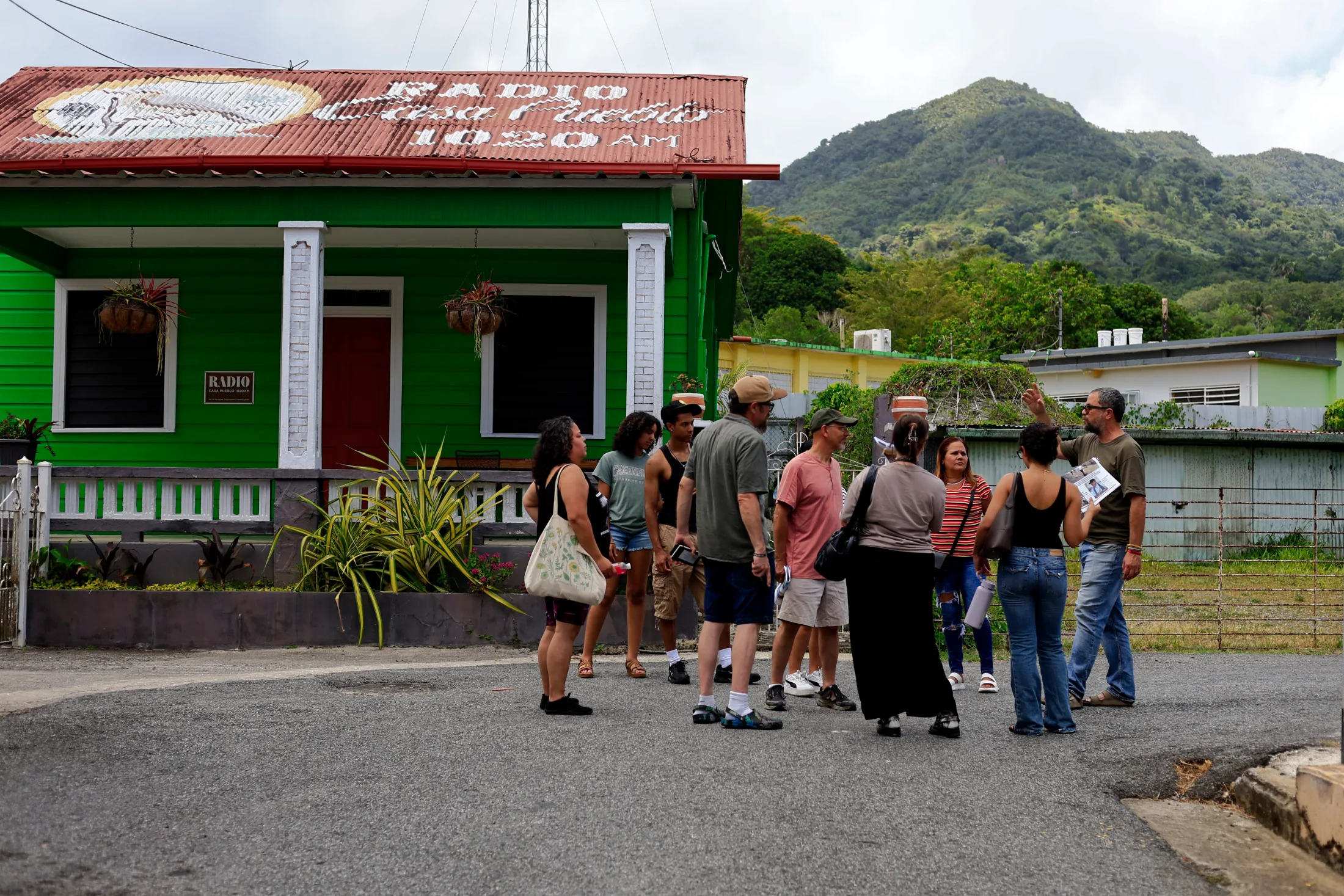
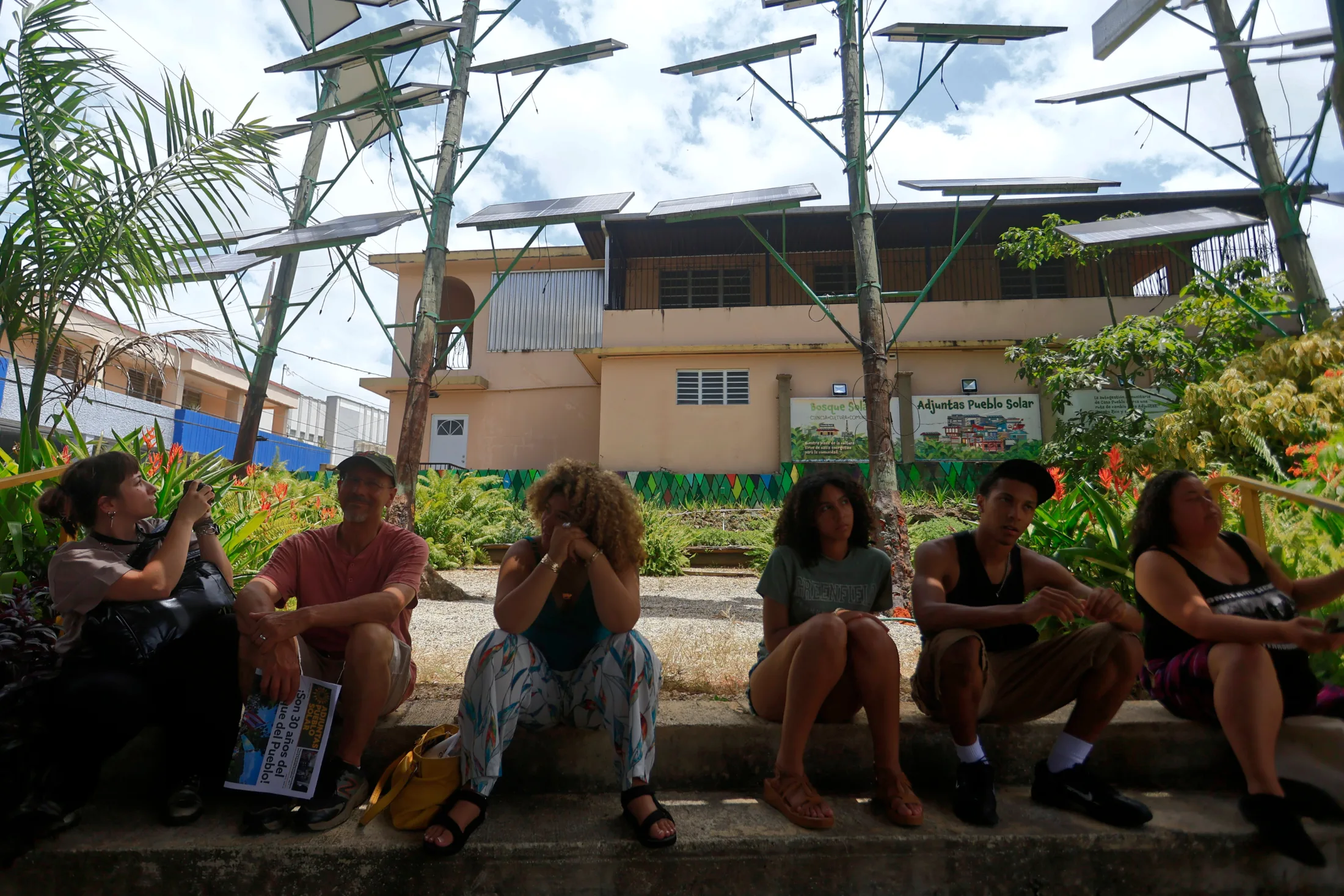
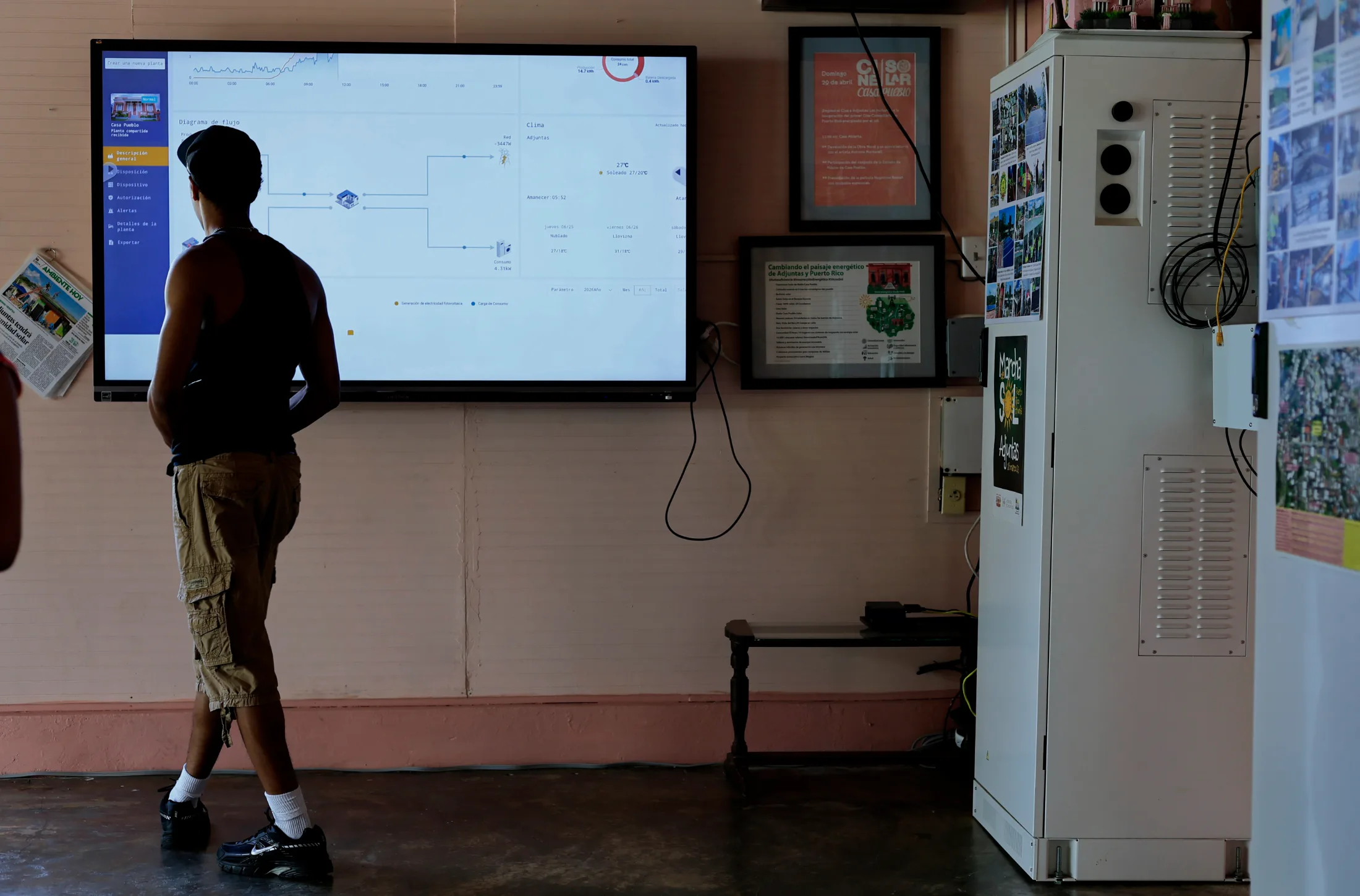
He recalls that in 1999, when they started with solar energy, people did not trust them and thought they were crazy hippies. When Hurricane Maria struck and all of Puerto Rico was in the dark, in Adjuntas people were able to charge their cell phones and the sick could refrigerate their medicines and use their electronic assistive devices.
During the devastating Hurricane Maria of 2017, Casa Pueblo managed to mobilize the Puerto Rican diaspora to send solar lamps “to educate, because it is not about charity, charity perpetuates dependency, we are in solidarity with our people, but solidarity pursues change.”
The Casa Pueblo laboratory carries out education and learning-by-doing programs in schools with the mobile laboratory Mi Plántula Solar, where they teach how to operate a solar plant.
The objective is, as Massol says, “to create an alternative development model. It is not from the left, nor the right, nor the top, nor the bottom. It is a social development model that benefits the community; and emerges from the community itself. In the community there is a lot of diversity of people who think very differently. You cannot segregate them because they wanted to vote for this, or vote for that.”
Arturo now tells The Parlor that what is needed is social organization, that people agree on a practice of radical democracy within the community that begins with participation and breaks “dependency on politicians.”
He believes that participation breaks ideological barriers to “build alternatives to the colonial model” that Puerto Rico suffers from, and that these efforts are no longer a minority, but a heterogeneous movement, “many people doing things.”
“The principle is to assume responsibility, to organize socially, and to want to transform your reality and fight. And fight, that is the word, and fight. And do what is within reach first,” he recommends.
He recalls the influence of his parents, Alexis and Faustina "Tinti" Deyá Díaz — both educated at the University of Puerto Rico, both instrumental in shaping what Casa Pueblo is today. Having grown up in the region, they brought the knowledge, the drive, and the deep connection to the neighbors, the mountains, and the rivers that the work required.
“There are neighbors who love us very much and there are neighbors who are afraid of us” because the stigma of police persecution still survives, of having been singled out as macheteros, although, he admits, “people have already realized the benefits.”
"We want good living, and we want good coexistence too. That remains the biggest challenge,” Arturo says. “That is where culture becomes the most powerful tool we have to talk to each other — we can say it singing, we can say it dancing, we can say it partying, we can say it celebrating that we have the Plaza de la Independencia.” It's a call, he says, to break apathy, fear, and individualism. “During Hurricane Maria the patterns of individualism were broken, but this cannot just be a response to emergencies, an anomaly in times of crisis.”
About the author
Iñaki Estivaliz
Iñaki Estívaliz is an independent journalist with 25 years of experience publishing in both major and alternative media across several continents, focusing on stories of human interest. He lived in Puerto Rico for 17 years, writing for a wide range of media outlets on the island. His reporting has taken him to border regions in Panama and Colombia, El Paso and Ciudad Juárez, Standing Rock, and Iceland, as well as to elections and conflicts in Venezuela, Bolivia, and Mexico. Over the past year and a half, he has reported from Libya, Syria, and Palestine.
Conversation
A space for Parlor members. Be generous, be real.
Loading…