
Cabo Rojo No Se Vende / Cabo Rojo is not for Sale
The Fight to Save Boquerón from a $2 Billion Luxury Enclave

Iñaki Estivaliz
April 22, 2026
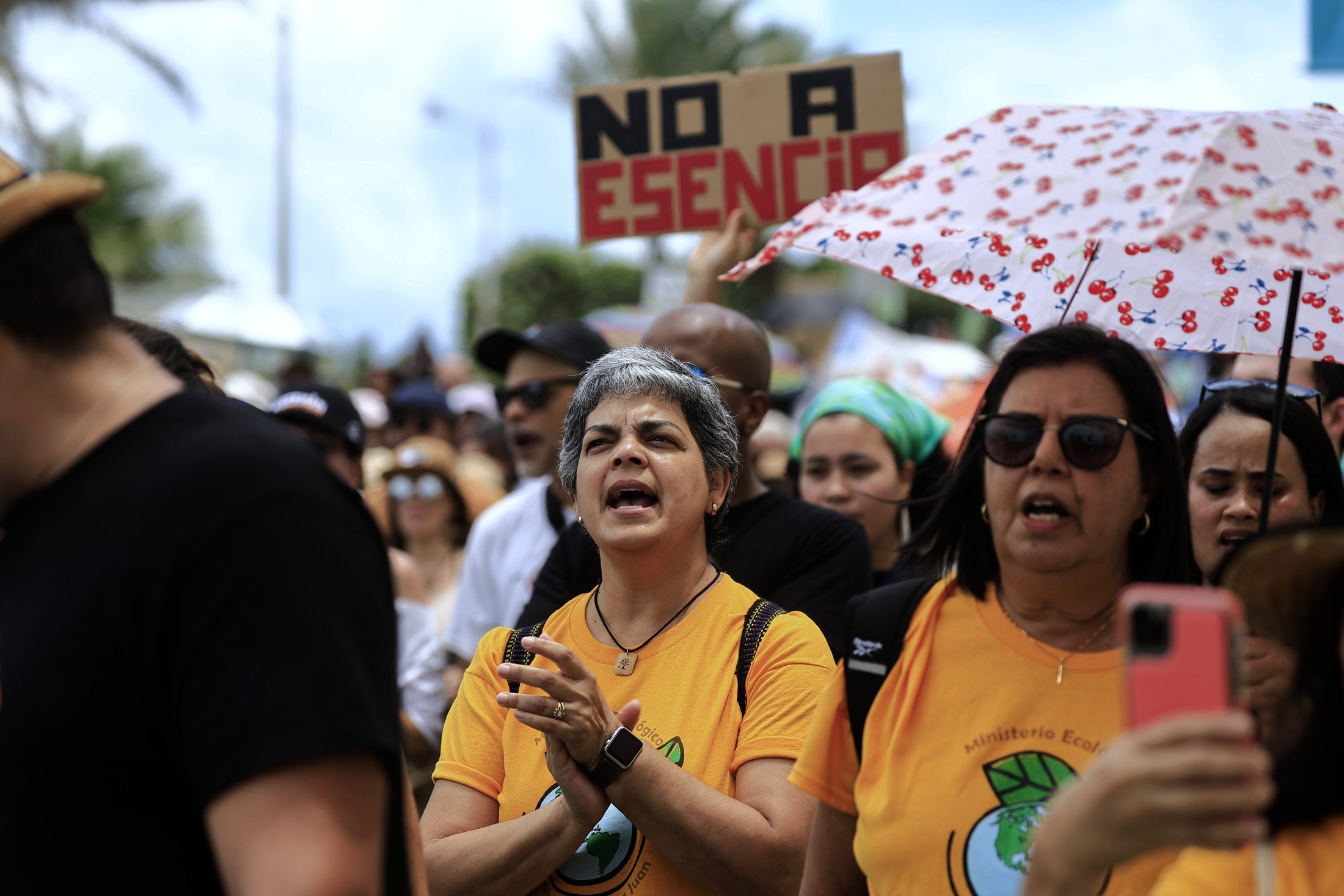
San Juan (PUERTO RICO), 3/28/2026.- Thousands of people marched through San Juan's main streets in protest against the construction of the Esencia residential and tourism project on the western coast of the island. The Parlor Magazine/Thais Llorca
Walking through Boquerón, Cabo Rojo, in Puerto Rico, one stumbles every few steps upon paragraphs from The Old Man and the Sea, The Pearl, or Treasure Island. Not because there are commemorative plaques to the works of Hemingway, Steinbeck, or Stevenson, nor because those classics of world literature were written here. Those pages are suggested in Boquerón by the coconut palms bent by the wind, rooted in salty sand, in the tinkling sounds of its artisanal pier, and in the ever-present figure of the pirate Cofresí (Roberto Cofresí y Ramírez de Arellano, 1791–1825) and rum. Phrases from those books resonate in the hollows that land jueyes dig into the damp earth, in the chirping of the yellow-shouldered blackbird and the Puerto Rican tody (mariquita, san pedrito), in the frights caused by native bats, and by mongooses and African monkeys introduced by pirates of one kind or another. And at dusk, the subtle perfume of the white sebucán flower intoxicates the most sensitive noses to the sound of coquí frogs.
Boquerón is part of a natural and human paradise where more than a dozen endemic species survive, along with a thriving native population. The urban development project, Esencia, will put them all in danger — closer to extinction than they already are.
The Esencia project, a $2 billion luxury residential and resort complex spanning 2,000 acres of Cabo Rojo's coastline, poses serious risks to the region's already strained water supply. The Puerto Rico Aqueduct and Sewer Authority has stated there is insufficient capacity to serve the development, and the project's own environmental impact statement projects consumption of over 1.25 million gallons of water per day — more than a third of the entire municipality's current daily use — a figure that does not account for the development's two golf courses. Beach and coastal land that has long been used by local residents for hiking and recreation has already been restricted since the project's land acquisitions began. The development also arrives as Cabo Rojo's housing market has already shifted significantly: a review of nearly 1,400 real estate transactions between 2019 and 2024 found a 290% increase in purchases made above asking or appraised value, and residents report being unable to compete for available properties.
Against this, a broad coalition — scientists, artists, editors, and community organizers — has gathered under the banner of Defiende a Cabo Rojo to fight the project. In March 2025, an estimated 50,000 people marched through Old San Juan in protest. The fight for Boquerón, in other words, is also the fight for the Puerto Rico that still exists outside the walls of luxury enclaves — the one that smells of sebucán at dusk and keeps its own time to the sound of coquí frogs.
“How are you going to ruin that view”
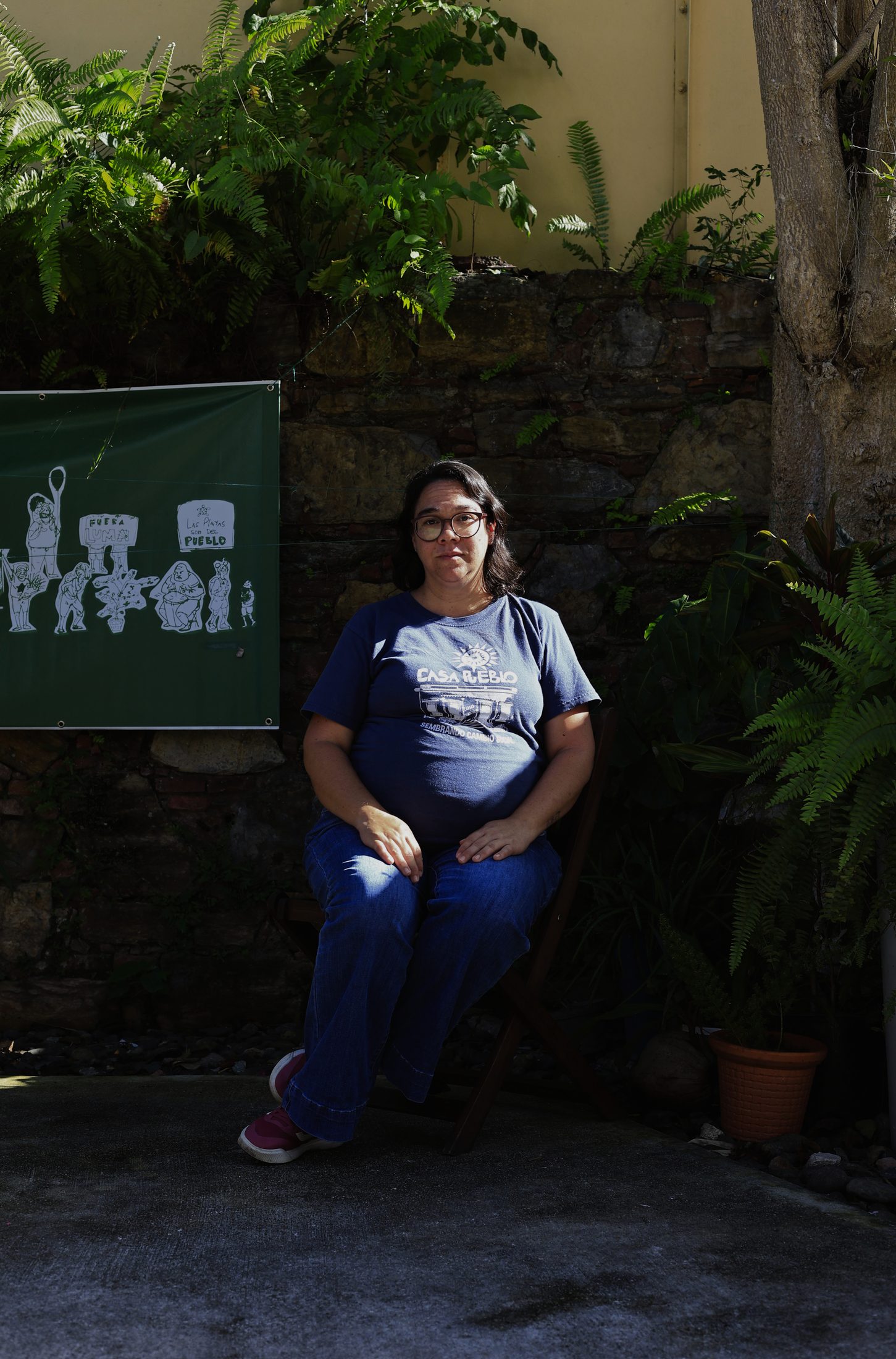
Sirena Montalvo Kats speaks warmly to The Parlor Magazine about her connection to the sea in Boquerón. A mother and a researcher, she represents the Cabo Rojo Committee for Health and the Environment, one of the eighty grassroots organizations that make up the coalition Defiende a Cabo Rojo.
As a child, her father had been a fisherman in those waters and later became a captain for the Marine Sciences Department of the University of Puerto Rico, where he had started as a diver, mechanic, and diesel engine technician for boats. He loved being soaked in Caribbean waters so much that in his free time he worked cleaning boat hulls in Los Pozos, an ideal place for that task.
“Part of his part-time work was taking care of boats and sailboats at the Boquerón nautical dock. I can say that until I was ten, every weekend meant being at sea with my father,” Sirena recalls.
She explains how in Los Pozos the tide has the perfect rhythm and depth to make diving and scraping boat hulls safe and comfortable. She believes “they won’t make that stretch of coast disappear,” but if the project moves forward, lifelong residents, fishermen, and adventurous sailors from around the world will lose access to this paradise—or have it severely restricted.
“Those of us who grew up there learned to swim there, to sail there, to fish there. All of those activities are part of the culture of growing up in that space,” she says.
Sirena also speaks about the deeper culture of Boquerón — its openness to outsiders, the way ecological struggle has been woven into community life for generations. She started attending meetings of the Cabo Rojo Committee as a teenager and volunteered with Casa Pueblo from age 14.
She wants to tell me about a man named Jimmy — a lifelong Boquerón fisherman, physical education teacher, graphic artist, and the town's Three Kings Day figure for 45 years. She remembers him telling her how he grew up going with his father by fishing sailboat to Los Pozos every weekend to clean the hull on its "flat little beach where the waves don't really come in." Two completely different generations, she says, with the same experiences in the same place.
"We don't want to be the last ones to have had them."
She recently took her daughter to Los Pozos for the first time. "It's really beautiful to see how you pass on those traditions. That bay and the space at Los Pozos — it really is something else."
Pointing to the topography, the mountain range that greets you coming down Highway 100 into Cabo Rojo, she adds:
"How are you going to ruin that view — the view that means so much to those who are from here, to those who have chosen to be from here, to those who come here as tourists? Those mountains are what you see when you go to eat in the village, when you go have a beer, when you go to the beach — that's the view."
“They will take the entire island”
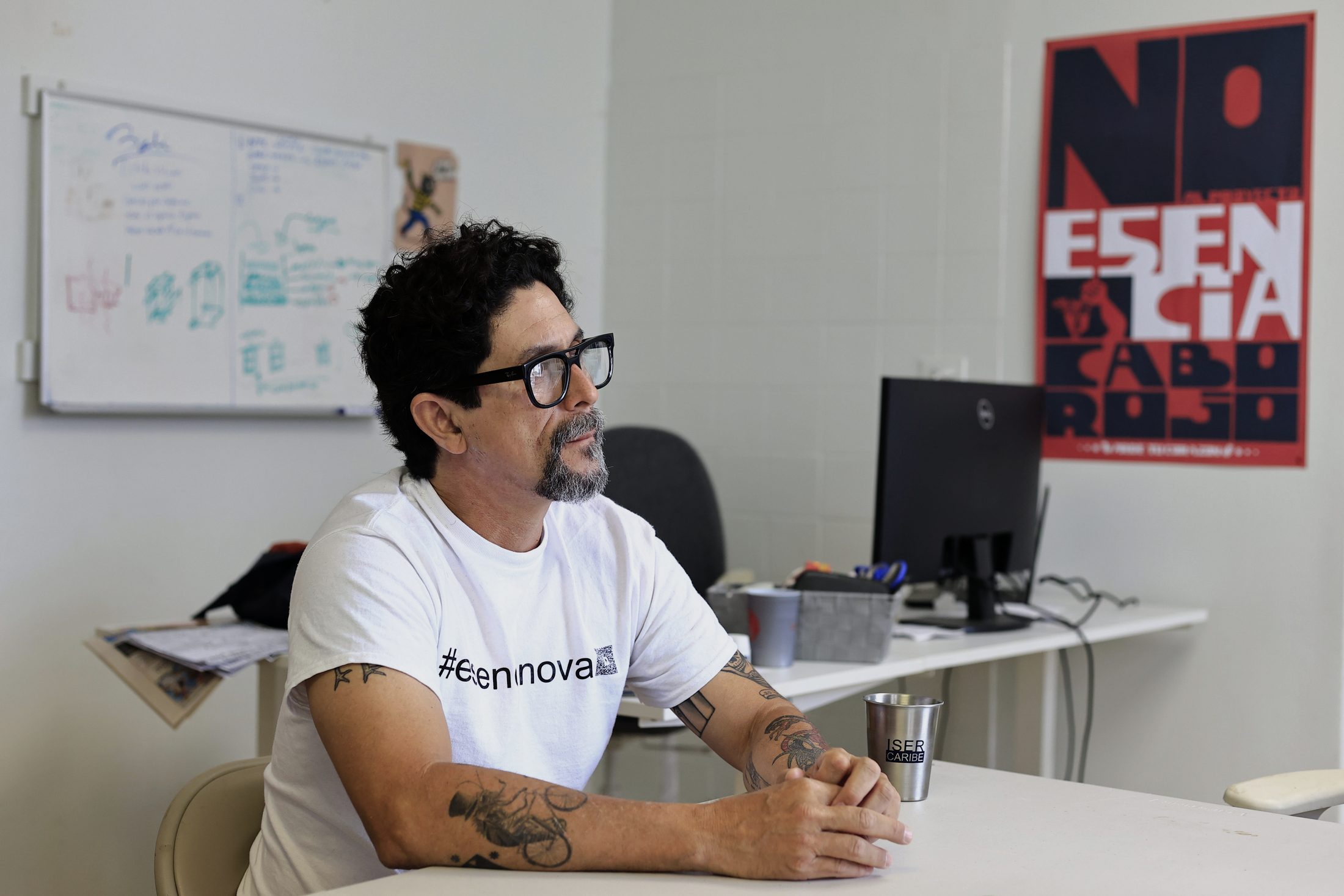
The Parlor Magazine brought together most of the community leaders featured in this report through the organization ISER and its director, Braulio Quintero Nazario, known in the West as Bali.
Bali grew up "between the waves of Rincón and the mountains of Maricao and Las Marías," on a farm with fruit trees and plantains. He studied biology at the University of Puerto Rico, completed a master's in Forest Ecology, and holds a Ph.D. in Environmental Sciences. His organization focuses on scientific research, environmental education, and community activism.
He is clear about what the coalition is demanding: repeal the $498 million tax credit decree granted to Cabo Rojo Land Acquisition; expropriate the company's private lands and convert them into public domain; and integrate the Los Pozos and Piñones de Melones area into the Boquerón State Forest, protected since Spanish colonial times. The third demand is co-governance between ecotourism operators, the community, and the government.
Two and a half years ago, he says, a small group of people read a letter and began organizing. In March 2025, they brought tens of thousands into the streets of San Juan.
"We managed to turn what we thought was a local struggle into a national one. All of Puerto Rico now knows and feels what is happening here."
He sees the fight against Esencia as part of a broader pattern of coastal development across the island — in Aguadilla, Luquillo, Isabela, Fajardo, Rincón, La Parguera. "This is developmental lawlessness. Let them do whatever they want — they have the money. Don't look at those with money; let them destroy, and we'll ask questions later."
Bali also notes that the land slated for development contains around 140 registered archaeological sites, and that among the threatened species is the Puerto Rican nightjar (Antrostomus noctitherus) — a bird of the coastal dry forests of southwestern Puerto Rico, considered extinct until it was spotted alive on a beach in Boquerón in 1961. An estimated 1,500 remain.
"This is the last call. If we don't defend this, they will take the entire island."
“They Think No One Lives There”
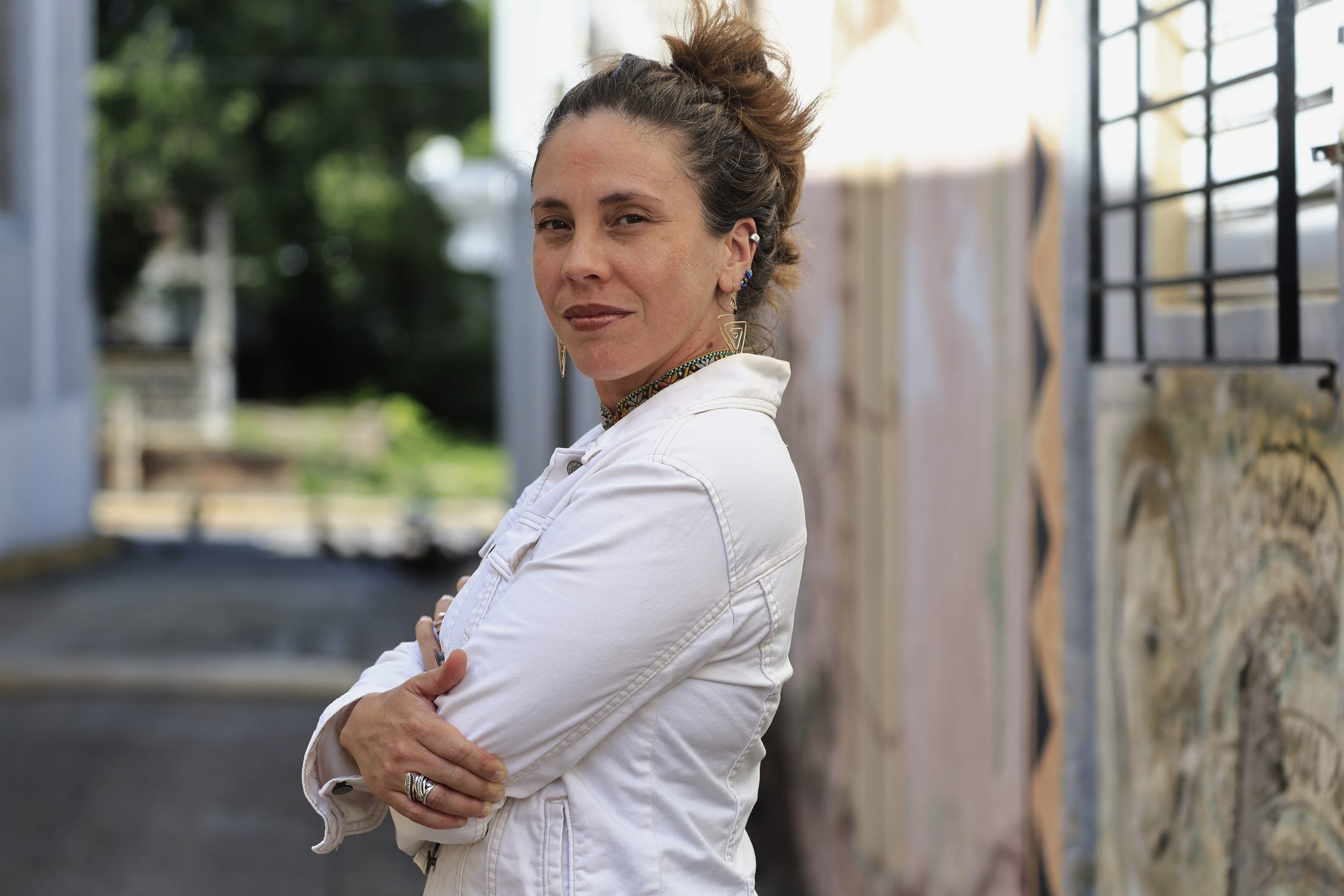
Beatriz Llenín Figueroa is an editor, translator, and co-founder of the independent Cabo Rojo–based press Editora Educación Emergente. She has been part of the Defiende a Cabo Rojo coalition for two years, both personally and as a representative of her press.
For Beatriz, the fight is partly a fight over language. She points to the project's name as a deliberate choice:
"It is not by chance that this is called Esencia, just as it is not by chance that the law called PROMESA is called 'promise.' This is even a fight for the meaning of words. They want to make us believe that a luxury settlement — which would be a catastrophe for Cabo Rojo, for the entire southwest region, for the whole country — is 'essential.'"
She describes Esencia as a continuation of a long pattern of displacement in Puerto Rico, but one that has reached a new scale.
"We are talking about people who have absolutely nothing to do with Puerto Rico, who come out of nowhere and think they can get away with everything. And the government acts as their servant. I imagine them looking at Google Earth, deciding how much they are going to take next — because they think no people live there, and no other species live there."
She also reflects on how the coalition works — horizontal, collaborative, attentive to the people within it as much as to the fight itself.
Support independent journalism
Enjoy reading The Parlor?
Become a paid subscriber to get full access, early releases, and subscriber-only extras.
Become a paid subscriber"People came to us after the March 28 march saying 'wow, this felt like a free and open demonstration.' People were so happy. And I think that has a lot to do with how we organize behind the scenes before we ever get there. For me, that is essential."
“Esencia is a population replacement project”
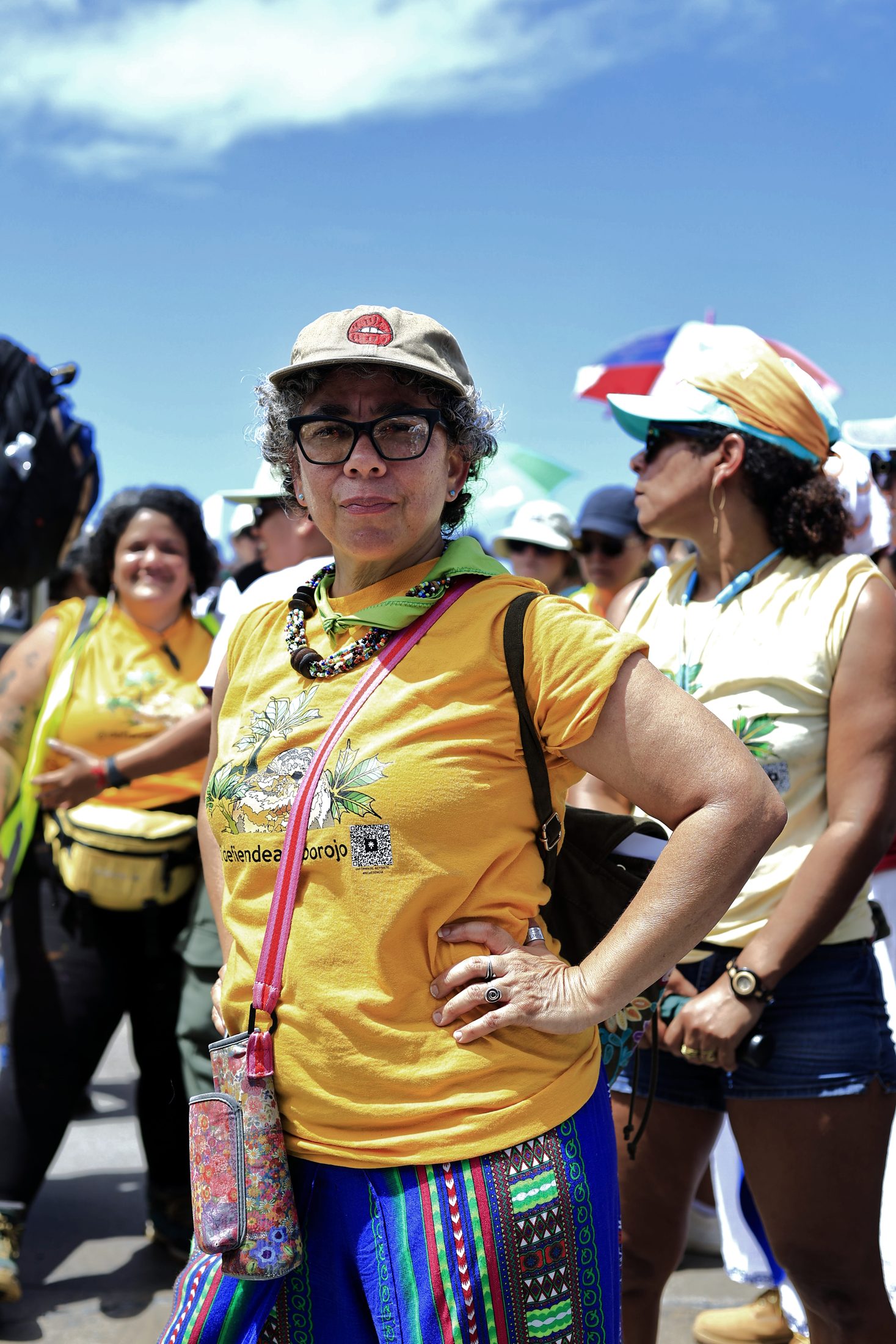
Damary Burgos is a visual artist, professor, and co-founder of the Brigada Solidaria del Oeste, which has worked on community reconstruction and mutual aid since 2016 — through PROMESA, Hurricane María, COVID, and the earthquakes. She sees a clear pattern in all of it.
"The government is negligent, the government abandons communities, the government makes communities more vulnerable, and the communities respond to disaster. Foreign capital is prioritized, and that makes families — especially the elderly — even more vulnerable. What we lack is sovereignty to make decisions that do not further precarize people."
The struggle is also personal. Two of the Brigada's founders who live in Boquerón are being forced out of the home where they have lived for 30 years because the new owner wants to turn it into an Airbnb.
A Puerto Rican from the diaspora raised in Philadelphia, Damary spent her summers in Cabo Rojo. She raised her children walking the bird reserve, learning the endemic species.
"Fishing communities that have had that connection to the sea and the land for generations deserve the right to exist, and for their work not to be sacrificed for a whim of foreign capital."
She leaves little room for ambiguity about what she thinks is really at stake:
"Esencia is not a development project — Esencia is a population replacement project. And all the struggles of this country find a kind of symbolism in the struggle against Esencia."
“They put forward a draft that was a trap”

Héctor Quintero Vilella spent 43 years at the Interamerican University of Puerto Rico and has worked as an environmental consultant for 30. "Every ecological study that's been done here, I've had to do it — and many times. So I've been able to analyze those studies thoroughly and see their flaws."
Two years ago he attended a town assembly and realized the scale of what Esencia could mean. He went home, combed through government websites and property registry records, and wrote a 69-page report documenting administrative, ecological, and legal problems with the project.
"Then they put forward a draft that was a trap," he says, still smiling.
One of his central findings: the project classifies golf courses, swimming pools, and private gardens as "green areas." The entire development — golf courses, roads, artificial landscaping — is impermeable, which worsens flooding and amplifies the effects of hurricanes. All potable water reaching the area depends on an irrigation system built in the 1950s.
"It's not just me saying it — the Department of Natural Resources said it, and the U.S. Fish and Wildlife Service doesn't support it either."
On beach access, the developers claim four public entry points. Héctor says there would effectively be three: one for employees, one for residents, and one for the general public — small, poorly located, and with controlled access. In Puerto Rico, he says, that is illegal.
He is also watching a broader shift. Puerto Rico recently passed a law that accelerates development permit approvals, and there are efforts to open natural reserves to construction. Esencia, he argues, is the largest and most ecologically damaging project the island has faced — but it is not alone.
"Anything goes now."
“Scientific opinions…simply don’t matter”
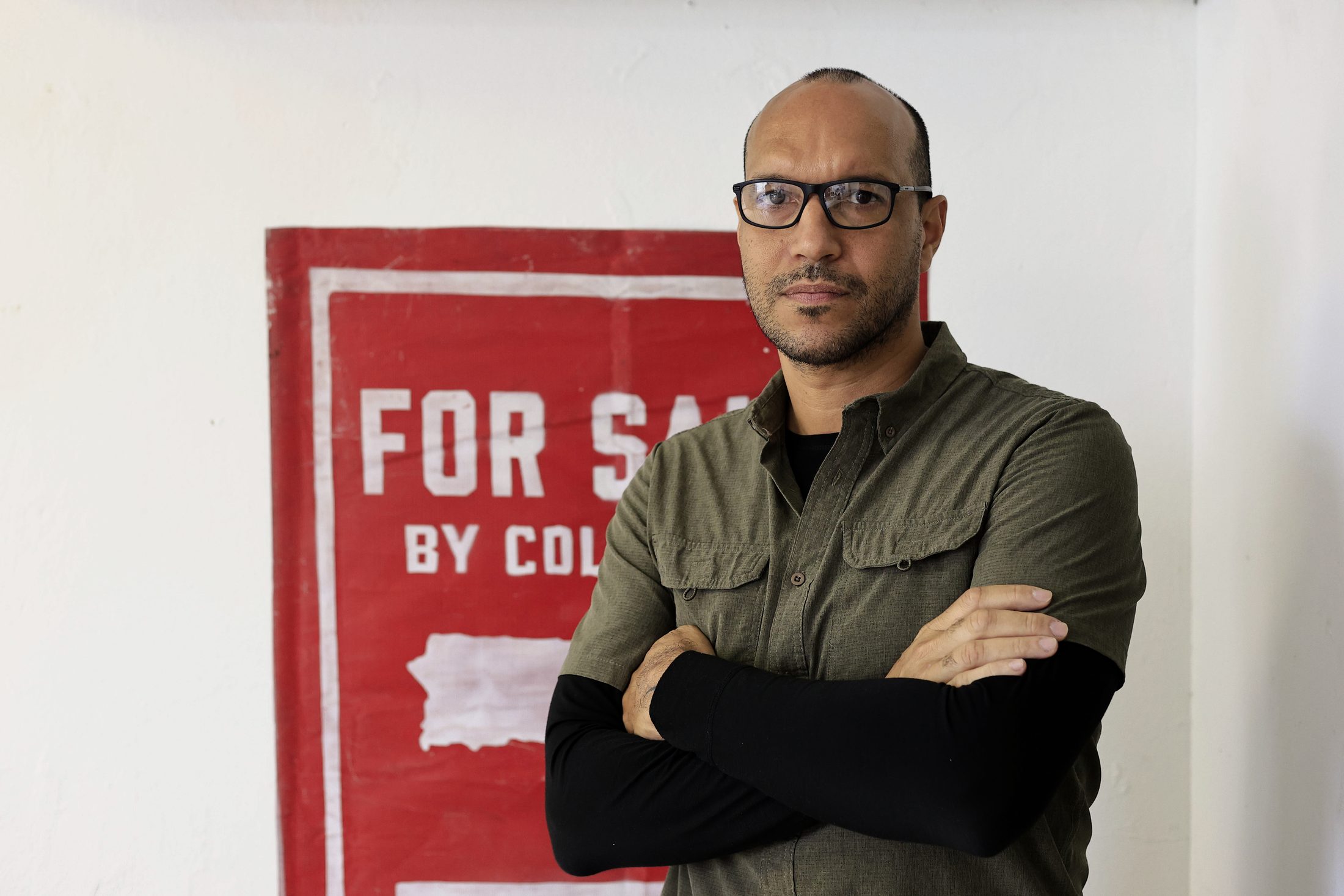
Ángel Luis Alicea León is a geologist specializing in soils, archaeology, and geophysics, with thirty years as a civil engineer and twenty as an environmental consultant. He came to speak with The Parlor as, in his words, "an expert witness for the people."
He begins with a structural problem: in Puerto Rico, geologists are not authorized as expert witnesses in their own field, and the government has made it difficult for scientists to obtain professional licenses.
"Our voice is legally very limited. In the permitting process, there must be a body of experts to certify legal compliance for each aspect — water management, solid waste, coastal zones. Not a single expert, in any of the documents, signed off on this project."
His assessment of the permit applications is direct: "Under no circumstances did the project comply with the law on any of the points submitted. None, to this day."
On the environmental side, he outlines several specific risks. Sealing the ground with concrete and turf would cause catastrophic runoff, preventing water from infiltrating the soil. Disrupted sediment balance would damage coral reefs and mangroves. Golf courses alone would spray millions of gallons of water carrying chemical and physical material directly into the coastal zone.
Then there are the caves. The limestone hills on the site naturally form cavities — and Esencia's own reports mention caves with corridors up to thirty meters long, without noting that they contain petroglyphs, and without studying what construction above them would mean in what he describes as the highest seismic activity zone in Puerto Rico.
"I have seen firsthand how the government has gradually sidelined scientists in Puerto Rico. Scientific opinions — protective of environmental well-being and people's well-being — simply don't matter."
What Is Truly Essential
The people gathered under the banner of Defiende a Cabo Rojo do not share a single profession, or a single argument, or a single relationship to this place. There is a marine researcher who learned to swim at Los Pozos, a geologist who reads the language of limestone and caves, an environmental consultant who spent months combing through permit applications, a community organizer who has spent years distributing water and supplies to people the government left behind, and an editor who understands that the first battlefield is always language.
What they share is the conviction that what is happening in Cabo Rojo is not an isolated real estate dispute. It is the latest and largest instance of a pattern — the gradual transfer of Puerto Rico's public land, coastline, and resources to outside capital, enabled by a government that has chosen to serve investors over residents. The permits that don't comply with the law. The tax credits granted to a predominantly residential project under the guise of tourism. The beach access points that exist on a rendering but not in reality. The water system built in the 1950s that cannot sustain two golf courses. The caves full of petroglyphs that appear in no impact study.
In March 2025, 50,000 people marched through Old San Juan. The coalition has not stopped since.
The Puerto Rican nightjar was considered extinct for decades. It was spotted alive on a beach in Boquerón in 1961. There are an estimated 1,500 left. The people fighting for this place would like it to stay that way — and they would like the same for themselves.

1 / 13
Cabo Rojo (PUERTO RICO), 04/08/2026. The Parlor Magazine/Thais Llorca
About the author
Iñaki Estivaliz
Iñaki Estívaliz is an independent journalist with 25 years of experience publishing in both major and alternative media across several continents, focusing on stories of human interest. He lived in Puerto Rico for 17 years, writing for a wide range of media outlets on the island. His reporting has taken him to border regions in Panama and Colombia, El Paso and Ciudad Juárez, Standing Rock, and Iceland, as well as to elections and conflicts in Venezuela, Bolivia, and Mexico. Over the past year and a half, he has reported from Libya, Syria, and Palestine.
Conversation
A space for Parlor members. Be generous, be real.
Loading…