
Scorched Earth
War, ecocide, and the generational environmental toll on Lebanon and Gaza

Varsha Yajman
April 29, 2026
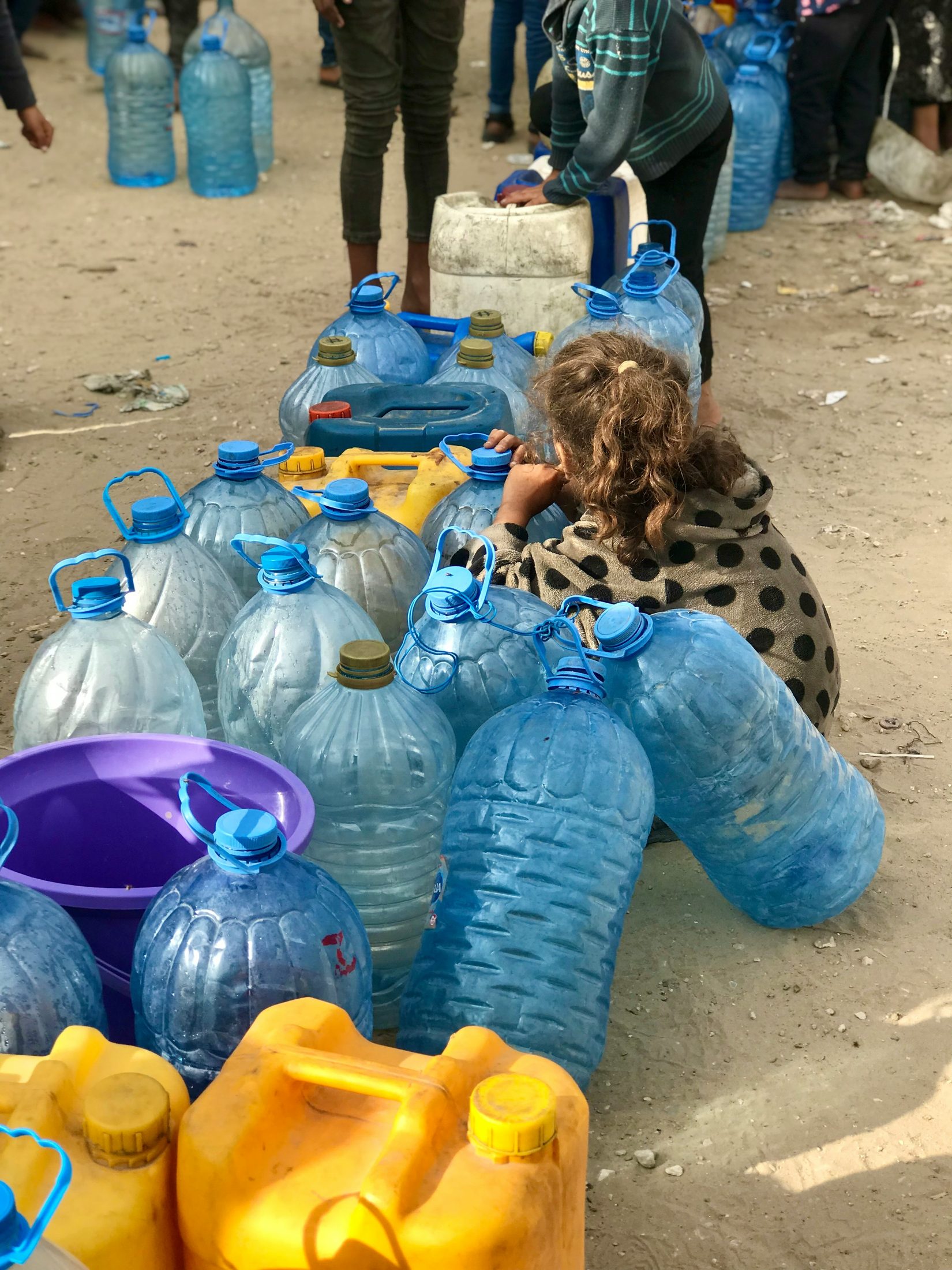
Photo by Emad El Byed on Unsplash
On April 8th, hours after a ceasefire was announced in the US-Iran war, Israel launched what it called its largest coordinated strike on Lebanon since March — over a hundred airstrikes hitting dense residential and commercial areas of Beirut without warning, killing at least 254 people and wounding more than 1,000 others. Lebanese Red Cross ambulances fanned out across the city. Hospitals flooded. Lebanon called it Black Wednesday.
The headlines that followed tracked the geopolitical fallout — the ceasefire disruption, the diplomatic condemnations, the death toll. What they did not track was what those strikes left in the soil, the water, and the air — and what that contamination will mean for the people of Lebanon for decades to come.
Everyday, through our social media feeds, we are barraged with statistics about the economic and human implications of war and genocide in Lebanon and Gaza. What is often ignored are the impacts on necessities like food, water and shelter and the long-lasting global impact of the chemicals released into the environment after prolonged bombardment.
In fact, the key international organisation on climate change, the UNFCCC Conference of the Parties (COP), still does not acknowledge military or conflict-related GHG emissions.
The Long-Term Effects of War
Picture a family in southern Lebanon, somewhere below the Litani River, deciding whether to stay or leave. The bombs have stopped — for now. But the land their family farmed for generations is contaminated. The water they drink runs through soil laced with toxic residue from airstrikes. The animals they kept are gone. The choice to return is not really a choice at all.
The environmental impacts of genocide and war are more than numbers of emissions or abstract weapons. In an interview with The Parlor, Inesaf Benzaki, Campaigns Lead at Greenpeace MENA, highlights the intersection between climate and conflict, noting that "environmental damage undermines livelihoods, culture, and long-term economic stability."
Benzaki has spent months using satellite imagery and tracking local and international news to understand the short and long-term effects of damage to civilian infrastructure across Lebanon and the broader region. What she has found is stark: contamination of soil and water, and decades-long ecosystem degradation from the toxic pollutants and greenhouse gases released by airstrikes, weapons like white phosphorus, and fires that burn long after the cameras leave.
The damage does not stay where it lands. Benzaki insists that while the conflict is in a specific region, "the effects will be felt for decades if not longer globally" — not just on the economy or energy security, but on the global climate itself. The MENA region's concentration of oil, gas, shipping routes, and energy infrastructure means that escalation here sends shockwaves far beyond its borders.
Meanwhile, families keep moving. Benzaki has tracked displacement patterns shifting from below the Litani River to areas above it and around the periphery of Beirut — entire communities pushed north by a combination of bombs and poisoned land. And for those who do stay, daily life is a negotiation with scarcity: fuel, electricity, and mobility are restricted, the infrastructure that sustains ordinary existence has been deliberately targeted, and the environment itself has become a weapon.
Food as a Weapon
In Beirut, Dr. Rami Zuryak watches this unfold with the particular grief of someone who has spent his career studying what happens when food systems break down. As director of the Food Security Program at FAFS and a professor at the American University of Beirut, he has long argued that food security is not just a humanitarian issue — it is a political one. And in Lebanon and Gaza, it has become a tool of war.
Support independent journalism
Enjoy reading The Parlor?
Become a paid subscriber to get full access, early releases, and subscriber-only extras.
Become a paid subscriber"The most primordial connection between people and their environment," he tells The Parlor, "is the linkage among food, land, and people." When the soil that animals graze on is contaminated, it moves through the food chain — into the animals, into the communities that consume them, into the plants that grow from the earth. The damage is not contained. It compounds.
Zuryak is direct about what he sees happening. "When a country such as Israel, known for ecocidal tendencies and replacement policies, bombs, it does not bomb to destroy military infrastructure but to destroy indigenous culture, infrastructure, and social structure." He identifies three mechanisms through which food becomes a weapon: destroying the basic means of food production by contaminating land; dismantling the networks that distribute food through blockades and targeted strikes on infrastructure; and forcing communities into modes of consumption so degraded they can no longer maintain culturally appropriate diets or the dignity that comes with them.
For food security to exist, Zuryak says, four conditions must be met: availability, access, autonomy over dietary choices, and stability. War methodically dismantles all four.
Benzaki echoes this from an environmental angle, pointing to Lebanon's particular vulnerability as a resource-rich country that has been unable to benefit from its own natural wealth due to decades of corruption and conflict — what economists call the resource curse. The result is a compounding cycle: conflict degrades land, reduces productivity, limits water access, causes chemical contamination, and depletes biodiversity. Each war leaves the next generation with less to build from.
A Call to Action
The problem with covering this story is that much of the damage cannot yet be fully confirmed. Benzaki is candid about the data gaps Greenpeace MENA faces near military zones and in occupied territories — the constantly changing conditions, the technical demands of satellite monitoring, the long verification processes, the blackouts and censorship that make clarity impossible in real time. She can only "confirm the scale, accuracy and severity of reported impacts after a cessation of hostilities."
In the meantime, awareness remains the first form of action. Coverage of conflict tends to focus on direct casualties and immediate economic impact, sidelining the slower, longer catastrophe unfolding in the environment. That silence is not neutral. It shapes which harms get addressed, which communities receive support, and which losses are simply absorbed into the background of history.
Greenpeace MENA is calling on all parties — governments, international actors, state and international organisations — to immediately cease hostilities, protect civilians and vital infrastructure, respect international law, and pursue diplomacy. It is the minimum the moment demands.
Beyond institutional calls, something else is moving. Around the world, people are taking to the streets. Others are going further. Violet Coco is one of the people who boarded the Freedom Flotilla Coalition — a grassroots solidarity movement working to break what it describes as Israel's nineteen-year illegal siege of Gaza — which departed Italy at the end of April 2026. "Gaza has been under Israel's illegal siege that is starving the Palestinian people," she told The Parlor. "Silence and passivity in the face of genocide is not an option."
About the author
Varsha Yajman
Varsha Yajman is a lawyer, writer and advocate based in the land of the Gadigal People of the Eora Nation. She writes about the intersection of topics like climate justice, mental health and race.
Conversation
A space for Parlor members. Be generous, be real.
Loading…