
The Real Sustainability Pioneers
Fast fashion’s Greenwashing Machine
Varsha Yajman
July 11, 2026
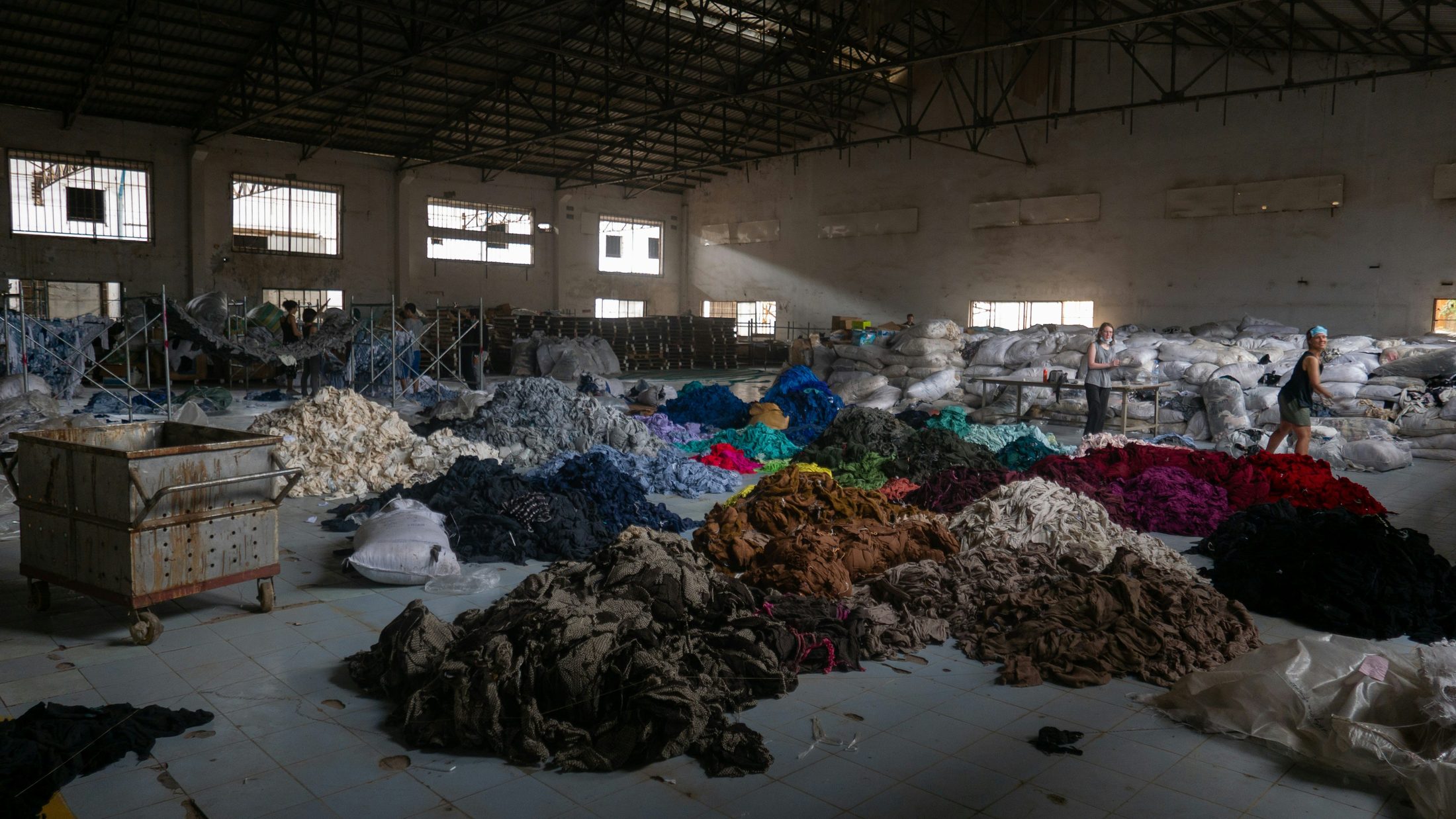
Photo by Francois Le Nguyen on Unsplash
The sustainable fashion market is on the rise, projected to grow from USD 12.44 billion in 2026 to USD 27.96 billion by 2034.
While this is good news, global textile production is on the rise, with up to 40% of major fashion brands increasing their emissions due to overproduction and shipping, ultimately leading to more waste.
So when major fast fashion brands are jumping on the sustainability bandwagon, there remains a question as to whether they are looking to change their ways or simply paint their brands with a stroke of greenwash.
Shein buys Everlane
This question arose in May, when Puck News reported that Shein, one of the world's most polluting fashion brands, had acquired Everlane, a brand known for its sustainability and transparency, in a $100 million deal.
Meanwhile, Everlane said it was valued at $250 million. Still, reports in March said I L Catterton and Everlane’s current C.E.O., Alfred Chang, were seeking an investor due to $90 million in debt.
“Everlane was known as arguably one of the first, biggest and most popular sustainable brands”, Sustainability educator Nina Gbor says, noting that the brand helped popularise the idea of sustainable fashion.
Everlane has had initiatives to discontinue certain plastic materials, to redevelop all raw materials with synthetic fibres into recycled components, and to offer "Choose What You Pay" sales, which allow shoppers to see how much each item costs to produce and how big the company's markup is.
Meanwhile, Shein emitted 16.7 million metric tons of CO2 in one year alone and has received the lowest possible rating in commitments, renewals, advocacy, and clean shipping, and a D-minus in materials and circularity.
However, Gbor says that the Everlane acquisition by Shein “isn’t too shocking” and indicates
“Ultra-fast fashion’s takeover of ‘sustainable fashion.’”
She points to the similarities between Shein and Everlane’s business models: “predicated on endless growth, overproduction, and rapidly increasing consumption.”
“These are fundamentally some of fast fashion’s founding principles”, she says.
While Gbor says Shein’s acquisition of Everlane could be “attempting to expand their empire globally” by acquiring Everlane, she also calls out the potential use of greenwash.
“It’s just old fashioned marketing tactics to appear more ethical by having a ‘sustainable’ brand in their portfolio.”
Fast fashion’s partnerships with sustainability
Apart from outright sales of sustainable fashion brands, fast fashion brands are also engaging in partnerships to paint their brands with sustainability.
In March, Zara announced a collaboration with John Galliano, the former creative director of Dior and Margiela.
The two-year partnership is said to “re-author the brand’s archives…deconstructing and reconfiguring them into new seasonal expressions and creations.”
Galliano is not Zara’s first high-end partnership; it has previously collaborated with designers like Narciso Rodriguez and Kate Moss. However, this partnership is not just a drop or two, but about giving the brand a new face for the long term. Galliano will be taking garments from Zara’s old stock and previous seasons and upcycling them into new products.
Zara’s focus on archives, reworking existing materials, and the move toward seasonless collections suggests a more sustainable approach to fashion production.
However, as noted by Good On You, a website that rates fashion and beauty brands on their sustainability, Zara's core is “an unsustainable ultra fast fashion model due to its quick release of trend-led styles, aggressive marketing practices, and very large number of products.”
This same risk applies to H&M’s new Stella McCartney collection, which is said to feature certified, responsibly sourced materials. McCartney is considered a "pioneer" in sustainability in the fashion industry.
In an interview with Vogue Arabia, McCartney says she chose to collaborate with H&M to attract people who can afford a lower price point and also that her "goal is to infiltrate from within, and show people that they can work this."
However, as of 2019, the H&M group was selling an estimated three billion articles of clothing per year, and, as noted by The Carbon Closet, such collaborations do not remove the risk of mass consumption, ultimately resulting in more garments and more waste. These collaborations also do not compensate for H&M’s lack of information on its sustainability certification or labour practices.
The waste is still there; these are the real pioneers of change
With mass consumption still at its core, the clothing from these brands ultimately ends up in the Global South. Kantamanto Market in Accra receives an estimated 15 million garments per week from the Global North, 40% of which are unsellable and are discarded immediately.
Support independent journalism
Enjoy reading The Parlor?
Become a paid subscriber to get full access, early releases, and subscriber-only extras.
Become a paid subscriberThe Revival, a community-driven, sustainable fashion initiative based in Ghana, is working to reduce textile waste, saving 7 million garments from landfill in just 2 years, with tailors upcycling within Kantamanto itself.
The Revival tackles textile waste “through upcycling, education, and job creation” and empowering youth and women in the Kantamanto Market to be part of the “circular economy practices, and fostering economic opportunities.
Vida Oppong, one of the women traders from Accra, Ghana, at Kantamanto Market, told Parlor Magazine that “giving these clothes a new life means giving value to something that others have already discarded.”
Oppong said that by upcycling these clothes, they generate income and support for themselves and their families while mitigating the environmental waste.
“It is also a way of showing creativity and proving that something considered old can become beautiful and valuable again”, she added.
Oppong noted the steps involved in upcycling clothes: first, sorting them into items that can be sold and those that need repair or transformation. Next, the clothes are cleaned and inspected. Oppong says that depending on the condition, traders will repair them, combine different pieces, add new details, or completely redesign them into something new. After sewing and finishing, the traders quality-check the garments before selling them.
“The process takes creativity, patience, and skill because every piece is different.”
Oppong has been working in Kantamanto for 25 years and says that when she started, “the quality of clothing was generally much better.”
“Today, we receive more clothes than ever before, but a large percentage are damaged, stained, torn, or made from lower-quality materials.” She said that the decrease in quality has affected traders' income as many of the bales of clothes they buy have pieces that cannot be sold, increasing “the burden on our community and environment.”
Oppong hopes to “see fashion companies take more responsibility for the clothing they produce and where it ends up.”
"Too often, communities like ours are left to deal with the waste created by overproduction and overconsumption elsewhere," She says, "Companies should focus on making better-quality garments that last longer and invest in solutions that support the people handling these clothes at the end of their life. I would also like to see more partnerships with traders, upcyclers, and local communities, as they have valuable knowledge and experience. We are not just managing waste, we are creating solutions."
Kantamanto has shown the world that circular fashion is possible, but the responsibility should not fall only on us. It must be shared across the entire fashion industry.
Change is possible
The real champions of sustainability aren't the fast-fashion brands paying their staff for greenwashing, but the traders in Kantamanto, organisations like The Revival, and the brands that place sustainability at their very core.
And as Gbor says,” sustainability is not losing the battle. It might still work if it’s done right.”
Gbor says that effectively addressing the systemic issues in the fast-fashion industry requires “broader policy and regulatory measures.”
Some countries and states across the world have already taken the steps to start this process. For example, last year, France passed legislation penalising fast-fashion companies for their environmental impacts. Alongside France, the European Parliament has passed laws requiring EU countries to provide proof of sustainability claims and has also banned the destruction of unsold clothes, shoes and accessories.
And while not enough to change the system, Gbor notes the power of individuals in mitigating waste, emissions and overconsumption as well as being able to “inspire collective change and influence companies”
Everlane itself is a great example of individual change, as just a week after it was sold, its co-founder, Michael Preysman, launched a waitlist group called stillradical.com, which, as of June 16th, has almost 100,000 signatures.
Preysman was CEO until 2022, then served as executive chairman for three years before stepping down from the board earlier this year.
On the sign up page, Preysman states: “I started Everlane in 2011. On May 29th, the current management team sold it to Shein. So we’re starting over. Same principles, but a new take. And this time: no venture capital, no private equity.”
"Preysman was appalled by the purchase of Everlane by Shein and the outcome for the company that he’d built around radical transparency", reported Forbes. We have yet to see what Presyman’s waitlist will turn into, but there is no doubt this is a bold move.
In an industry that can feel hopeless at times, the work of the communities and brands across the globe that do see sustainability as a core value rather than an afterthought is crucial.
About the author
Varsha Yajman
Varsha Yajman is a lawyer, writer and advocate based in the land of the Gadigal People of the Eora Nation. She writes about the intersection of topics like climate justice, mental health and race.
Conversation
A space for Parlor members. Be generous, be real.
Loading…