
Smells Like Resistance
How Bright Black Tells Stories of Black Diaspora Through Scent

Lindsey Brock Morales
October 30, 2026
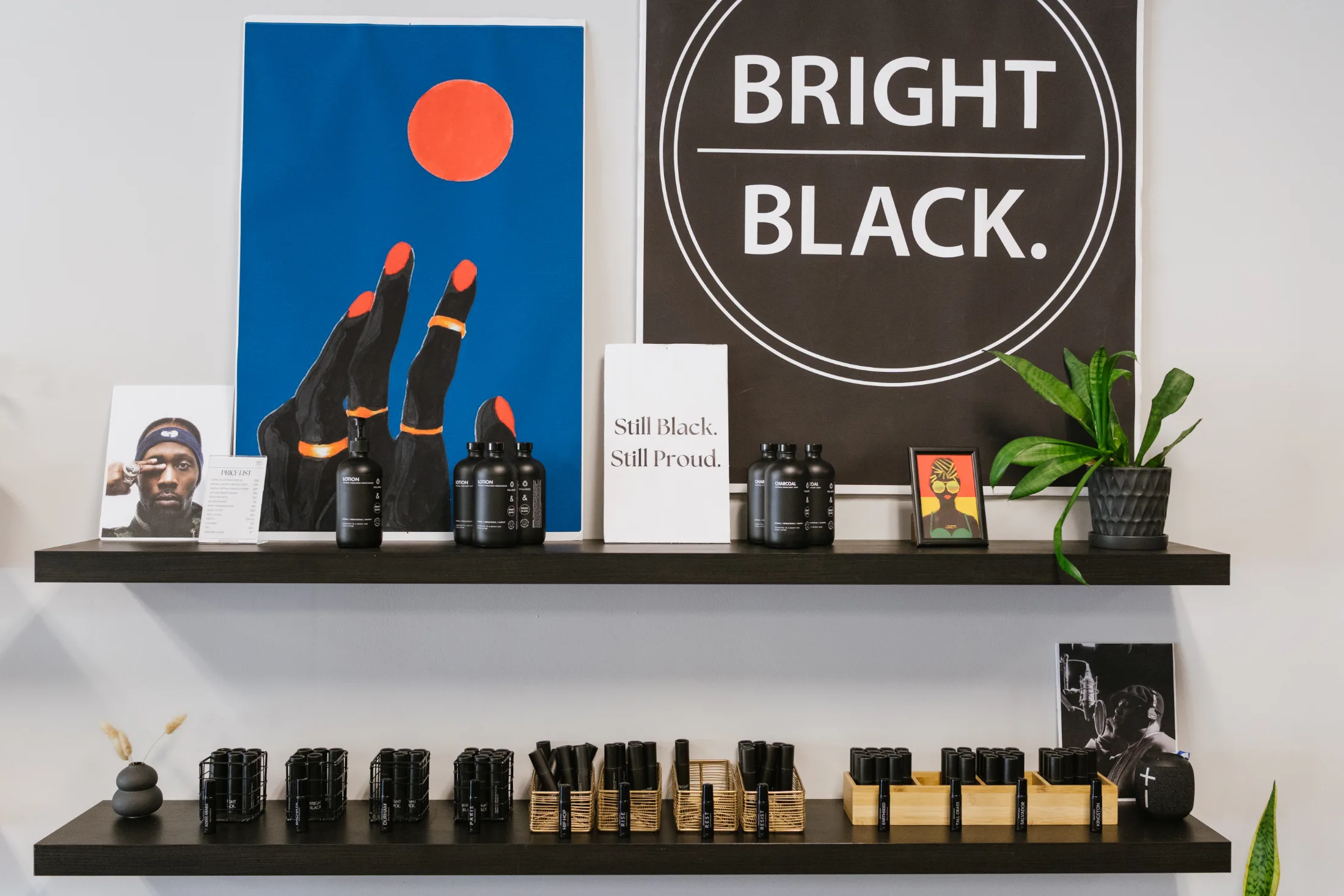
Inside Bright Black’s Durham space, Black art, cultural expression, and fragrance come together, reflecting the company’s mission to celebrate Black identity and preserve cultural stories through scent. Used with Permission.
Before founding Bright Black, Tiffany Griffin worked as a social psychologist studying racial identity, discrimination, and institutional decision-making. Her career eventually took her from academia to the U.S. Senate and then into the federal government's international development work, where she spent nearly seven years studying resilience.
Today, she approaches many of the same questions through an entirely different medium: scent.
Based in Durham, North Carolina, Bright Black creates fragrances inspired by Black culture and the African diaspora. But the business extends well beyond its candles. Its physical space hosts scent-making workshops, activities for children and caregivers, and community organizing efforts. Tiffany sees the company as both a cultural preservation project and an experiment in what socially responsible entrepreneurship can look like.
We spoke with Tiffany about the power of scent, the importance of supporting Black-owned businesses, the relationship between rest and collective care, and the challenges of building a business that serves its community without exhausting the people behind it.
This interview has been edited for length and clarity.
The Parlor: What did you do before starting Bright Black Candles, and what led you to decide to become an entrepreneur?
Tiffany: I'm a social psychologist by training. I did research on the relationship between racial identity and racial discrimination, particularly for health and education. I was really fascinated by the idea of institutional discrimination and what psychology could say about it.
I focused a lot on decision-making and how one decision may or may not be discriminatory, but when you look at patterns of decisions, you can start to see themes reveal themselves that, in the aggregate, are discriminatory.
I left academia because I felt like the incentive structure wasn't quite there for me, and went into federal policy. First, I was on the Hill, working in a New Mexico Senate office in D.C., doing health policy. This was around the time of the ACA battles and the Supreme Court, and there was just a lot of partisanship and fighting. The ratio of policy to politics was skewed for me.
So I left the Hill and went to the executive branch. This was a time when Obama and Secretary Clinton were looking for social psychologists and social scientists more broadly to help them figure out how to operationalize resilience in the federal government, particularly in the international development space. I heard that and jumped at it.
I was there for almost seven years. It was phenomenal. I did a ton of resilience work. I was tasked with helping teams figure out how to measure it. How do you know it when you see it? And then how do you program it? How do you feed all of your learnings back into programming?
When the administration changed and Obama went out, I left the government shortly thereafter.
I knew I wanted to continue this thread of honoring Black stories, just maybe not with data anymore.
I knew I wanted more control over my time. I was a new mother at the time, and I knew I wanted to play in the space of entrepreneurship and the private sector because I felt then, and feel even more now, that the private sector affords you a type of agility that the nonprofit sector and philanthropy don't.
That's what Bright Black is at a structural level. In practice, Bright Black harnesses a lot of what I had done before using numbers, but using scent.
The Parlor: Why did you choose scent as a storytelling medium?
Tiffany: I wanted a more embodied approach to storytelling, one that could cut through cognitive blockages.
I'll give an example. We have a Paris candle in our Diaspora Collection, and people are like, "Oh my gosh, of all the cities in the world, why in the world did Paris make the cut? There are so many Blacker cities than Paris."
First of all, you're starting from a point of curiosity. That's openness, and that's a form of connection.
If I had come to you and said, "Lindsey, the French government stopped collecting data on race, and if they don't collect data on race, how are they going to fight health disparities and education disparities?"—if you're not a data nerd, you're like, whatever.
Or if I said, "African Americans and folks from other parts of the African diaspora have completely different experiences in France, and let me tell you why that matters."
For some people, they're into that. I'm into it. I'd be like, tell me all day, all night. But for a lot of people, that's a hard entry point.
Scent is a really nice entry point for facets of Black culture that matter to Black people like me. It's a way to enter into it from a space of openness.
I wanted to fill in the gaps that words and pictures leave. I wanted people to feel. I wanted people to experience. And then I wanted to bring in that prefrontal cortex, cognitive brain. We'll get there, but I didn't want to start there.
I felt—and to be totally honest, it was around the time of the killing in the church in Charleston—that we were entering a new moment.
I have never felt like we were in a racial utopia. However, that instance, the way it was messaged and discussed, and everything around it, made me feel like we were entering a new phase, or maybe returning to an old phase, of the United States.
I thought, we're going to need different tools to fight this form of noxious hatred.
Do I think a candle is going to heal someone like Dylann Roof? No. But I do think there are a lot of really good, curious people who don't know about things outside of their experience.
If you want to know, and maybe you have certain blockages to that knowledge, but you have a generalized openness, those are my people.
Some of those people are non-Black people, but some are Black people.
My husband's Jamaican American, and I'm African American. Our families had to learn a lot about each other. There needed to be some openness to learning about our respective cultures, even within the diaspora.
That's why scent. I felt like we needed different tools, and we needed a tool that was more embodied and not cognitive.
The candles were just the mechanism.
There's a whole history around candles and marking moments, ceremony, solidarity, and celebration, and all of that is true as well.
But what kept me up at night was: How can I use the power of scent to communicate when we're all dealing with so many blockages to truly hearing each other?
The Parlor: How does scent connect people across different backgrounds?
Tiffany: People have different experiences of scent.
When people think about what brings people together, they think it's food. But so much of taste is scent.
Scent is directly connected to the emotion and memory centers of our brain. There's so much potential for self-regulation and connection.
It's very transportive.
We have a Durham candle, for example, and people will say, "Oh my gosh, this just brought me back to childhood." You would drive through Richmond or Durham, and it would smell like this.
Or there was a man I met at a market who happened to be Ethiopian, and he was in tears. He said, "This is Ethiopia. This is my grandmother's house. How did you do that?"
Some of the scents are very transportive. Some are more symbolic, like Paris. People are like, "Please tell me this does not smell like the Paris metro." No, it doesn't. It's more symbolically representative of Paris.
Scent can stop you in your tracks.
People will say, "Oh my gosh, I was in the grocery store and I smelled my nana," or something smells like scented crayons they used as a kid. It's really fascinating.
The Parlor: How do you engage with the Durham community?
Tiffany: We do lots of different activities.
We do candle-making and perfume-making, where folks can come in and make their own custom scent.
We also do scent storytelling workshops, where we teach people how to go from a memory, a concept, a place, or a vision into a scent form, which is really fascinating.
We do a ton of work with kids. We work with kids and their caregivers on how to use scent to navigate big feelings and support emotional literacy. We also do scent art workshops where kids design their own scents. They're very uninhibited, and it's really cool to see.
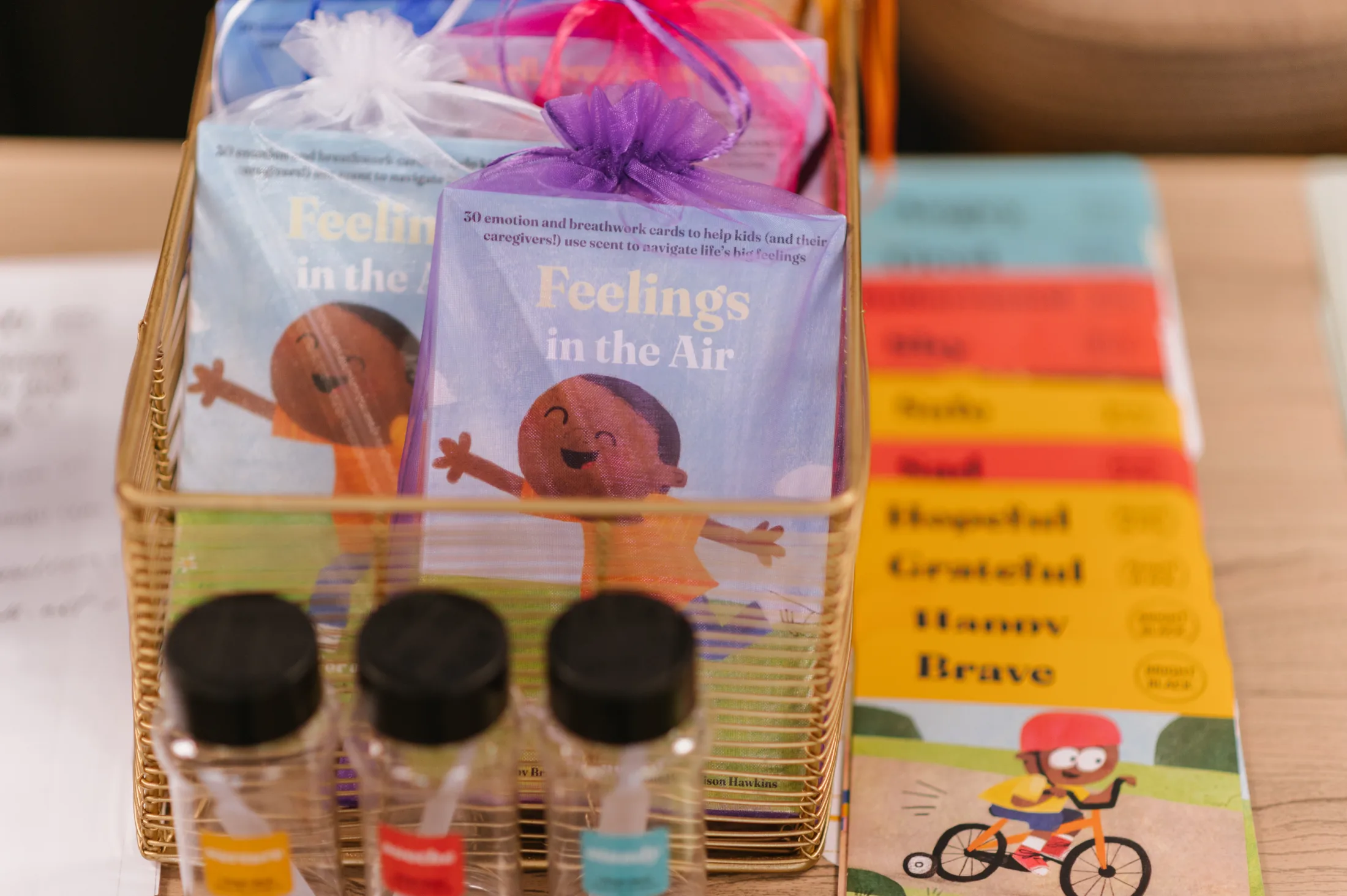
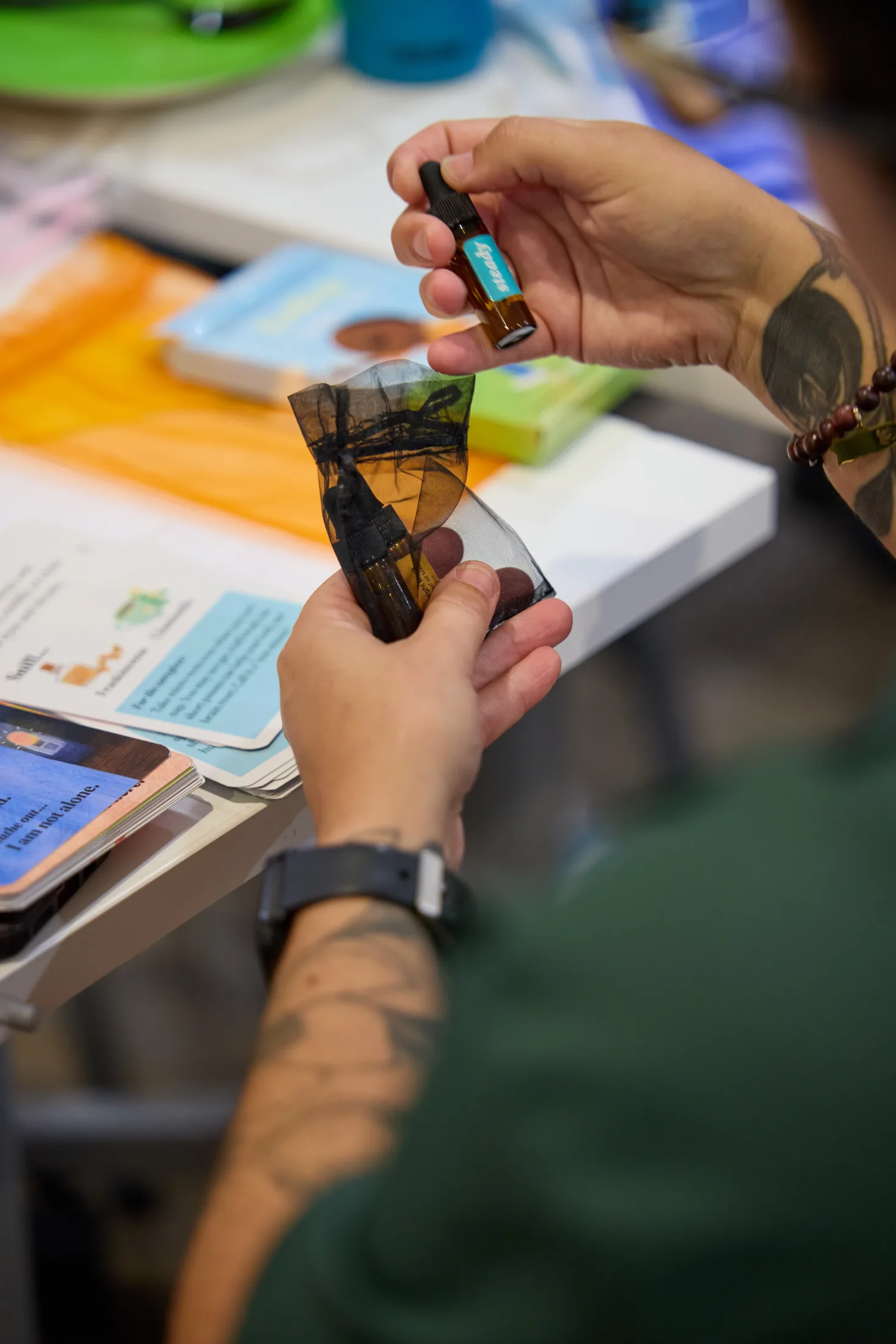
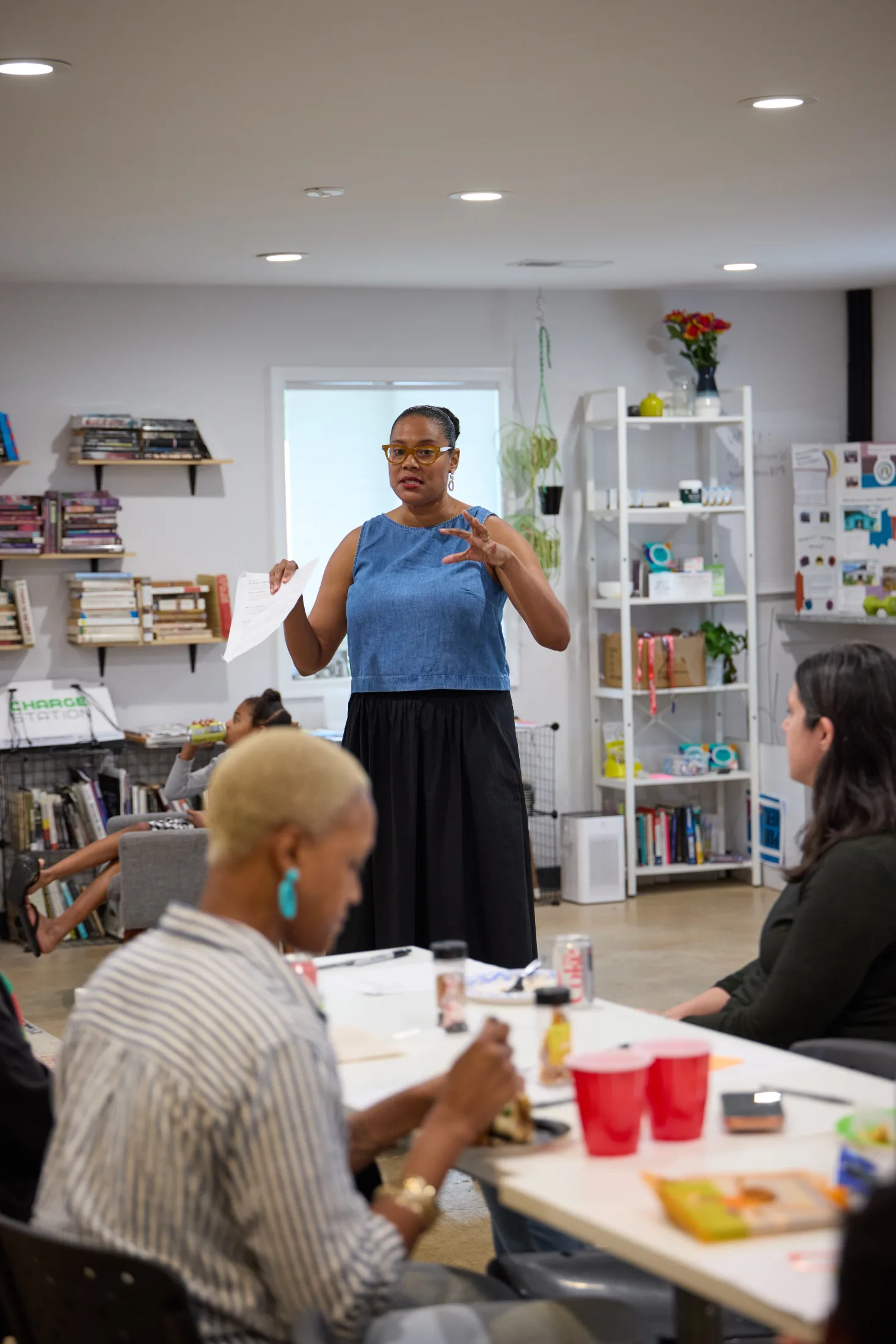
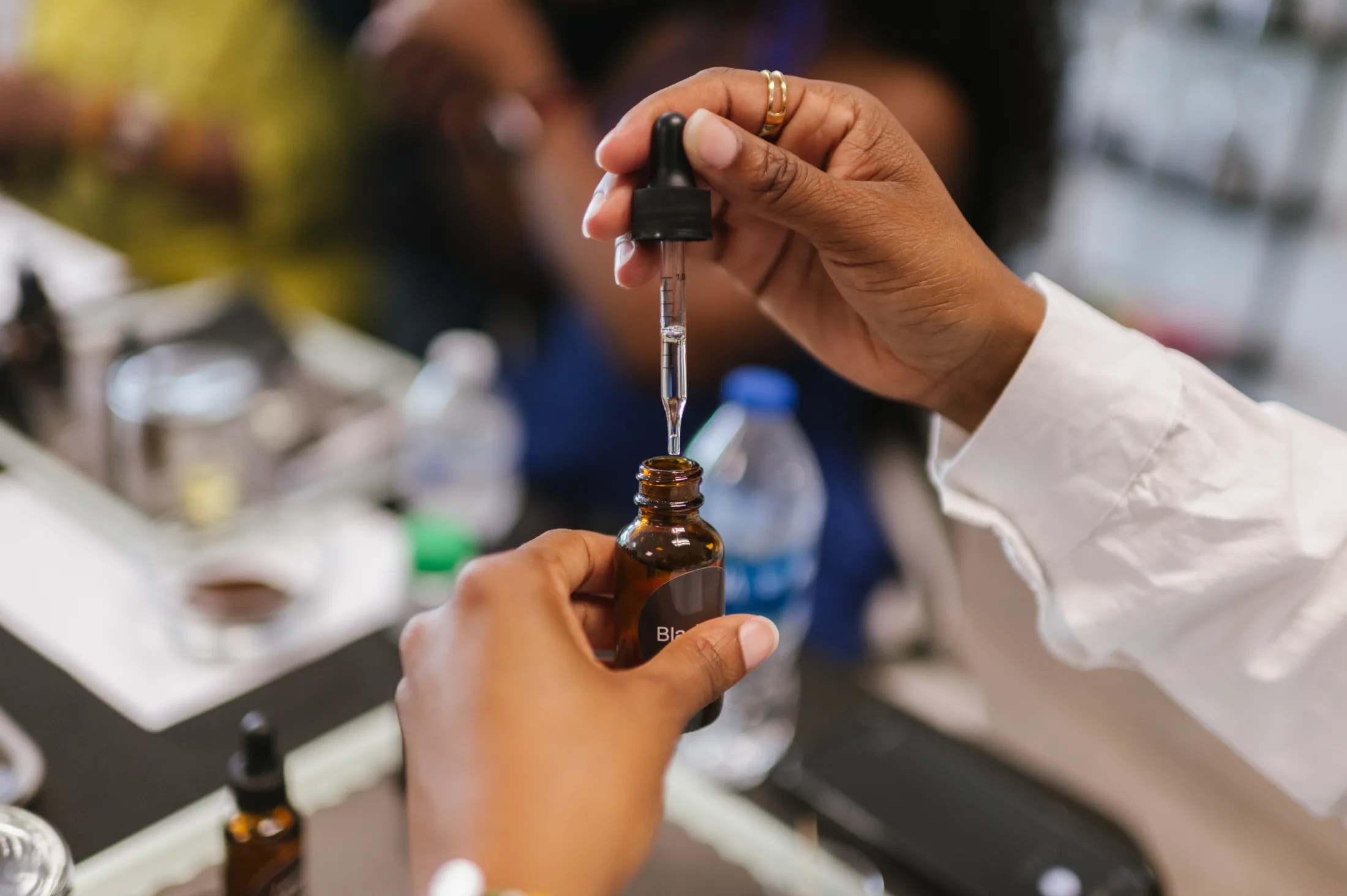
Folks can rent out the space for their own events, and we leverage the space for a lot of community engagement.
When SNAP was cut, we did food drives and diaper drives.
When ICE was in town, we were giving out whistles and doing trainings. We had our door locked, and we trained other small businesses on what rights they had.
We were like, ICE has to eat, and they have to stay somewhere, and they want coffee and beers. We were like “starve them”—both literally and figuratively.
I don't know that they want candles, but if they did, they weren't getting any.
A lot of businesses didn't know what they could and couldn't do.
We definitely leverage our space for all of the values that we're also trying to achieve through the scents.
The Parlor: How does rest and collective care fit into your work?
Tiffany: A few different ways.
One, we have a Rest scent. There are a lot of racial disparities in sleep, in the length and quality of sleep. Everybody is hearing these days about how essential sleep is for mental and physical health.
We have a very palpable tool made with a number of scents that are known to be soothing.
Then we offer folks different types of rituals they can use to build a practice of rest, as opposed to it feeling like something you earn, which I personally am also battling from socialization in Western culture.
More recently, we've broken ground on a physical scent installation. We're converting a grassy median in a parking lot into a scent garden that asks the question: "Who's there to nurture the nurturers?"
It's this notion that we need to self-nurture if we're going to fix this mess that humans have gotten ourselves into.
We also need to nurture those people who are constantly stepping up to support others. They're going to burn out. They're burnt out, actually. We shouldn't take them for granted.
We're creating a scent story where you'll walk through a constellation of plants that will change over the year. The experience will be different depending on what's blooming.
There'll be benches and an opportunity to immerse yourself in a scent experience that's centered on rest and nurturing oneself.
The Parlor: How does Bright Black support Black culture and cultural preservation?
Tiffany: We really do envision ourselves as a cultural preservation organization.
Black studies departments are being cut across the country. Books are being banned. They're not being sold. They're being burned, and they're being destroyed by AI companies.
Words like "Black" are being banned from grants and federal, state, and local funding. Even our Pride parade got funding cut.
Culture is being attacked left and right.
That goes back to the agility of the private sector that I talked about. We are not dependent on the federal government to fund our work. We are dependent on our tribe, though.
People are talking about Black-owned businesses dropping like flies, and small businesses in general are really being annihilated by this particular social moment, with Black-owned businesses disproportionately impacted.
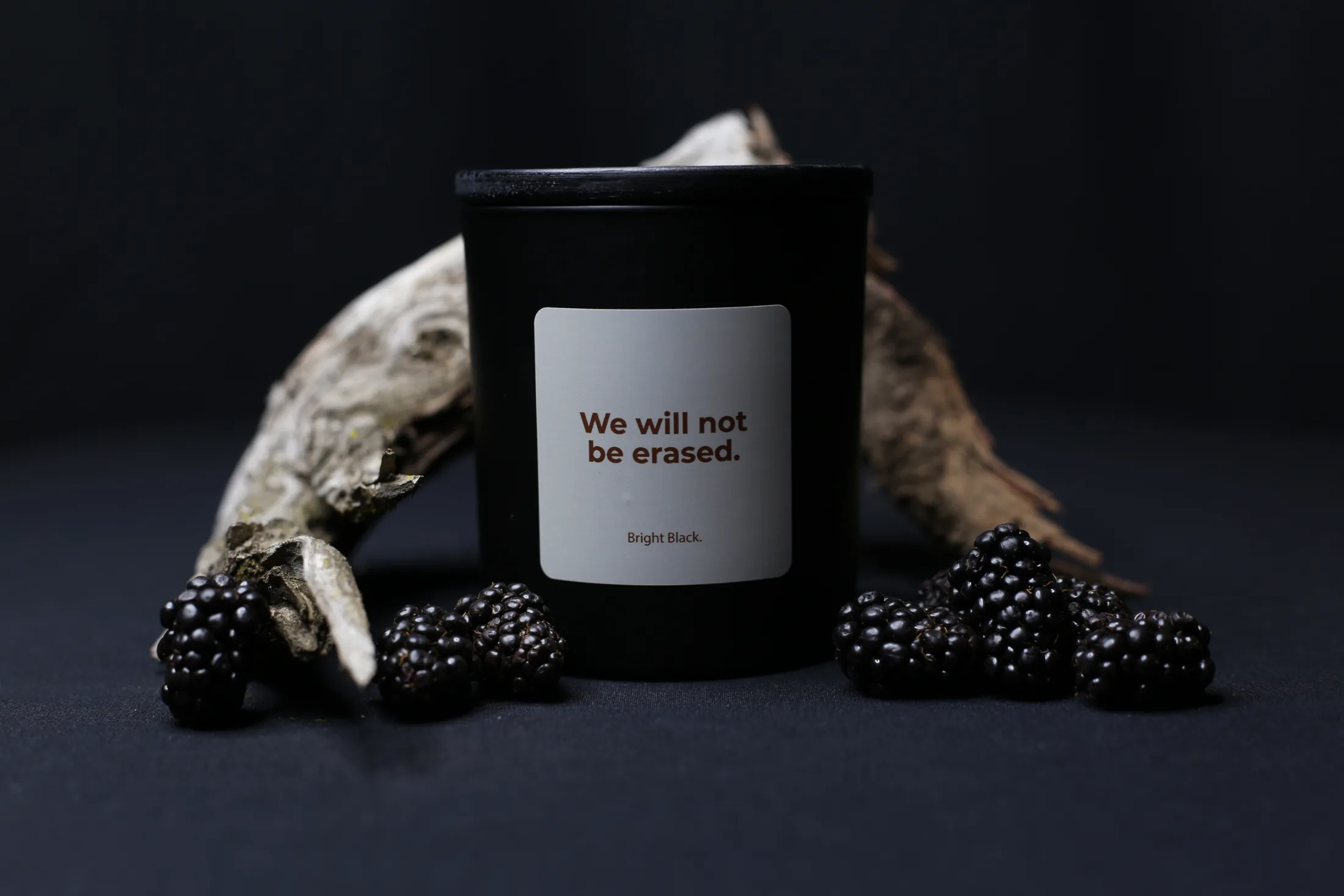
If we want small businesses to play these types of roles in communities, people have to buy the products.
Yes, we all want to live in some sort of alternate reality to capitalism. And I think we will create it eventually. In the meantime, capitalism wants the rent paid.
People forget that sometimes. You actually have to patronize and actively support.
It doesn't always have to be financial. It could be sharing a post or letting a company with a really great budget know that they should gift with this small business instead of going to Bed Bath & Beyond and making a bunch of baskets.
Those things seem very small, but they're actually very impactful for a small business.
IBM's coffee budget for one meeting could make or break whether we close that month. It literally is that precarious for so many small businesses, including us.
People see you on Instagram, and you're doing this and that, and you're "crushing it." I guarantee you there's almost no small business right now that feels on the inside like they're crushing it.
I don't know one small business that feels stable.
Support independent journalism
Enjoy reading The Parlor?
Become a paid subscriber to get full access, early releases, and subscriber-only extras.
Become a paid subscriberThe Parlor: What's been your biggest challenge as an entrepreneur?
Tiffany: There are so many lessons to learn.
Bright Black started as a project. I thought I was going to do research on the side and do this passion project.
Then a bunch of stuff happened where it was like, no, this is a business, and this is going to sustain not just your livelihood but your entire household's livelihood.
It's been, and continues to be, a very steep learning curve around a lot of the mechanical aspects of the business.
Probably the biggest thing I've learned is that I cannot do it all.
Right now, I'm designing all of the scents. I'm doing all of the social media. I'm working in the shop. I'm facilitating the scent workshops. I'm designing the postcard that we need to go with the Kwanzaa candles this year.
It's too much.
We're at a point where we're very seriously considering going to the community and being like, we just need every single follower on Instagram to give $10 so we can take a fucking break for just a second and be thoughtful about how to do this business.
There's been no time to breathe.
Both my husband and I are very—it's not proud, but we're like, "No, if it was good, people would buy it. That's just the way it is."
And it's like, no. We've kept a business open since 2019 with zero marketing budget and no investments. Consumer product businesses don't work like that.
I think we should abandon these narratives and create another model. If we're so open to giving to community and being grounded in cooperative economics, why not flip that around on ourselves?
I think people would be there. I think they would want to say, "Tiffany, you sit your ass down and rest for a bit, and we're excited to see what you create from that space," as opposed to the space I'm currently working in.
It remains to be seen. We'll see, because I think we're going to do it in Q1 next year.
This isn't sustainable, and we don't want to close.
I think some businesses are like, "Okay, I gave it a fair shot, but I'm ready to move on to something different."
We're like, we've got so many more stories to tell, so many more ideas, so many more offerings.
The Parlor: What do you hope Bright Black achieves in the coming years?
Tiffany: I have a few different hopes.
One, I would love to be in some sort of Harvard Business Review case study showing that you can be a for-profit business that's profitable and impactful with respect to social impact, and not in a Nike social responsibility unit kind of way.
I would love to have that form of impact.
I would love to be financially stable. That would be fantastic.
Going back to my psychology training, and my own spiritual orientation, I really believe that when we are a collective of regulated beings, we can do magic.
I don't think scent can save the world, but I think it can play a part.
I think it happens literally one person at a time.
My daughter right now is like, "I need my Soothe oil."
I would love to see kids and babies using scent as a tool. From two-year-olds and up, just seeing scent positioned as a tool that we have access to and can leverage easily and fluidly.
If we could have that sort of impact, I would be a very happy Tiffany.
About the author
Lindsey Brock Morales
Lindsey is the Founder and Editor-in-Chief of The Parlor. After over a decade in humanitarian aid and community organizing, she founded The Parlor in 2025 to build a publication rooted in the belief that the people most affected by power are the most qualified to describe it. She is based between Washington, D.C. and Bologna, Italy.
Conversation
A space for Parlor members. Be generous, be real.
Loading…