
Engaging Men, Centering Survivors
How advocates are shifting sexual assault prevention from crisis response to cultural change

Jessica Shih
April 29, 2026
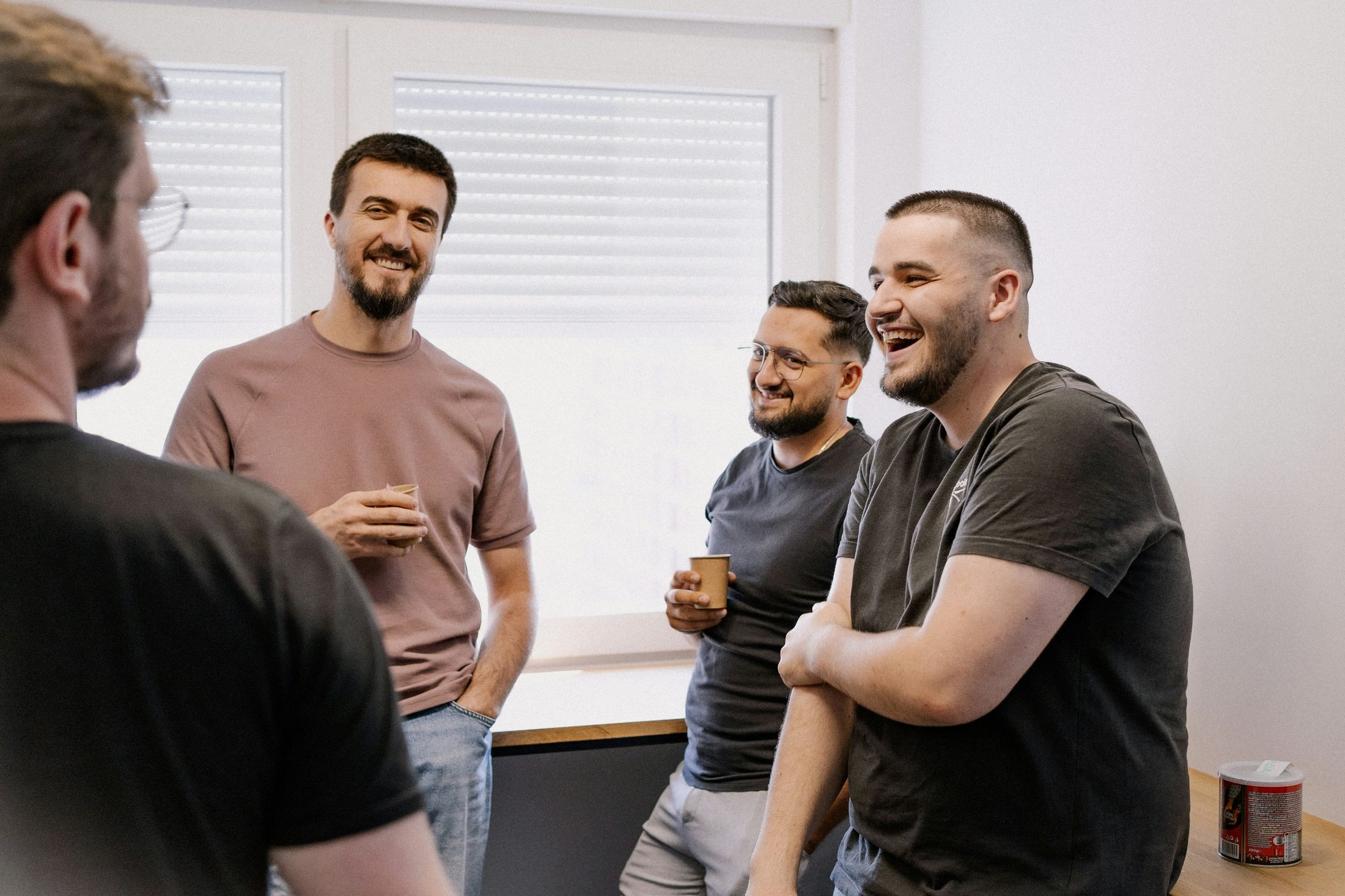
Photo by Azwedo L.LC on Unsplash
April is Sexual Assault Awareness Month—a time often marked by the quiet distribution of teal ribbons and the recitation of sobering statistics. But beneath its somber surface, a seismic shift has been rattling the foundations of social justice advocacy. From the high-stakes halls of the Delaware State House to the vibrant classrooms of D.C. public schools, the sexual assault awareness conversation has surpassed the reactive loop of crisis management toward a proactive prevention model.
Although in recent years, the Trump administration has pivoted toward reactive criminal justice interventions—citing federal “ideological overreach”—the work of dismantling root causes has moved to the front lines of state-level advocacy and grassroots resistance. Having built support systems for the aftermath, we must now dislodge the building blocks of patriarchal power before they re-manifest as violence. This evolutionary step demands a hard reset: reimagining how we engage men and boys to shatter the restrictive “Man Box” and uproot systemic oppression through a culture of global accountability.
…And yet, we’re still standing on shaky ground.
A “Manospheric” Navigation Along Urban Front Lines
For the voices in the field doing “boots-on-the-ground” work, the primary antagonist isn’t a lack of information so much as it is a surplus of the wrong kind. Facilitators at Men Can Stop Rape (MCSR) are locked in an ongoing war with the digital “manosphere,” a commercialized ecosystem of “manfluencers” who peddle entitlement, misogyny, and rigid gender roles under the guise of “alpha-level” wisdom. In this world of infinite scrolls, these personalities have mastered the 30-second hook, deliberately packaging harmful ideologies to reach young men long before a mentor can. And, this weaponization of social media is all in the name of a business model built on monetization.
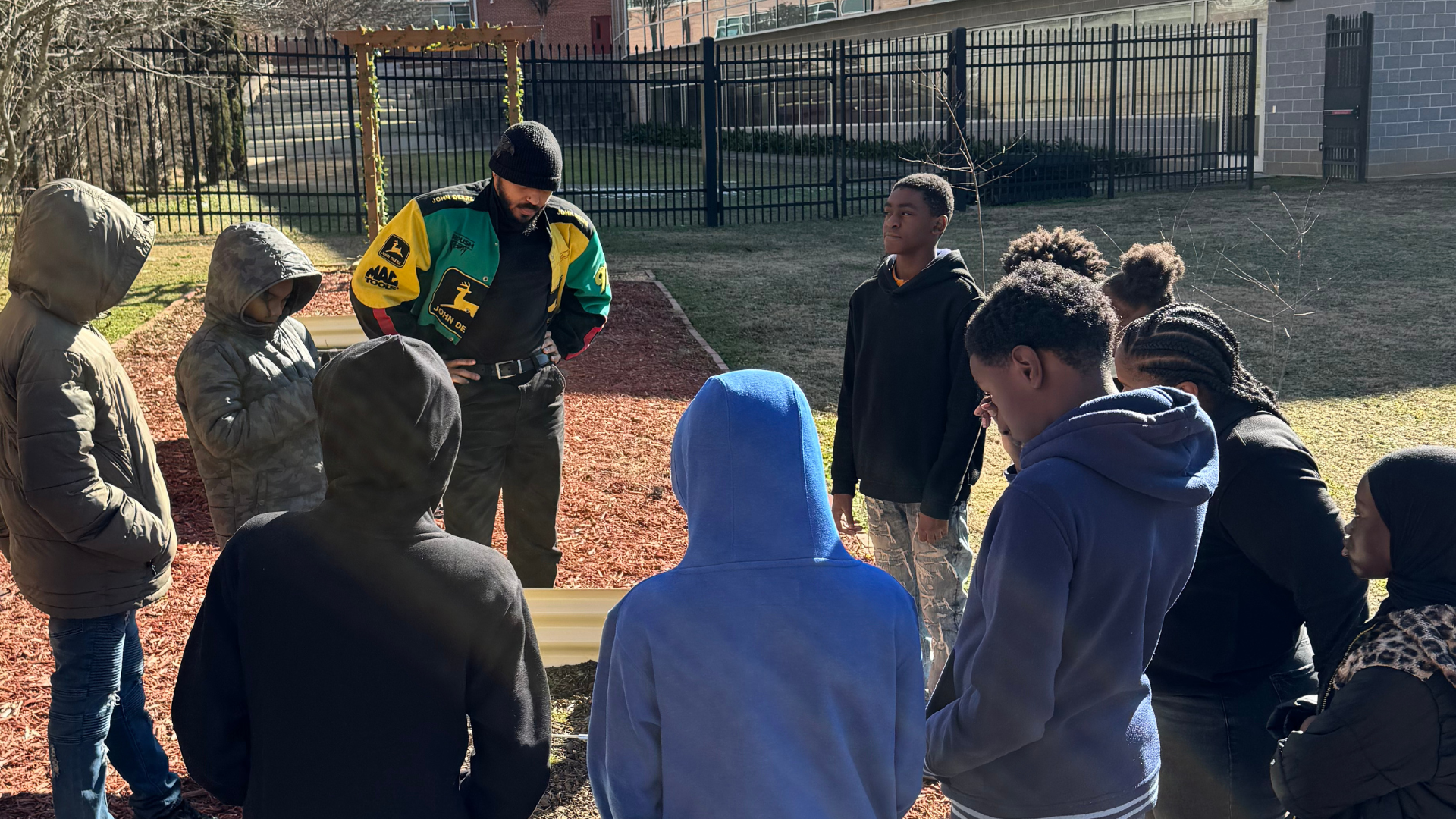
These field advocates recognize that today’s youth navigate a challenging world: “No one’s there to tell them, ‘Yo, you shouldn’t watch that.’ They’re trying to figure out their identity, but the guidance is often lacking,” explains MCSR Program Coordinator Destine Freeman. In searching for a sense of belonging, the manosphere exploits young men who lack positive male guidance. Advocates approach this issue by “calling in” rather than “calling out,” acting as mentors for these vulnerable male demographics. “I see that innocence—a kid who doesn’t quite understand himself yet. I’m there to provide an avenue for them to see themselves as something bigger than what the world shows them,” Freeman adds.
In Men of Strength (M.O.S.T.) Clubs, this work becomes realized through a structured curriculum of identifying dominant stories entailing restrictive, harmful scripts of the “Man Box” and displacing these notions with counter-stories that embrace healthy masculinity, emotional intelligence, and consent. Notably, in cyclical fashion, Freeman himself was actually an M.O.S.T. club member back in 2016. He recalls his junior year at Duke Ellington School of the Arts, when a mentor affectionately named “Mama Hollis” more or less “dragged” him and his friends into a seemingly random room that turned out to be a M.O.S.T. club meeting. That singular moment of intervention transformed his entire life trajectory, with Freeman serving as a living testament to when the community invests in the male demographic, they can become co-architects of change. Within Freeman and his friends, Mama Hollis not only instilled the importance of consent, but alighted the foundational leadership skill of valuing vulnerability over dominance.
Perhaps the legacy of the M.O.S.T. Club is best exemplified in the hallways of the Woodland Job Corps, where tension between rigid academic structures and urgent mental health needs is most palpable. At times, facilitators arrive with a structured lesson plan on healthy relationships, only to encounter a room of young men burdened by the immediate trauma of their surroundings. If a student checks in and reveals a crisis at home or a loss in the neighborhood, the coordinator will scrap the whole lesson plan for the day to facilitate a circle on mental health and resilience. This flexibility directly rejects the school-to-prison pipeline that tends to decimate inner-city schools, ensuring these young men aren’t viewed as mere statistics or “bad kids,” but individuals who deserve a space safe enough to even just breathe. Yet, despite MCSR’s nearly 30-year legacy in the social work field, facilitators still fight administration to establish this simple yet sacred space as akin to “pulling teeth,” highlighting the need for institutions to view this as vital social-emotional work (and not some sort of extracurricular luxury).
Unwieldy Policies & Funding Mechanisms Run the “Hamster Wheel”
If community work is the heart of prevention, then policy is the skeleton. For state policy advocates like Lauren Cuevas, Vice Chair of the Delaware Victims’ Rights Task Force and Board Member for the Delaware Alliance Against Sexual Violence (DASA), the movement will perpetually remain on a “hamster wheel” if it only focuses on the aftermath of an assault. Namely, within this constant struggle of promoting proactive versus reactive advocacy, if we only ever fund the response, we’ll never stop the occurrence.
This shift requires deep structural change, particularly in the legislative arena. One primary battleground is the statute of limitations for criminal and civil sexual assault, which can “take a lifetime for a survivor to feel safe enough to come forward,” Cuevas notes. In this trench, advocates are fighting for Delaware bills that’d remove these arbitrary clocks entirely, allowing for civil litigation regardless of when the abuse occurred.
However, legal victory rings hollow without sustained funding. The field is currently bracing for the “VOCA Cliff,” a massive federal shortfall in the Victims of Crime Act fund that threatens to gut local services. As Cuevas explains, “If an organization is ‘treading water’ just to keep the lights on, they can’t focus on the higher-level work of systemic policy change.” In Delaware, the lack of a guaranteed line item in the state budget forces providers to essentially “bid” for funds annually, essentially creating a Maslow’s Hierarchy for nonprofits within which survival instincts stifle long-term innovation.
Broadening this scope, global organizations such as MenEngage Alliance foster a globalized accountability culture, comprising a community of over 1,000 members across 90 countries. However, this work requires a decolonial approach that moves away from Western-centric models of gender training. In conflict zones like Gaza and the West Bank, prevention can’t be divorced from the broader context of state violence and occupation. Often, a Western model focused solely on interpersonal consent fails in regions where the very concept of safety is undermined by systemic geopolitical trauma. Centering local expertise, accountability becomes defined by the community, not non-governmental organizations (NGOs). As Laxman Belbase, Co-Director of MenEngage, asserts, the goal is to dismantle the rigid masculinities that force boys to “cut off their capacity for compassion or emotional connection in order to appear tough” in their cultural contexts.
To achieve a true globalized accountability culture, MenEngage argues for decolonization of the development sector. Where members’ work with men and boys tends to be treated as a “silver bullet” driven by Global North donors and Eurocentric narratives, this change requires shifting power to local grassroots organizations. Donors must listen to civil society organizations (CSOs) from marginalized geographies without predetermined solutions, allowing them to design strategies based on real community needs more than donor perceptions.
Telling Our Stories to Break Societal Silences
Within the sexual assault awareness sphere, engagement has shifted toward social-emotional learning and personal narrative. For instance, MenEngage utilizes practitioner-led approaches and stories of change to inform their “Theory of Change,” inviting men to reflect critically on lived experiences as gendered beings—particularly for men and boys facing injustice.
Since 2008, the innovative Men’s Story Project (MSP) engages men in peer leadership education and public, personal storytelling to promote healthy masculinity and social justice. With 22 implementations across the U.S., Canada, Chile, Gaza Strip, the West Bank, Costa Rica, and Guatemala, the MSP’s flagship program entails a series of tailored workshops where participants learn together about issues at the nexus of gender, health and justice; craft personal stories that critically examine masculinity norms through the lens of their life experience; and build community. And coupled with small-group “story circles” in which participants hone their narratives through peer feedback, the MSP culminates in larger public storytelling and community dialogue events that are filmed to create locally-relevant media. Over time, these men’s stories have addressed three core themes:
Celebrating: Highlighting sources of love, joy, and resilience in their lives, such as deep friendships and intimate relationships, mentors, and an engaged, enriching fatherhood.
Challenging: Confronting restrictive notions of masculinity and sharing journeys of personal growth, healing and change (as related to mental health, violence, sexuality and other topics).
Support independent journalism
Enjoy reading The Parlor?
Become a paid subscriber to get full access, early releases, and subscriber-only extras.
Become a paid subscriberResisting: Pushing back against intersecting oppressions including racism, homophobia, and ableism, whether experienced or previously perpetuated.
Across workshops and public storytelling, the MSP creates spaces for radical candor: Survivors share about their healing journeys, while those who’ve caused or enabled harm share about their journeys of change and commit to maintaining this change before their community. Dr. Jocelyn Lehrer, MSP Founder & Director, emphasizes a “first do no harm” public health approach, noting that without rigorous ethical guidelines, programs involving men publicly sharing personal stories on sensitive topics could inadvertently foster harm. Beyond safety, the MSP helps counter the male loneliness crisis by helping men discover they’re not alone in their individual lived experiences, and helping people (participants, audience members, and those in their social networks) strengthen their relationships and community connections.
Creative storytelling also plays a role in reaching younger audiences. For example, the MenEngage Youth Reference Group’s comic strip “Are (All) Boys Really Like That?”depicts relatable visuals that challenge misogyny and the manosphere. These narratives foster a culture of internal accountability, translating complex gender theory perspectives into accessible formats for all.
In Texas, this cultural shift is visible through community-based initiatives like the Rio Grande Valley (RGV) Dads project in Edinburg. By hosting regular mental health discussions via Zoom, the group provides a space for single, married, and divorced fathers to engage in honest dialogue about fatherhood, relationships, and healthy manhood. “I’ve watched their Zoom frames get larger and larger every month,” observes Emiliano Diaz de Leon, a lead with Texas Men Supporting Prevention Education Advocacy & Knowledge (S.P.E.A.K.). These programs bridge gaps, meeting tangible needs (like providing a diaper fund) to build lifelong relationships at the earliest stages of fatherhood.
Ultimately, accountability bridges story to action. For men who have caused harm, it requires acknowledging the paradox that they “may never comprehend the full extent of the harm caused” while making public commitments to change. Alex Nelson, Regional Coordinator for NAMEN, notes a major barrier is the fear that gender equality is a zero-sum game. “In reality, gender equality is a win for everyone,” Nelson explains. “To address loneliness, we need to shift the narrative so men don’t see feminism as antagonistic.”
Prevention Starts Right Here, Right Now
Cultural change begins at the start of the social cycle by teaching toddlers bodily autonomy and “correct language,” which Cuevas implores is critical for accurate reporting. Global prevention must be inclusive, amplifying marginalized communities and male survivors by providing the support needed for them to share stories in their own “language of convenience.” Adopting this bottom-up approach prioritizes local knowledge holders as experts, the field avoids becoming an extractive industry, ensuring narratives are shared exactly as lived rather than through an external lens.
Diaz de Leon highlights a decade-long shift toward men taking ownership of this work: “Men have to get our hands dirty and engage in the hard conversations,” he asserts, emphasizing the need to listen directly to women to understand their challenges. Ultimately, training the next generation of diverse leaders—reflective of the actual diversity within our states—is the only way to achieve lasting transformation.
Ending the “Hamster Wheel” Cycle, Forevermore
Awareness is the first step, but action creates safety. To roll back reactive advocacy, we must engage in proactive prevention. Here’s how to support that shift:
Advocate for Sustainable Funding: Urge federal and state representatives to restore VOCA funding and establish guaranteed budget line items for prevention. Innovation is impossible when organizations are stuck in survival mode.
Support Comprehensive Education: Attend school board meetings to advocate for Comprehensive Sexuality Education (CSE) and social-emotional programs like the M.O.S.T. Club. These must be treated as core curricula, not optional electives.
Dismantle the “Man Box” Locally: Encourage men to join spaces like NAMEN, the MSP, or local initiatives like RGV Dads. Whether joining an established group or forming a new one, the goal is to create regular spaces where men support one another in disrupting harmful norms.
Call for Legislative Reform: Support bills that eliminate statutes of limitations for sexual assault. Stay informed through groups like DASA and Victims’ Rights Task Force so that public comments are timed for maximum impact.
Engage with Community Civics: Participate in and sustain community-level initiatives. Moving past that shaky ground means upholding the long-term support system for men to thrive.
Let’s Put Ourselves Out of a Job
When we envision the future of advocacy, it’s one of obsolescence. As Cuevas pitches, “I’m working as hard as I can to put myself out of a job.” This is a frank sentiment shared across the field, alongside the collective goal to create a world where sexual violence is no longer an inevitability.
The path forward requires breaking societal silence, legislators shifting from reactive cycles to prevention, and men stepping out of the “Man Box” as active stakeholders. By securing bodily autonomy from day one and dismantling patriarchal systems, advocates are rewriting the script to one of accountable, collective liberation, and a violence-free future.
About the author
Jessica Shih
Jessica Shih is a policy expert, leveraging her mastery of grant writing and regulatory compliance to shape the future of e-mobility, while also pursuing freelance journalism and editorial publication services in her off-hours. This cross-functional talent proves Jess' compassion at her local animal shelter, where she provides essential care and puts her writing skills to use, composing the engaging, heart-warming bios that are the key to every furry resident’s successful adoption.
Conversation
A space for Parlor members. Be generous, be real.
Loading…