
Songs for a Society Falling Apart
Sunny War talks artistic freedom, anarchism, and why the state of the world keeps finding its way into her songs.

Claudia Jobi
September 15, 2026
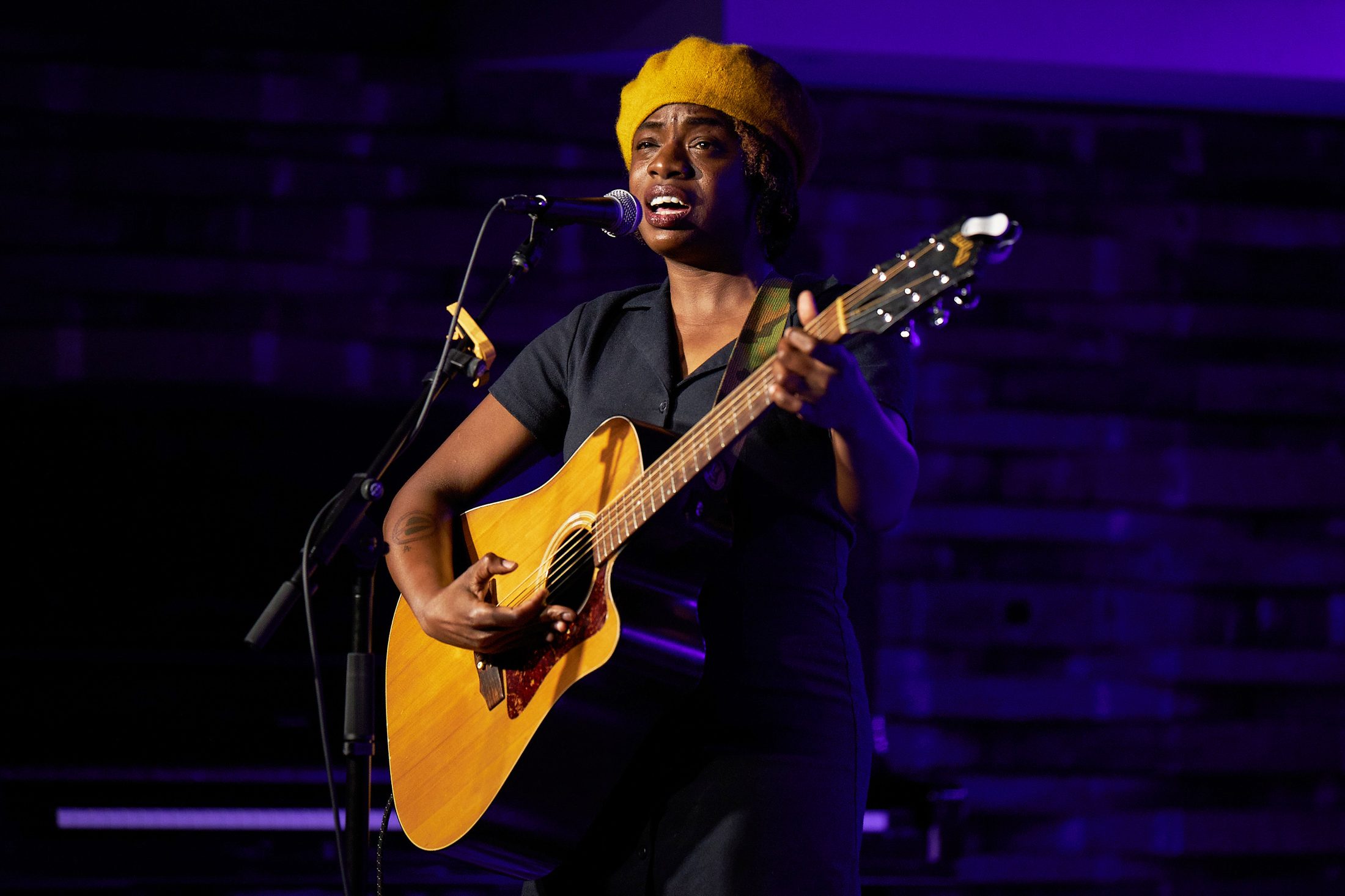
Live at The Loft at City Winery, 2.1.23 Photographer: Gus Philippas Source: Flickr
Sunny War remembers days in Venice Beach when she would play guitar for hours until her hands hurt.
Busking was her only income. She was homeless, and the guitar she had been playing since childhood had become the thing that might make her five dollars. Some days she could disappear into it. She would play so long that she entered what felt like a trance.
“That made me love music because it made me feel spiritual about it sometimes,” she said.
Other days, she hated it.
She would play for hours and fall short of what she needed to make. Her self-esteem dropped. Songs she had written and loved became songs she could no longer stand to play. Someone might stop to tell her she sucked. Groups of teenagers sometimes stood around laughing at her. Once, she was robbed while she was playing.
“I learned people are really mean,” she said.
War was a teenager then. Born in Nashville, she moved to California at 12. Music had been around her since childhood. Her stepfather played in an alternative art-rock band/spectacle called Holtzclaw. Her mother and stepfather introduced her to Ween when she was around six. By middle school, with her first electric guitar, she was obsessed with AC/DC. Bad Brains remained a favorite as she got older.
On the street, music took on a different purpose. War had to play every day because she needed money. That meant hours of practice, followed by long stretches with little else to do except sit with her guitar and write.
“When I was homeless, I was writing more than ever,” she said.
She thinks those circumstances changed her lyrics. She felt like an outsider. Everything felt more intense. Busking carried a particular shame, even when she felt she was offering something in exchange for the money people gave her.
“I didn't feel like I was begging for money, but it still feels like a thing, like people are looking down on you even though you're trying to contribute something artistic or something,” she said.
“I think I was just really vulnerable,” she said. “It just made me, like, need to write because I needed that… just that escape or something.”
Years of strangers passing judgment eventually did something else to her. They stripped some of the authority from the judgment itself.
Then someone else would stop and say they really liked what she was doing.
“It kind of taught me like, this is just opinion based anyway,” she said. “Anything art related you can't really care if people like it or not because it doesn't matter. It's like there's no one can actually say if it's good or not.”
The Inspiration
War has never had a preference about genre. She hears connections between music that other people might sort into different categories. Her playing carries punk, folk and blues influences. A banjo player who was friends with her stepfather fascinated her as a child, partly because the instrument sounded unlike the guitar, bass and piano she usually heard around her.
“I don't think it's weird to listen to everything and get something from everything, even if it’s not your genre at all,” she said.
Her lyrics pull from a similarly broad set of influences. She names Gillian Welch and Elliott Smith among her favorite lyricists. Nina Simone appeals to her for another reason.
“I like that she's really bold and direct and it's like she's just like this is what it is,” War said.
She also listens closely to rappers, impressed by how many words they can fit into a song. Lately, that presents a practical problem. War has been writing lyrics separately from music, leaving her with finished pages of words and phone recordings of instrumental ideas that may or may not belong together. She has around 12 demos, though she says she likes perhaps half of them.
One unfinished piece is called “Mother.”
I'm a baby lover, but I can't be a mother / because I haven't learned to baby myself. / When babies get to crying and they need pacifying, / I'm looking around for someone to help.
With arms able to form and ways that keep you warm / and lips that kiss and sing you to sleep. / Not tired, just uninspired, a dreamer, not a liar, / and the truths I've never been so sweet.
The homes I've known were broken, my woes won't go unspoken, / but I won't pass grief this strong along. / It's yes, not no or maybe — I'll die a childless lady. / What's right for me could never be wrong.
She does not know yet how it will fit into a song.
Support independent journalism
Enjoy reading The Parlor?
Become a paid subscriber to get full access, early releases, and subscriber-only extras.
Become a paid subscriber“I just have a bunch of these poems now,” she said.
War is comfortable leaving them that way for now. When people talk about writer's block, she sees periods without writing as part of the process. A person might stop writing for a year. Something might be developing in the meantime.
“Sometimes you just got to step away from something and then come back and then let it feel fresh,” she said.
The Politics
War describes herself as an anarchist, though she rejects the idea that a society without government would mean people abandoning one another. Doctors could still practice medicine. Farmers could still grow food. People could educate each other and form communities.
“There doesn't have to be somebody in charge for people to continue to do what they do because we are the workers, are the people, like there doesn't have to be somebody above us,” she said.
When she describes anarchy as love, she talks about trust. She also talks about taxes and war.
“The love part is like, if anarchy is love, it's because I don't believe you need to be paying taxes if you don't want all your money to go to killing people in another country,” she said.
Her political songs arrive when something has happened that she cannot get out of her head. She says there is usually at least one on each album. She has never sat down with a requirement that a song address politics.
“Usually it's like something really crazy happened that day that made me like have a breakdown where I really am obsessing over that,” she said.
Lately, those songs have become harder to avoid.
“Now the new demos are like that because it's just been terrible,” she said. “So now I guess I'm just writing protest music now.”
I mention her album, Armageddon in a Summer Dress, and ask the significance of the title. The name itself comes from the song “Gone Again”, about a woman trying to keep it all together, visibly about to break.
"I feel like summer dresses, you're really easygoing, you're keeping it light, but internally it's the end for you."
That’s how everyone seems to feel now, she says. "People are freaking out, and then also still going to work every day. It's a feeling of, what are we doing? But then you're also like, I still have to do what I have to do. It almost makes you feel crazy, because you're forcing yourself to pretend that nothing's going on to get through the day." Then, "We're trying to function as a society while it's literally falling apart.
Washboard and Punk
Her new demos are unexpectedly Southern. "I'm not country," War says, "but I'm recording washboard and shit."
She's calling what she's making now “a string-band thing.”
War is back in Tennessee now, living in Chattanooga, and the sound around her has started entering the work too. Local bluegrass musicians gather at open mics and jam. She talks about fiddle and banjo players who hang around a local bar, musicians she describes as “shreddy.” She's in Appalachia; maybe it's just a vibe. Whatever it is, she has played more banjo since moving there than at any other point in her life.
Slow songs increasingly bore her onstage.
“I wanna play upbeat stuff, 'cause I want it to be fun to play.”
There is another project taking shape too. War has joined a punk band as the bass player. They have two songs and are looking for a singer.
The current name is Methhead, Craig, and the Magic Tricks. War likes it. Her bandmates apparently do not.
“We might change our name,” she shrugged, “because I'm the only person in the band that likes [it].”
She has no firm plan for where any of it goes, but she doesn't seem too worried about it.
"You just gotta let life happen," she said. "If something is inspiring, it's inspiring. It's okay to not be inspired, also."
About the author
Claudia Jobi
Claudia Jobi is a poet and essayist based in the Midwest. Her work has appeared in Eunoia Review and The Pub. She plans to pursue an MFA in the coming years. You can find her on Instagram at @claudia.jobi.
Conversation
A space for Parlor members. Be generous, be real.
Loading…