
The first thing Yayra Agbofah wants clear is that nothing arrives to Kantamanto without a price.
"Everything that comes into the country, or ends up in Kantamanto, which is being imported, is not free. Everything is paid for," says Agbofah, who founded The Revival, a community-driven sustainable fashion initiative in Ghana. "Whether it's trash, whether it's not trash, it's being paid for by the trader."
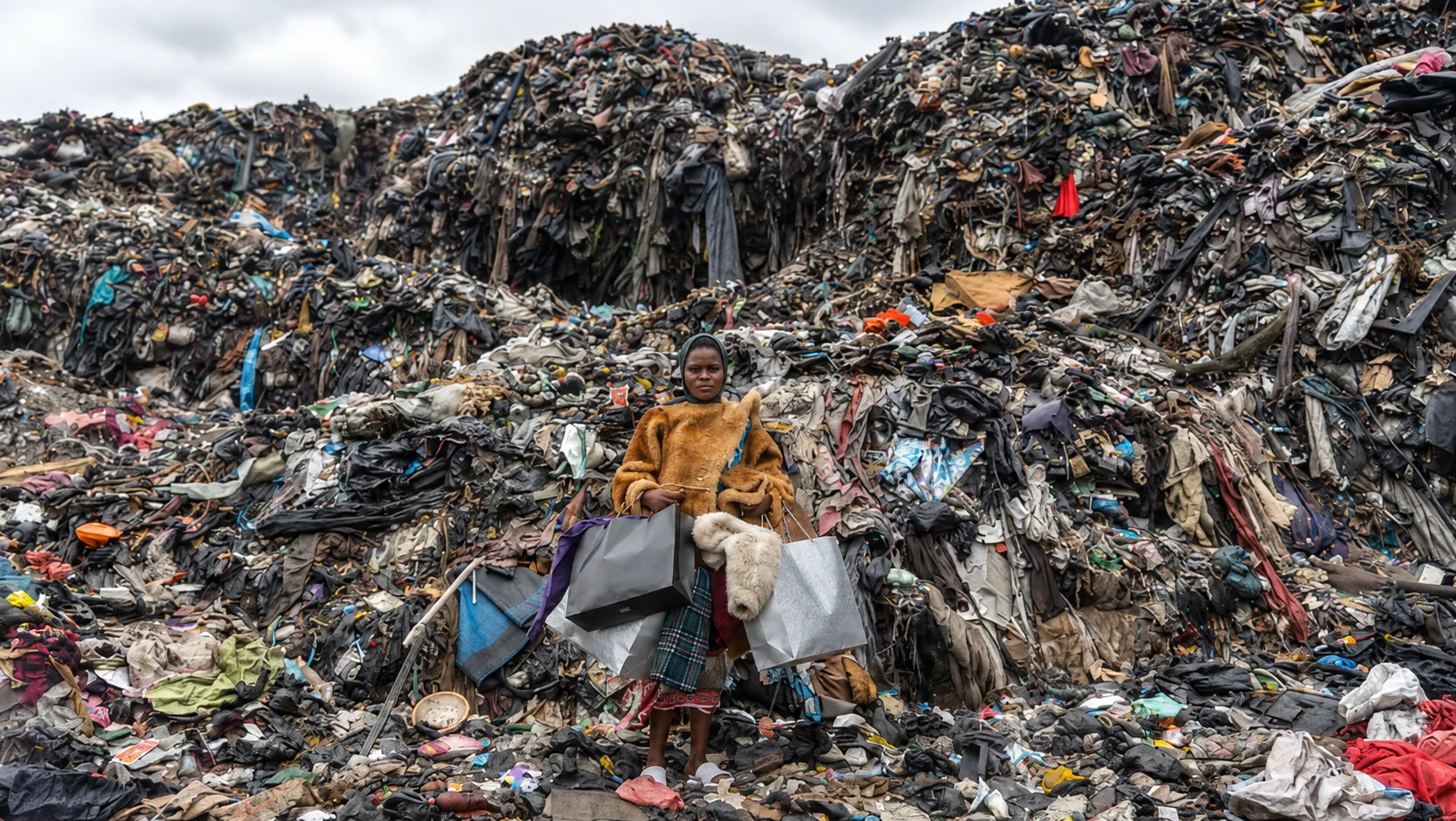
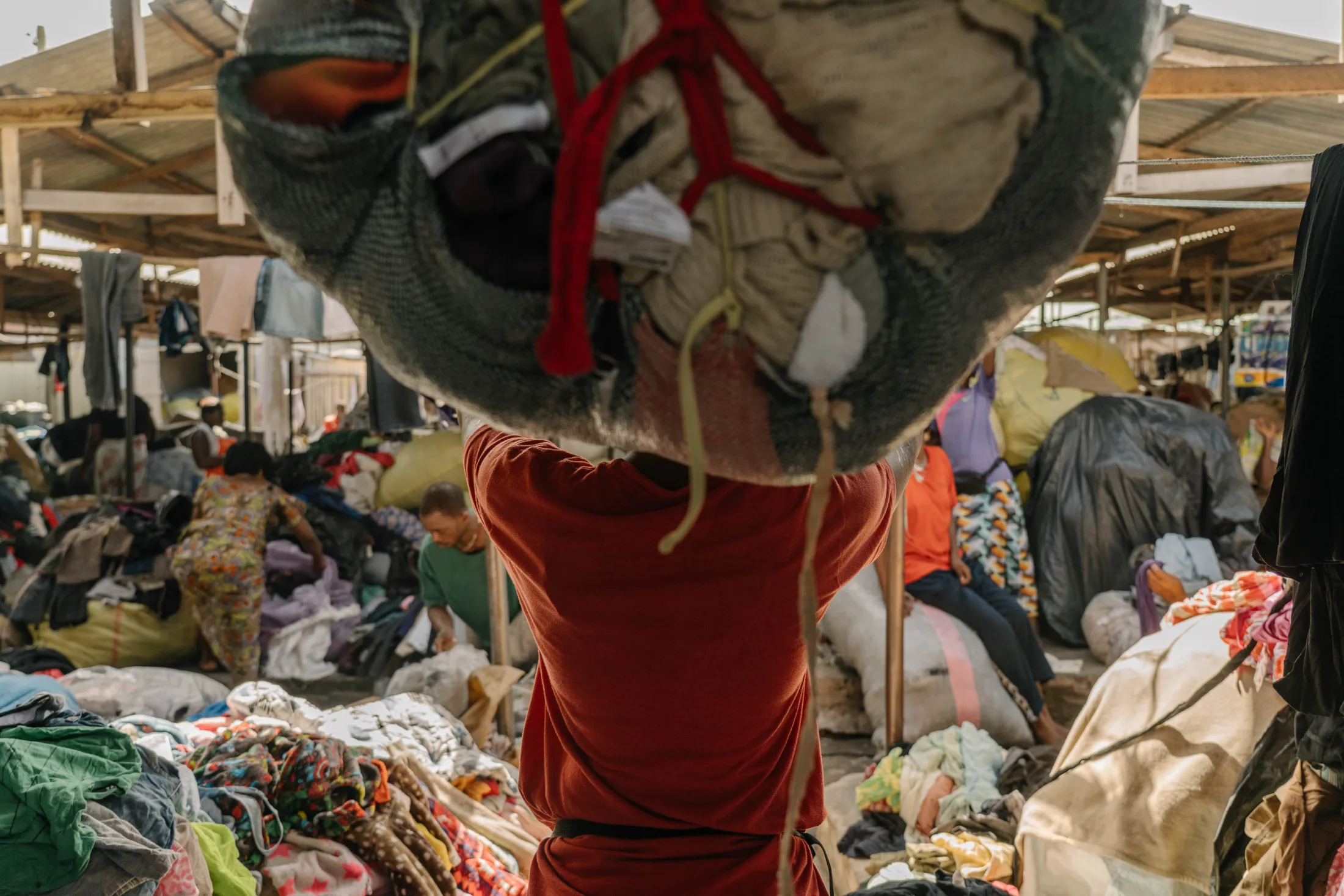
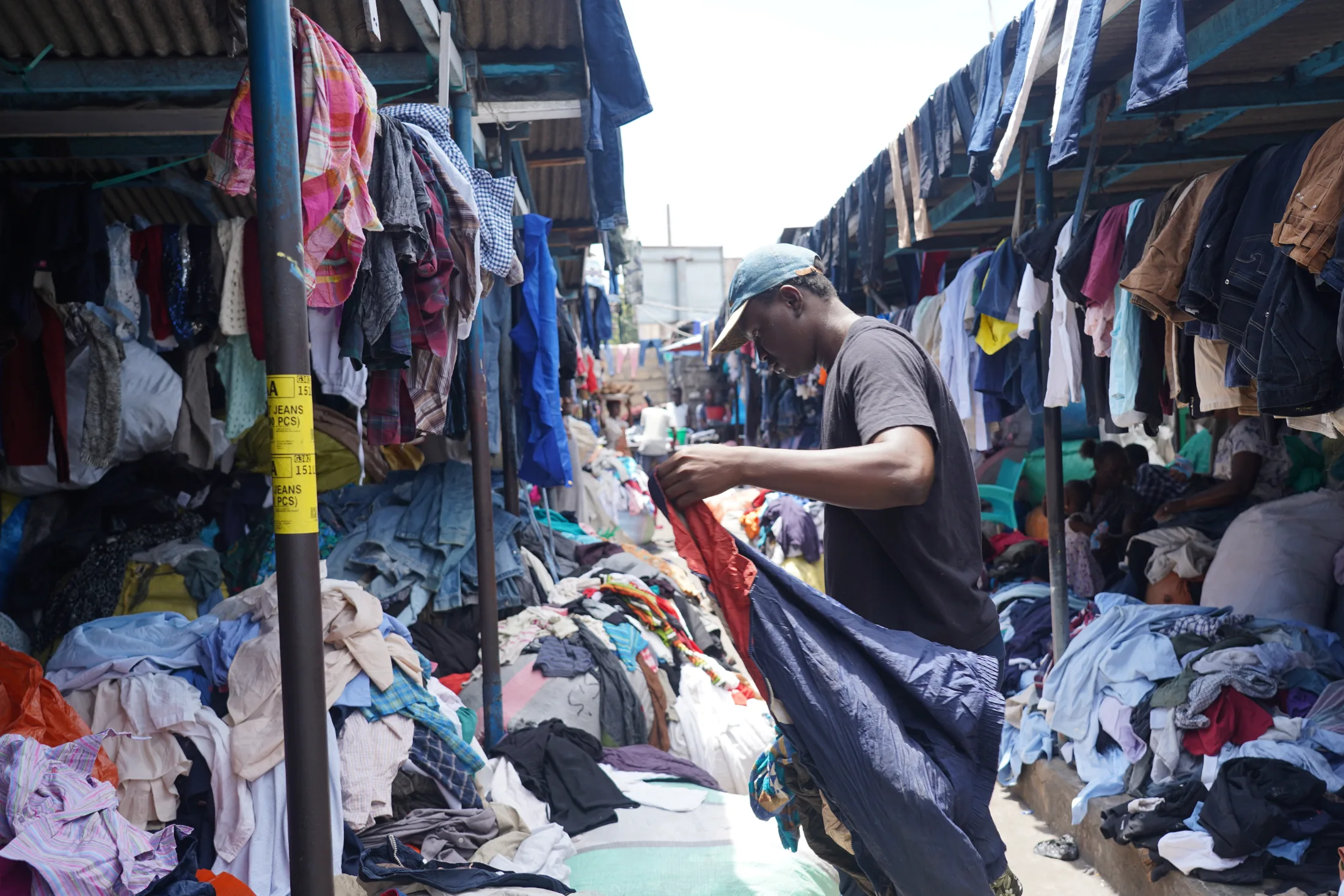
That is the math underneath a system the Global North still describes in the language of charity. Kantamanto receives an estimated 15 million garments a week, around 40% of which are unsellable on arrival. Traders buy those garments sight unseen, in bales, often on credit. The unsellable portion is not a donation. It is a debt.
"Today, we receive more clothes than ever before, but a large percentage are damaged, stained, torn, or made from lower-quality materials."
"Nobody was coming to our aid"
Agbofah has worked in the market in one capacity or another for more than two decades, and he founded The Revival from inside that decline rather than in response to it from outside.
"I started Revival out of the need for agency — the need to do something about the problem that we were all encountering, myself and thousands of traders," he says. The viability of the trade was falling because "the quality was reducing rampantly," producing unsellable stock and, with it, debt. "Nobody was coming to our aid and nobody was doing anything about it. So I decided to look at how I could help myself, and then others."
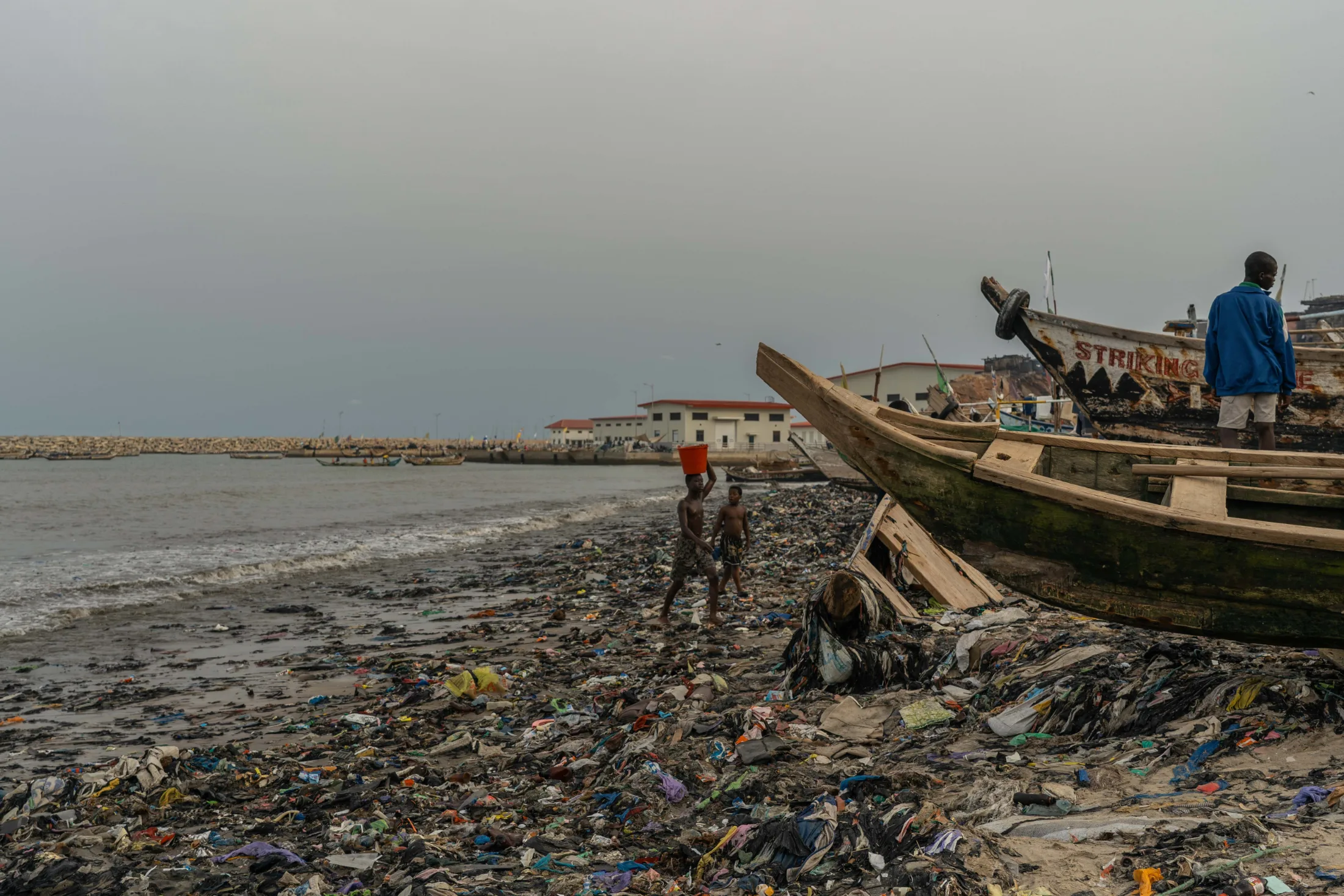
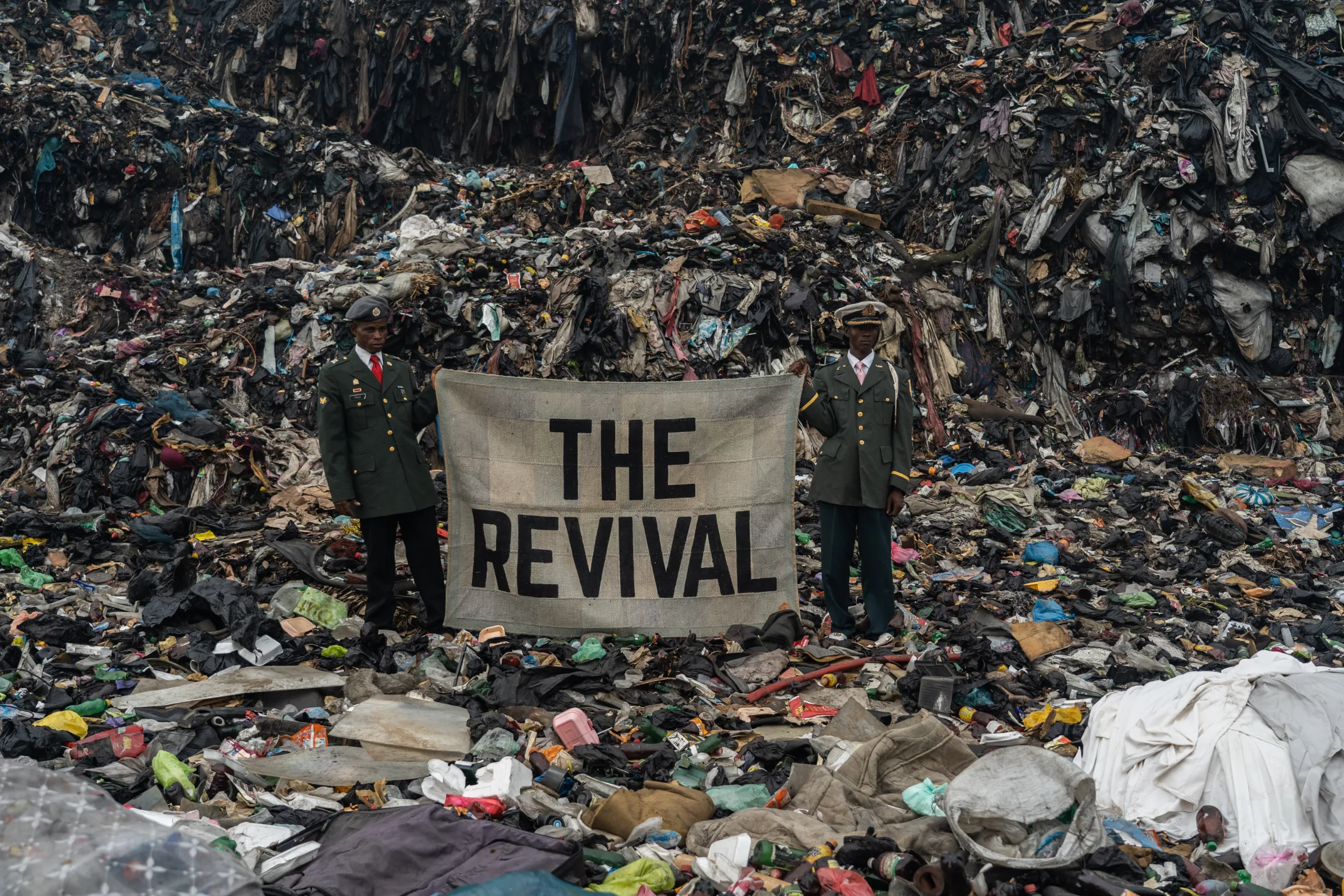
Following the problem past the market took him to the coastline and the drainage channels. "I saw the beaches, I saw the landfill, and the waterways and the gutters. When there is flooding, it's just clothing blocking waterways," he says.
He describes the difficulties the local children face accessing the beach: "I saw some kids and they were just standing by the beach. And I asked them, why are they just standing there? They would love to play, but their clothes and stuff — they cannot play on such a surface. When you look at the waste on the beach, it's not waste that we've created here. It's not items that we generated here. This is literally somebody else's waste that is polluting our environment," he says — and, he adds, denying children access to their own coastline for something as basic as play.
He started adapting what the market already knew how to do — upcycling, repair, mending — into something that could keep clothes out of the waste stream and put money back into traders' hands. But there was no playbook that he followed to get there.
"If I tell you that I had a plan, or that I envisioned us ten years ago being where we are, I would be lying to you. I had no plan, to be honest. I was just doing it because I had to do it, to help my community and help myself."
The Revival has diverted more than 12 million total garments over its entire span of operation since 2018.
"When people see the waste, they miss the people"
Asked what the Global North gets wrong about Kantamanto, Agbofah said it's often reduced to its status as a used clothing market.
"Kantamanto is one of the most sophisticated circular economies in the world," he says. "Instead of having the title of the largest used clothing secondhand market in the world, I'd rather say it is the largest practical circular economy in the world, because that is its functionality."
That functionality is exactly what the coverage erases. "The media portrays Kantamanto as a secondhand and dumping site, whereas its benefit to the world — and specifically to the global industry — is keeping things in circularity for decades," he says.
"Most headlines focus on waste, but every day thousands of repairs are done. Altering, wearing, washing, sorting, redesigning and reselling are done. There's an incredible amount of knowledge and innovation happening here in Kantamanto. Traders know how to assess quality in seconds. They can transform damaged garments into something completely new. Entire livelihoods are built around extending the life of products."
"When people see the waste, they miss the people," he says. "And the people are the most important part of the story."
The process is unglamorous and specific. Traders perform the primary sort — sellable and unsellable — themselves. What fails goes to one of The Revival's collection points in the market, where the organization pays an incentive based on weight.
"Every unsellable item dropped off at our collection point is a loss that has been incurred by the trader, because they pay for the bale, the entire thing," Agbofah says. "So we support with at least recouping some of it, based on our capacity."
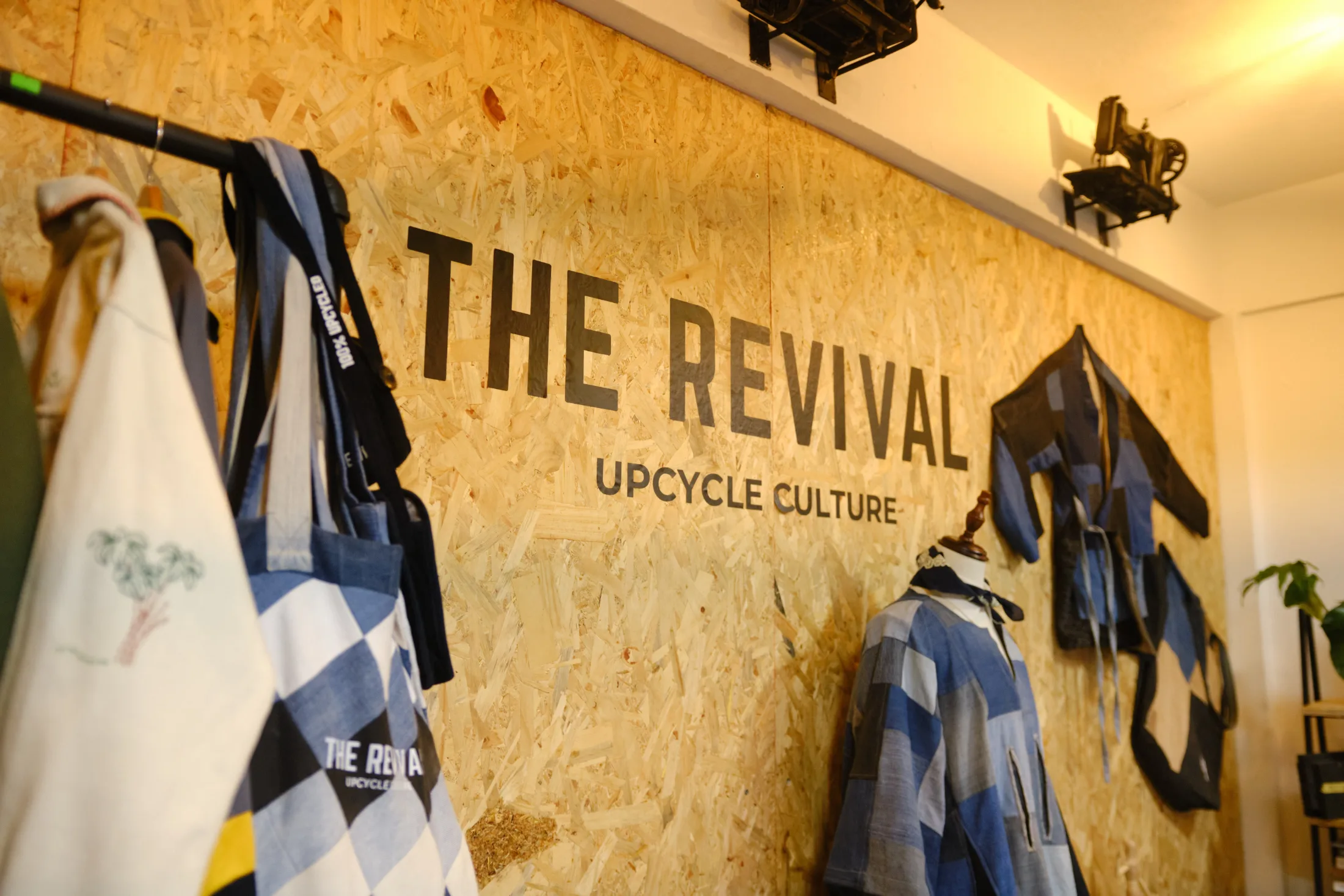
Then comes a second sort, this time by material rather than resale value. "Our team assesses the type of fabric, the condition, its durability and its potential use," he says. Denim becomes tote bags, chosen for strength. Cotton-rich material is routed toward a recycling stream the organisation has spent the past year developing. Heavier fabrics are loomed into rugs. Durable material becomes workwear — including protective uniforms produced for pineapple farmers.
"The goal is always to preserve as much value as possible before considering mechanical recycling," he says. “One question we mostly ask is: what is the highest and best use for this material?" Upcycling, repair and reuse are attempted first.
"Material becomes waste when it's in the wrong context," Agbofah says. "When material is in the context of a tailor or a designer, that context is changed, because he knows what to do with the material. But when you put that same material in front of somebody else, they might consider it unusable. So it's about putting material into a context of reuse, of value, and of how it could support livelihoods."
When volume exceeds what the team can handle — which is most of the time — the sorting criteria are durability and adaptability. "We ask ourselves whether a product can be repaired, reused or transformed again and again in the future," he says. "It's not just about making a product. It's about extending the lifespan of the material for as long as possible."
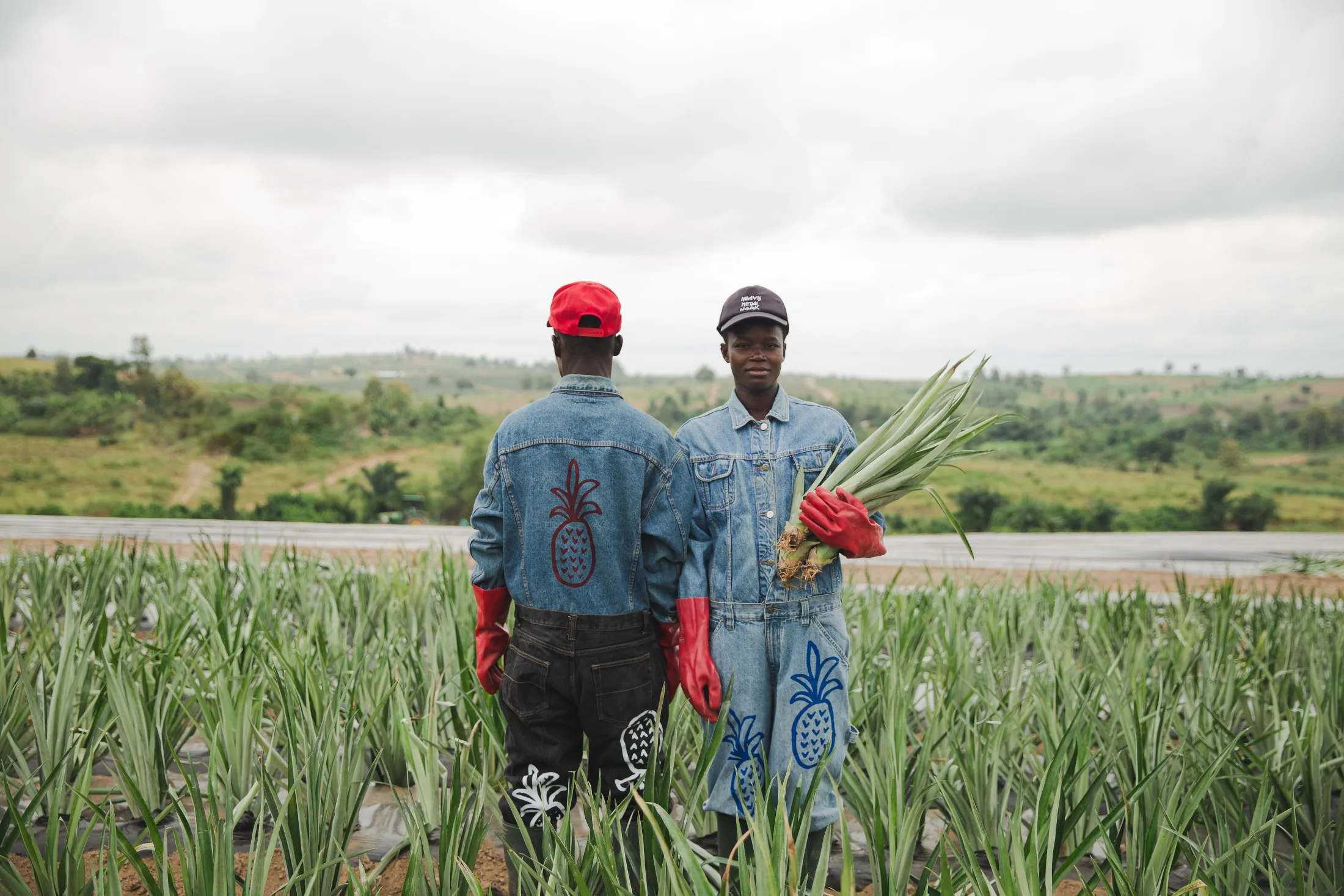
Denim currently dominates, for two reasons at once: it makes up the bulk of what has come in over the last six months, and The Revival produces denim goods for a partner in the UK. "Our clientele and product demand also influence what materials we prioritise," Agbofah says — a small, honest admission that even community-led circularity is shaped by who is buying.
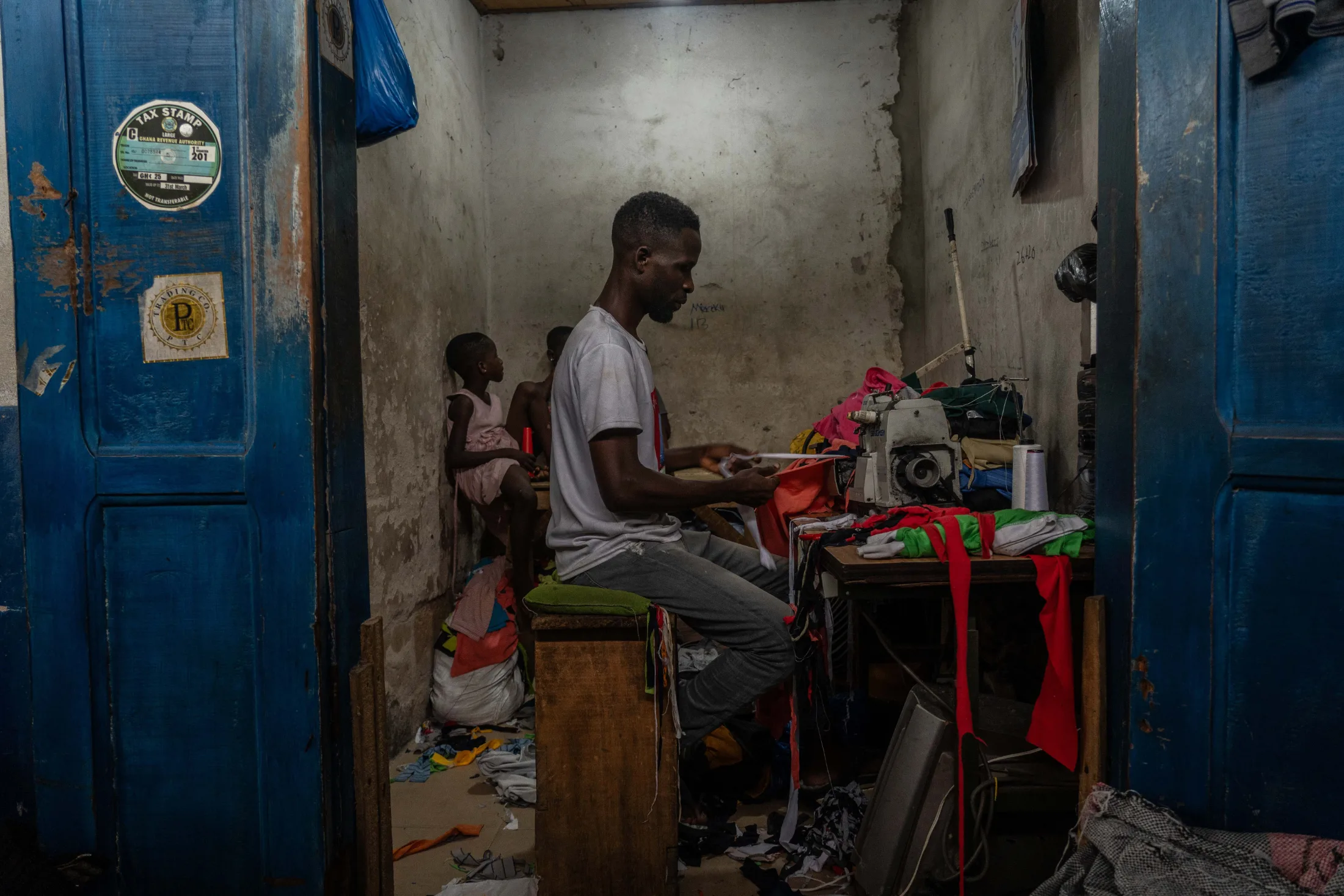
Oppong describes the same process from the trading side. Garments are sorted into what can be sold and what needs work, then cleaned and inspected. Depending on condition, traders repair a piece, combine several, add detailing, or redesign it entirely. Everything is quality-checked before it goes out.
"The process takes creativity, patience, and skill because every piece is different," she says.
"Giving these clothes a new life means giving value to something that others have already discarded," she adds. "It is also a way of showing creativity and proving that something considered old can become beautiful and valuable again."
"The goal is always to preserve as much value as possible before considering mechanical recycling," he says. “One question we mostly ask is: what is the highest and best use for this material?" Upcycling, repair and reuse are attempted first.
Kantamanto traders operate with almost no cushion against loss. They buy bales of secondhand clothing blindly, so a bale that turns out to be full of unsellable stock — damaged, mildewed, or simply unwanted — is a loss they absorb alone, with no recourse to the brands or exporters who sent it. The Revival Ghana's response is to pay traders for that unsellable stock rather than leave the loss entirely on them.
"Buying a bale is a major financial gamble," he says. "Many traders take loans and have no idea what they will find in it." What The Revival provides is "a small safety net”, Agbofah says. "Our goal is to have the optimum support we could have for traders in terms of recouping their losses or helping them pay their debts back. But our capacity does not allow that. That doesn't mean we will not do anything about it."
The more durable change, he argues, is one of perception rather than cash flow. "What was once considered worthless now has value and can re-enter the local economy in a different form.
That shift has also changed who is directing the work. What began as a buyer-seller transaction has become something closer to a partnership: traders now arrive with materials, ideas and intelligence.
The Gamble
Kantamanto traders operate with almost no cushion against loss. They buy bales of secondhand clothing blindly, so a bale that turns out to be full of unsellable stock — damaged, mildewed, or simply unwanted — is a loss they absorb alone, with no recourse to the brands or exporters who sent it. The Revival Ghana's response is to pay traders for that unsellable stock rather than leave the loss entirely on them.
"Buying a bale is a major financial gamble," he says. "Many traders take loans and have no idea what they will find in it." What The Revival provides is "a small safety net”, Agbofah says. "Our goal is to have the optimum support we could have for traders in terms of recouping their losses or helping them pay their debts back. But our capacity does not allow that. That doesn't mean we will not do anything about it."
The more durable change, he argues, is one of perception rather than cash flow. "What was once considered worthless now has value and can re-enter the local economy in a different form."
That shift has also changed who is directing the work. What began as a buyer-seller transaction has become something closer to a partnership: traders now arrive with materials, ideas and intelligence.
"They point us towards specific waste streams. They come and tell us, oh, there are some people here who throw this away, or we have offcuts," Agbofah says. "Others share insights about what types of garments are becoming harder to sell." That exchange doubles as market data. "They are often the first people to identify challenges and opportunities, because they are the ones dealing with these materials on a daily basis."
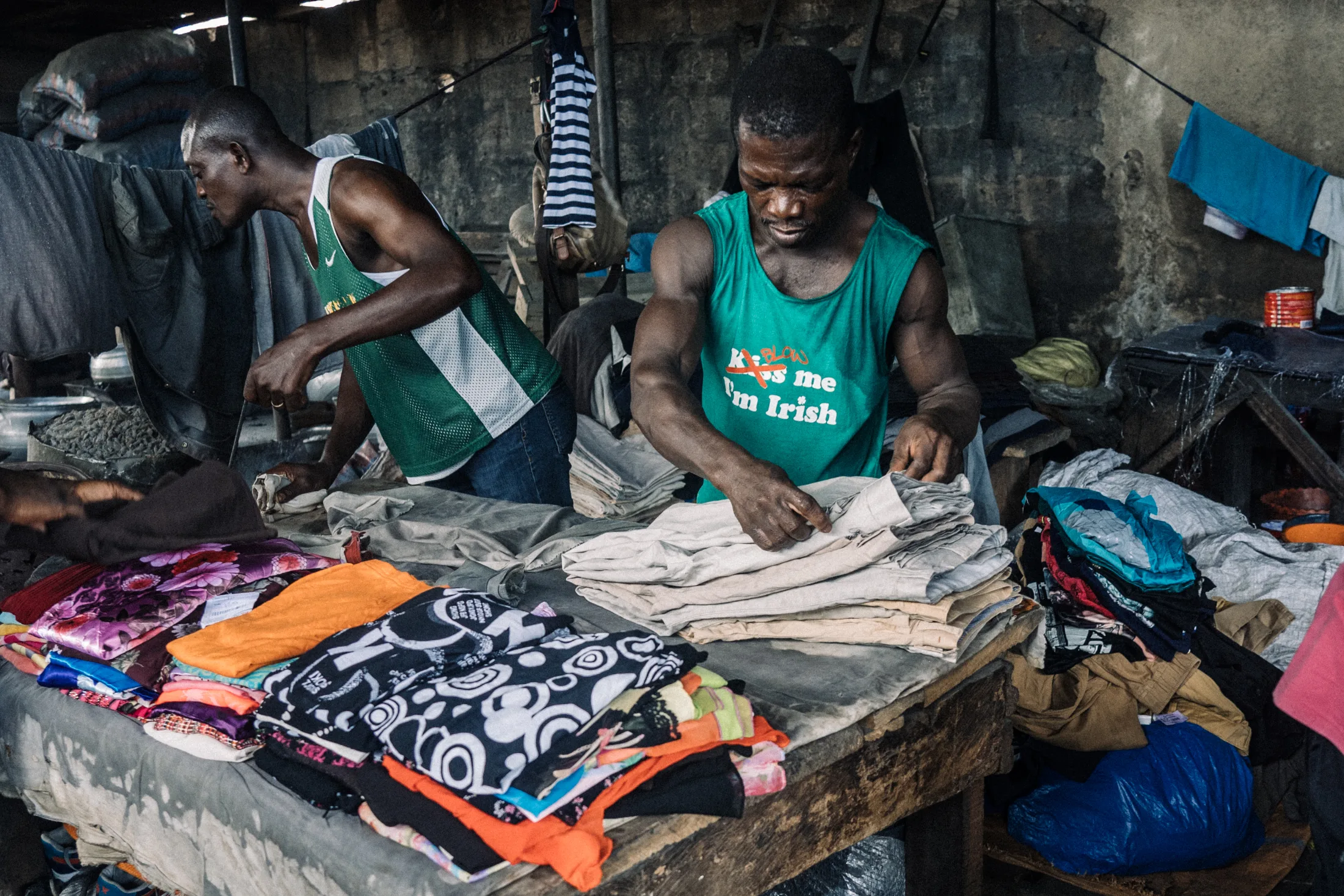
The Revival has also spent the last five or six years funding infrastructural development in the market, on the grounds that circularity cannot be practised in unsafe conditions. "Kantamanto, as we speak, is not a decent working space, based on the improper infrastructure," Agbofah says.
He locates himself squarely inside all of it: "I'm one of them."
Training the people who carry the weight
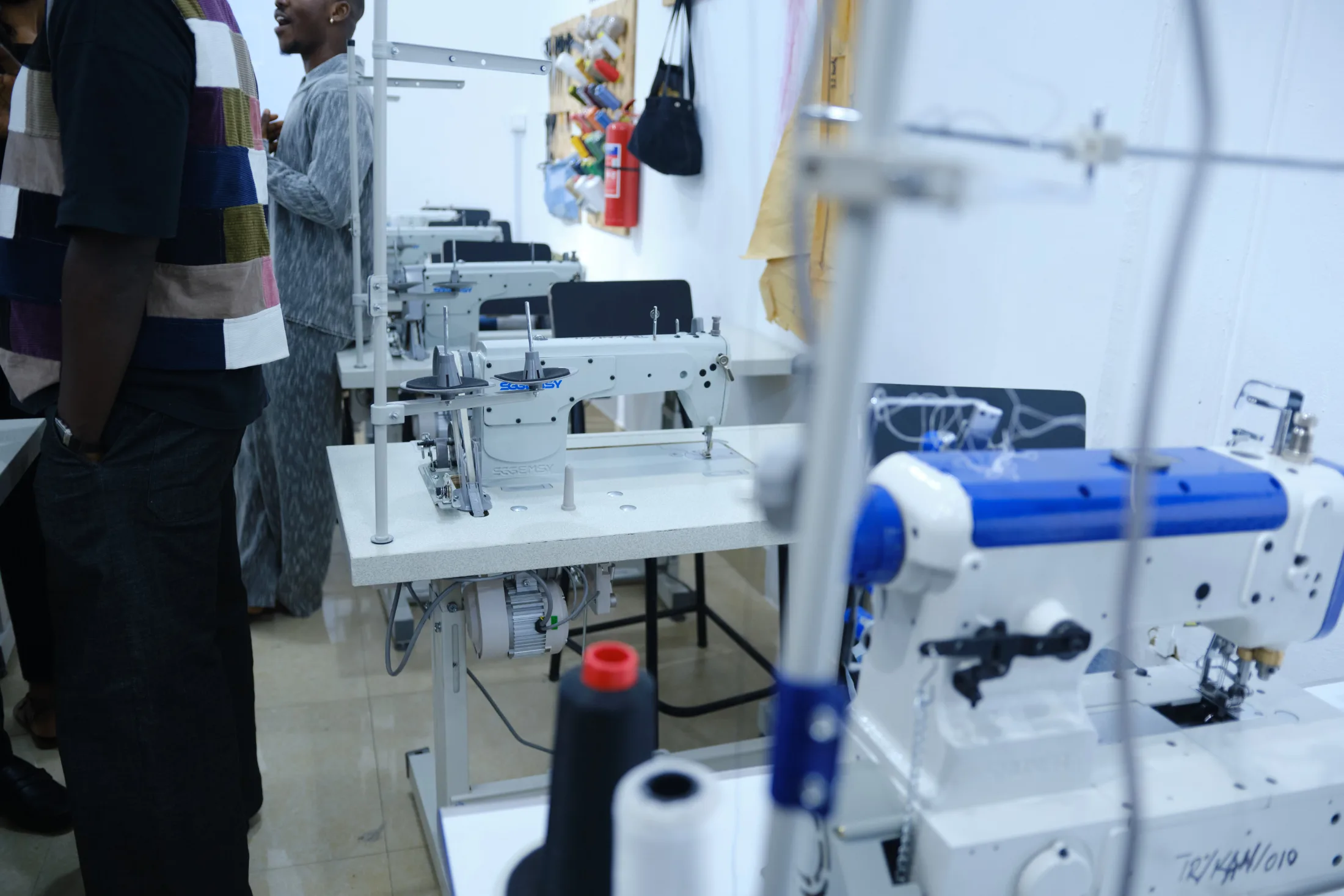
The Revival's workshops teach repair, upcycling, pattern making, sewing, quality control, design thinking and entrepreneurship. The last two cohorts arrived with no sewing experience at all and were taught to use a machine from scratch.
"More than technical skills, people leave with a different perspective on value," Agbofah says. "What I want them to see is that discarded material is not waste, but a resource — an untapped potential."
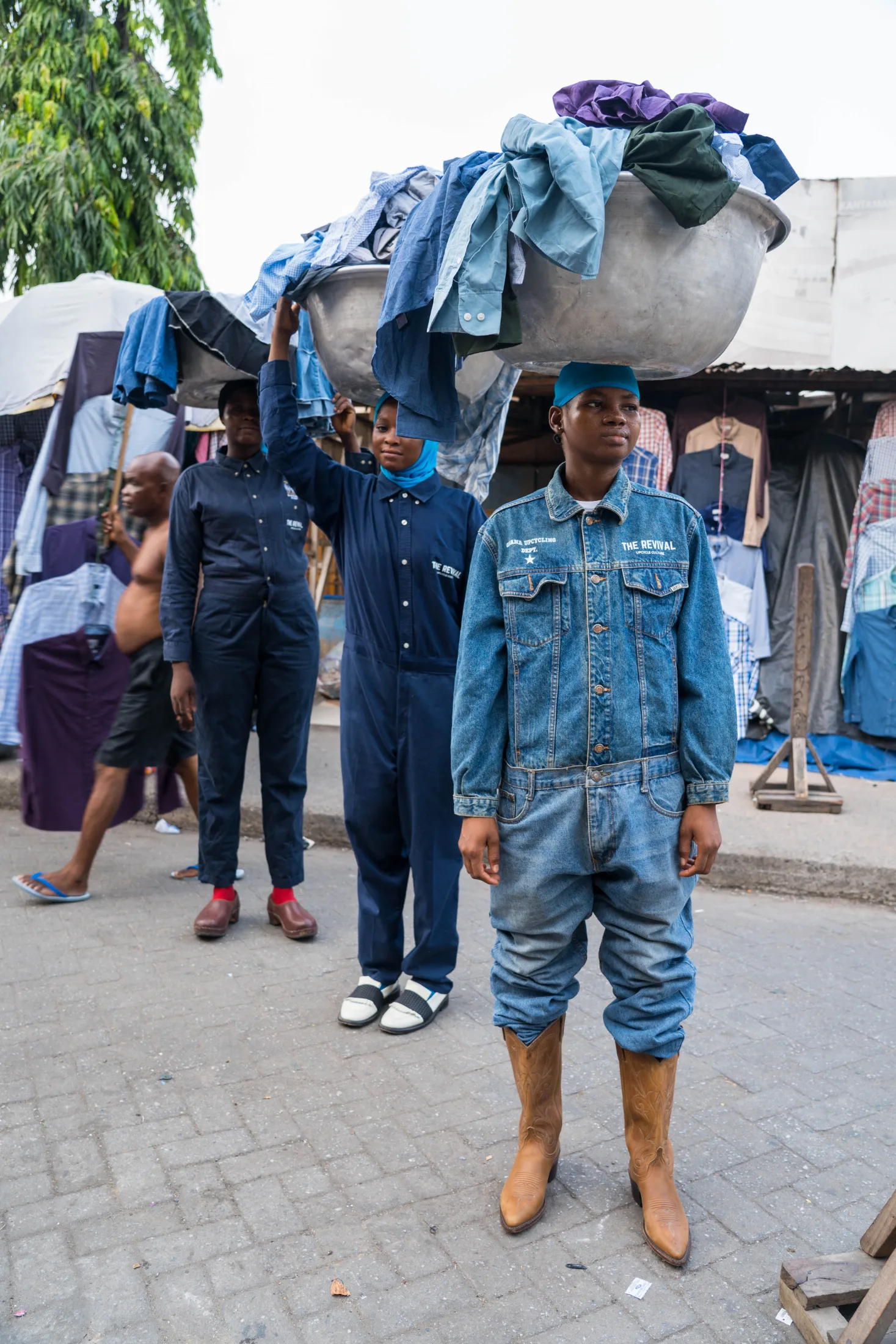
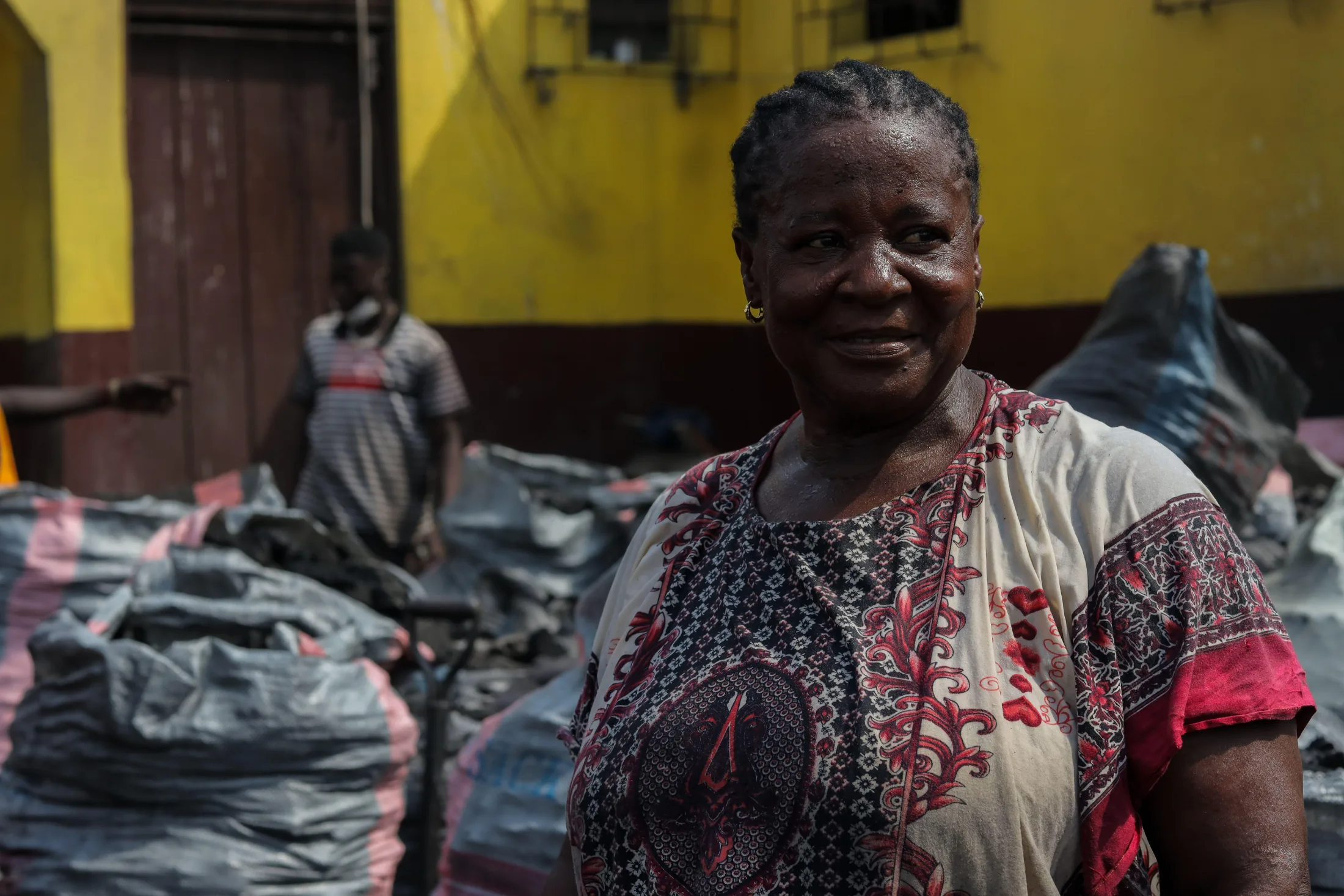
There is no formal entry criterion, but the training program prioritises homeless young women, and the female head-loaders who move bales through the market on their heads. "Sixty-five, seventy-five kilos on their heads," he says, "and make peanuts."
Training, accommodation and support are provided free, and participants are paid during the programme. The intended arc is explicit.
"Coming as a homeless person and leaving as a skilled upcycler, a skilled clothing manufacturer, and an entrepreneur," Agbofah says. Graduates are expected to set up businesses in the areas they came from — and to train and hire others in turn.
International partnerships, including with fashion schools abroad, sit deliberately below this. "Community always comes first," he says. "International partnerships are valuable because they help amplify the work and create opportunities, but they are not the reason Revival exists. If a partnership doesn't create value for the community, it isn't the right partnership for us."
"Kantamanto traders are not beneficiaries of the work," he adds. "They are the co-creators of the work."
But there is a hard limit to all of this.
"Every day we see far more material than we can process. All our storage facilities are full. We have tons and tons of textile waste. But it keeps coming, and sometimes we have to reject it," he says. Scaling responsibly requires infrastructure, equipment, funding, training and people. "The tension is not that we want to help immediately — you also want to build a system that can last."
He describes that decision as the hardest part of the work. "My heart bleeds when I have to reject waste based on capacity." No amount of skill or invention at the receiving end can absorb what is being produced at the sending end.
Upstream, the greenwashing machine
The sending end, meanwhile, is having an excellent year in sustainability.
The sustainable fashion market is projected to grow from USD 12.44 billion in 2026 to USD 27.96 billion by 2034. Global textile production is rising in parallel, with up to 40% of major fashion brands increasing emissions through overproduction and shipping. Both are true at once, which tells you most of what you need to know about how the label is being acquired.
In May, Puck News reported that Shein — one of the world's most polluting fashion brands — had acquired Everlane, a brand built on sustainability and transparency, in a $100 million deal. Everlane put its own valuation at $250 million; reports in March indicated that L Catterton and Everlane CEO Alfred Chang had been seeking an investor to address $90 million in debt.
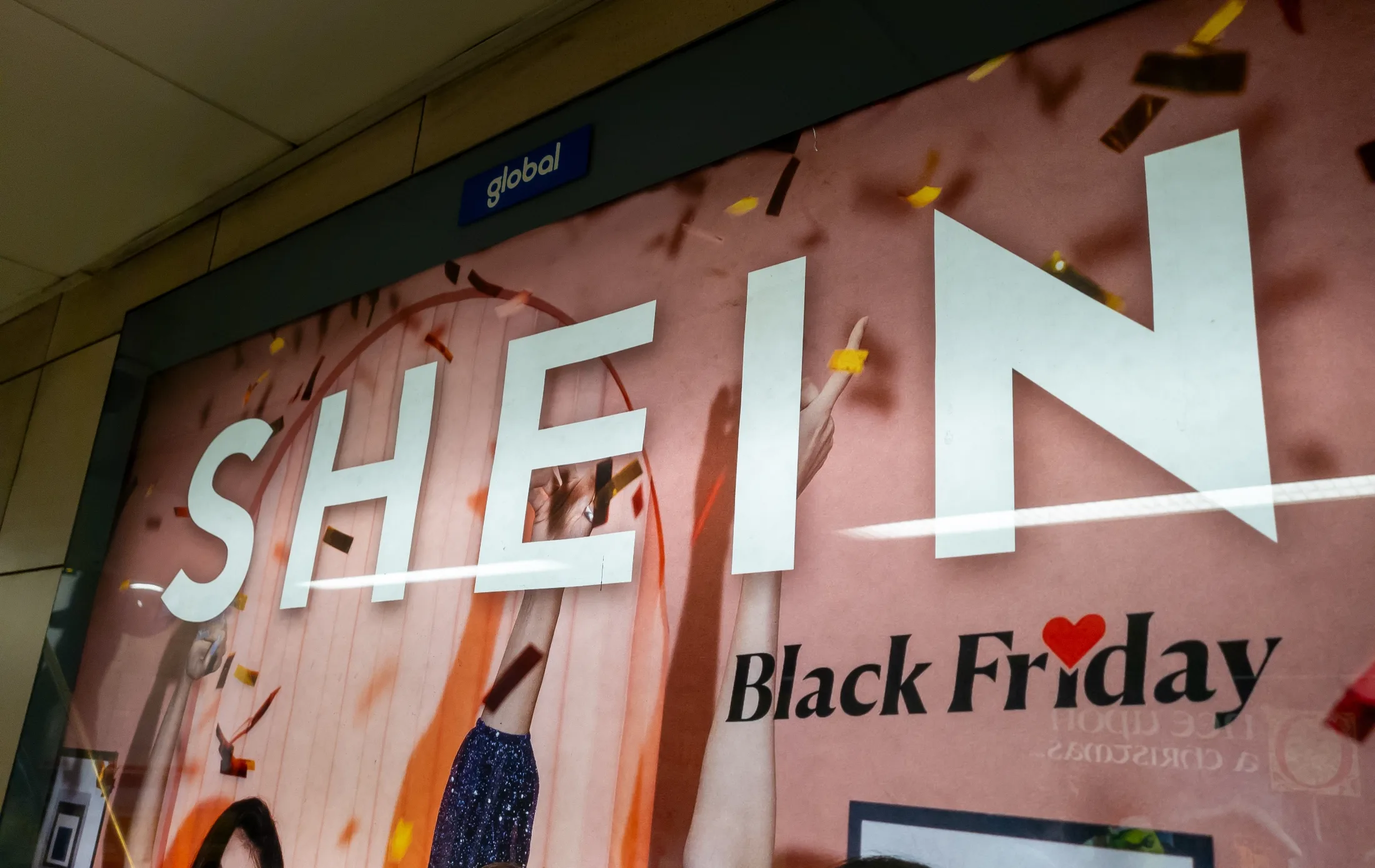
"Everlane was known as arguably one of the first, biggest and most popular sustainable brands," says sustainability educator Nina Gbor, noting that it helped popularise the idea of sustainable fashion. Everlane discontinued certain plastic materials, committed to redeveloping synthetic raw materials into recycled components, and ran "Choose What You Pay" sales showing shoppers production costs and markup.
Shein emitted 16.7 million metric tons of CO2 in a single year and holds the lowest possible rating in commitments, renewals, advocacy and clean shipping, plus a D-minus in materials and circularity.
Gbor says the acquisition "isn't too shocking" and signals "ultra-fast fashion's takeover of 'sustainable fashion.'" She points to what the two business models share: both are "predicated on endless growth, overproduction, and rapidly increasing consumption."
"These are fundamentally some of fast fashion's founding principles," she says. Shein may be "attempting to expand their empire globally," she adds, but a simpler reading is available: "It's just old fashioned marketing tactics to appear more ethical by having a 'sustainable' brand in their portfolio."
Acquisition is one route into the category. Collaboration is the other.
In March, Zara announced a two-year partnership with John Galliano, former creative director of Dior and Margiela, to "re-author the brand's archives… deconstructing and reconfiguring them into new seasonal expressions and creations." Galliano will work with Zara's old stock and previous seasons, upcycling them into new products. It is not Zara's first designer tie-up — Narciso Rodriguez and Kate Moss came before — but unlike a one-off drop, this one is meant to give the brand a face.
The vocabulary is circular. The business underneath it is not. As noted by Good On You, a website that rates fashion and beauty brands on their sustainability, Zara's core remains "an unsustainable ultra fast fashion model due to its quick release of trend-led styles, aggressive marketing practices, and very large number of products."

The same applies to H&M's Stella McCartney collection, built around certified, responsibly sourced materials and fronted by a designer widely treated as the industry's sustainability pioneer. McCartney told Vogue Arabia she chose the collaboration to reach people at a lower price point, and that her "goal is to infiltrate from within, and show people that they can work this."
As of 2019, the H&M group was selling an estimated three billion articles of clothing a year. As The Carbon Closet has noted, a responsibly sourced capsule inside that volume does not reduce mass consumption; it produces more garments, and eventually more waste. Nor does it fill the gaps in H&M's disclosure on sustainability certification and labour practices.
Those garments do not disappear at the end of the season. They arrive in Accra, by the bale, at a rate of 15 million a week — paid for, on arrival, by the people receiving them.
"We cannot recycle our way out"
Agbofah's account of what meaningful accountability would require begins before anything reaches a sorting facility.
"Accountability starts with reducing overproduction, because overproduction is the driving force of overconsumption, and that leads to waste," he says. "We cannot recycle our way out of a system that continues to produce more clothes than the world can realistically use. Brands need to make fewer, better quality garments, designed for longevity, repair and even recycling."
The second half is investment in the places absorbing the consequences: "recycling infrastructure, workers' welfare, community-led innovation, and fair economic opportunities."
And the third is a demand about who is in the room.
"Communities like Kantamanto should not just be consulted. We should have a seat at the table when decisions are made about the future of fashion," he says. "For decades we have been doing the work that much of the industry is only now beginning to call circularity. We have been practising sustainability and circularity decades before it became a buzzword."
"They should be seen not only as recipients of support, but as co-creators, co-authors, partners."
He is also critical about the donation bin, which he identifies as the point where most readers' understanding stops.
"A donated item doesn't disappear when it leaves your closet. It enters a global system involving sorting facilities, exporters, charity shops, importers, traders, repairers and resellers," he says. Some of that system genuinely extends a garment's life. Much of it does not. Winter clothing, for instance, is functionally waste the moment it lands. "When winter clothes get here, they are not functional, because we never have winter."
"Out of sight, out of mind doesn't mean the problem is solved," he says. "It means the problem is starting somewhere else."
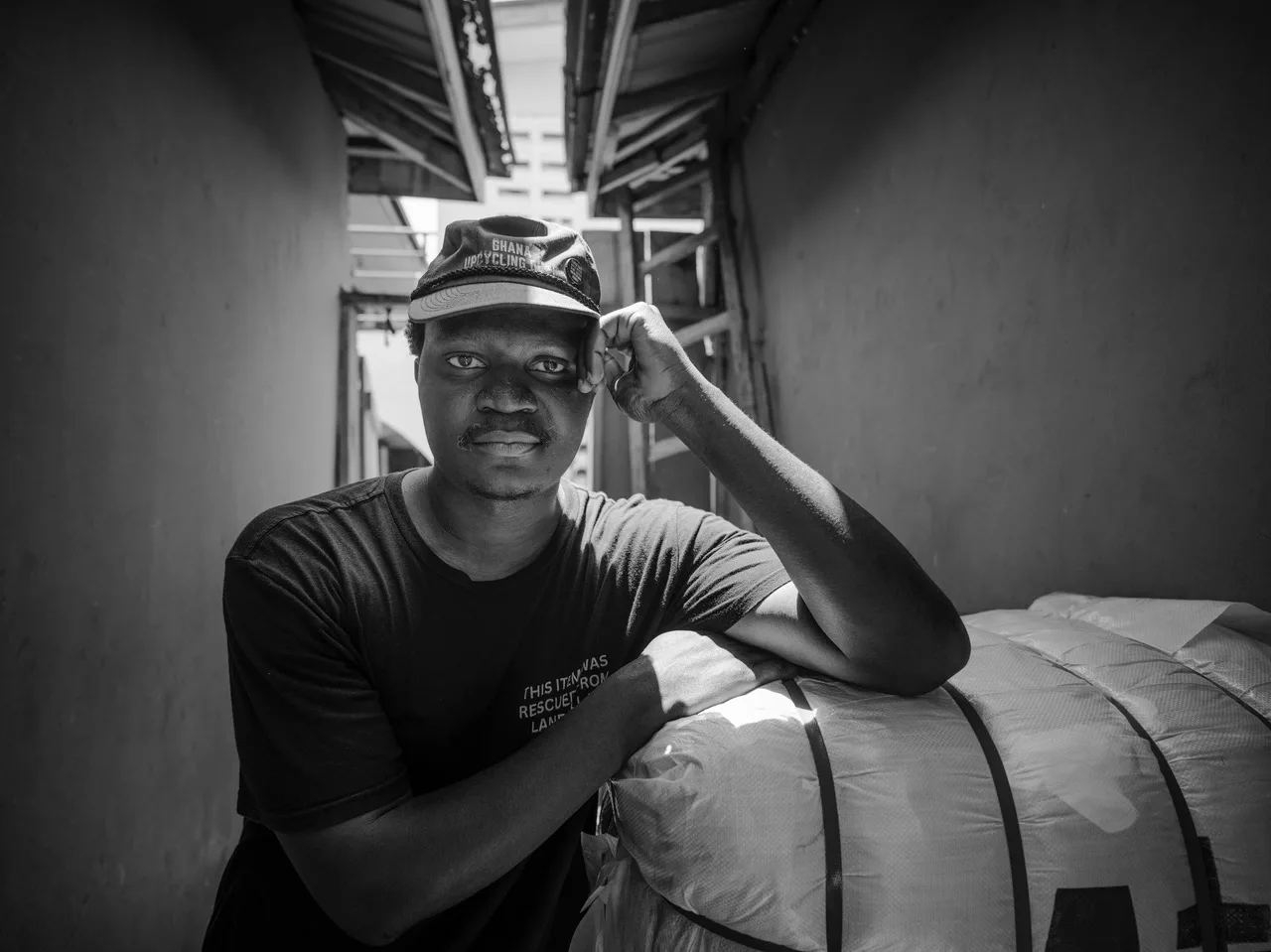
From inside the market, Oppong makes the same request:
“Too often, communities like ours are left to deal with the waste created by overproduction and overconsumption elsewhere. Companies should focus on making better-quality garments that last longer and invest in solutions that support the people handling these clothes at the end of their life. I would also like to see more partnerships with traders, upcyclers, and local communities, as they have valuable knowledge and experience. We are not just managing waste, we are creating solutions.”
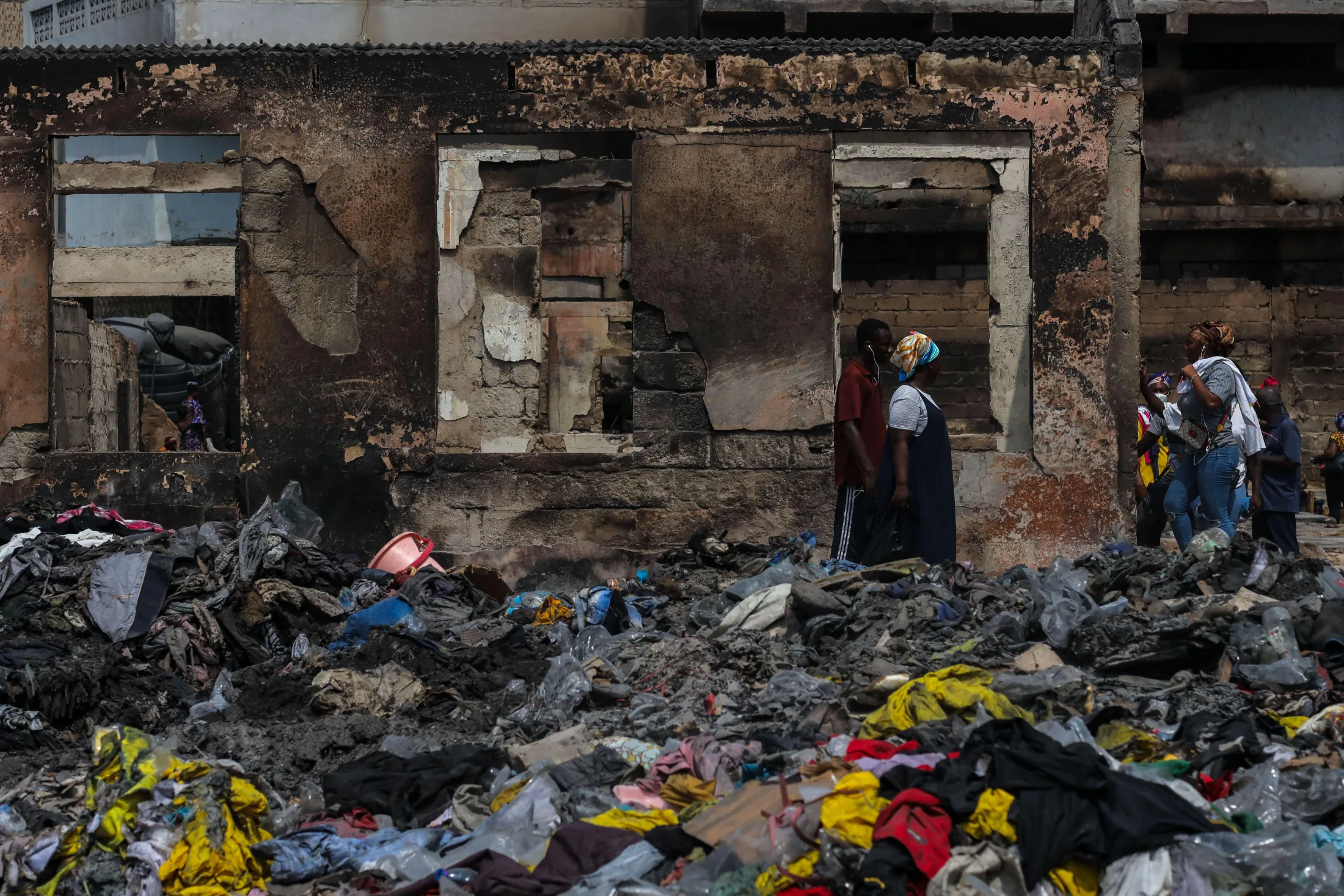
After the fire that tore through Kantamanto in January, The Revival's own definition of its work widened. Agbofah says the fire confirmed a conclusion he had already reached.
"Design alone is not enough. Revival began as a design and upcycling response to waste, but the realities of Kantamanto require engagement with workers' welfare, infrastructure, safety, policy and economic justice."
"We will always be designers and makers," he says. "But we also have a responsibility to advocate for the communities carrying the burden of a global problem they did not create."
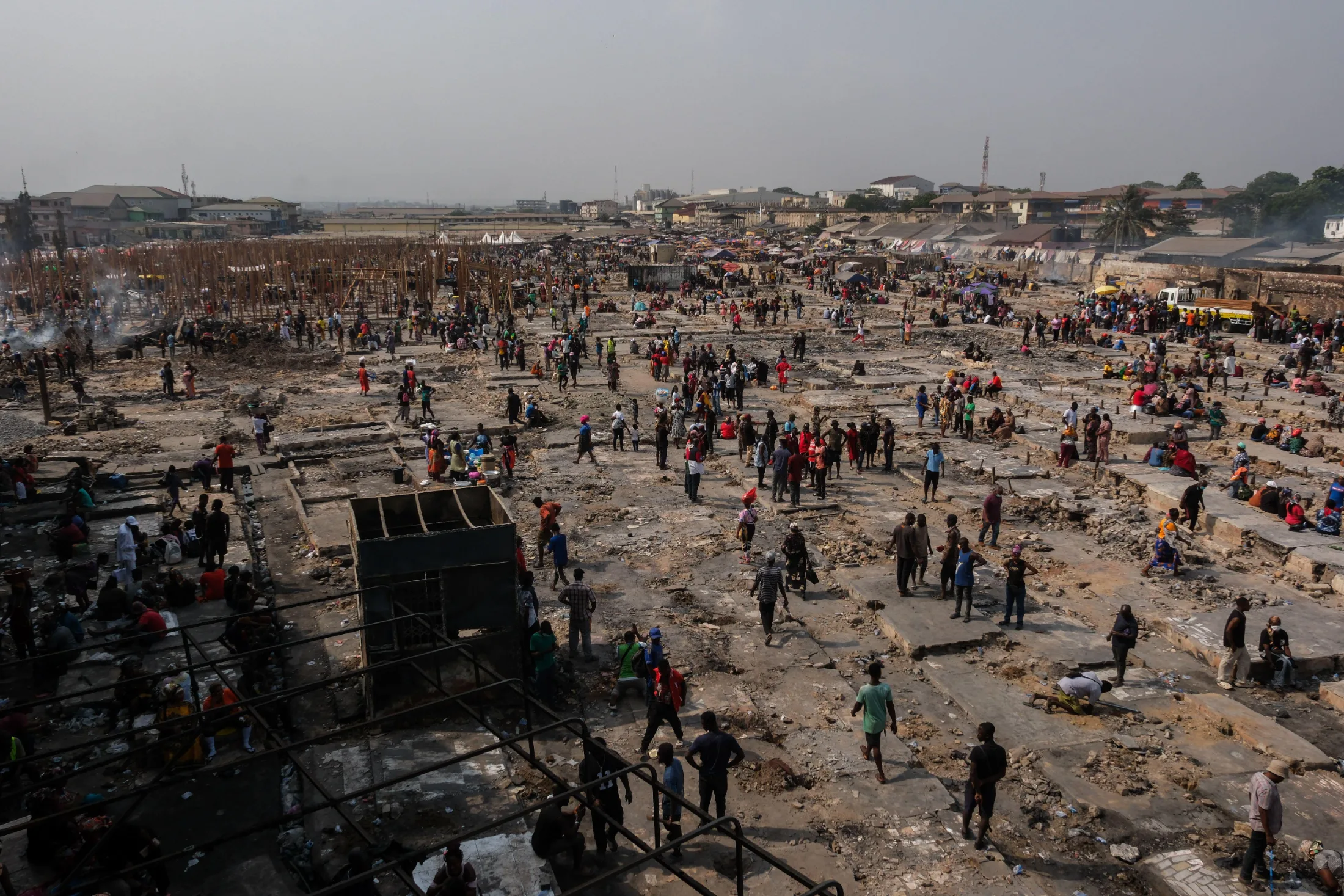
Change is Possible
Gbor argues that fixing the systemic issues in fast fashion requires "broader policy and regulatory measures," and some governments have begun. Last year France passed legislation penalising fast-fashion companies for their environmental impacts. The European Parliament has passed laws requiring EU countries to substantiate sustainability claims, and has banned the destruction of unsold clothes, shoes and accessories.
Individuals matter too, Gbor says — not as a substitute for regulation, but for their capacity to "inspire collective change and influence companies."
Everlane's own history offers a small demonstration. A week after the sale, co-founder Michael Preysman — CEO until 2022, then executive chairman for three years before leaving the board earlier this year — launched a waitlist at stillradical.com, which had gathered nearly 100,000 signatures by 16 June. "I started Everlane in 2011," he writes on the sign-up page. "On May 29th, the current management team sold it to Shein. So we're starting over. Same principles, but a new take. And this time: no venture capital, no private equity." Forbes reported that Preysman was appalled by the sale and what it meant for a company he had built around radical transparency. What the waitlist becomes remains to be seen.
But the more instructive model is already running, at scale, without the press cycle. It is in Kantamanto, where traders have practiced circularity for decades under a name the industry only recently borrowed, and in organizations like The Revival, which has kept 12 million garments in use and now refuses to let the conversation stop at upcycling.
The question is whether the brands generating it will ever agree to share the bill.
About the author
Varsha Yajman
Varsha Yajman is a lawyer, writer and advocate based in the land of the Gadigal People of the Eora Nation. She writes about the intersection of topics like climate justice, mental health and race.
Conversation
A space for Parlor members. Be generous, be real.
Loading…