
Sewing the Shroud, Dressing the Trench
The Aesthetic and Political Rebirth of the Lolitas

Iñaki Estivaliz
July 26, 2026
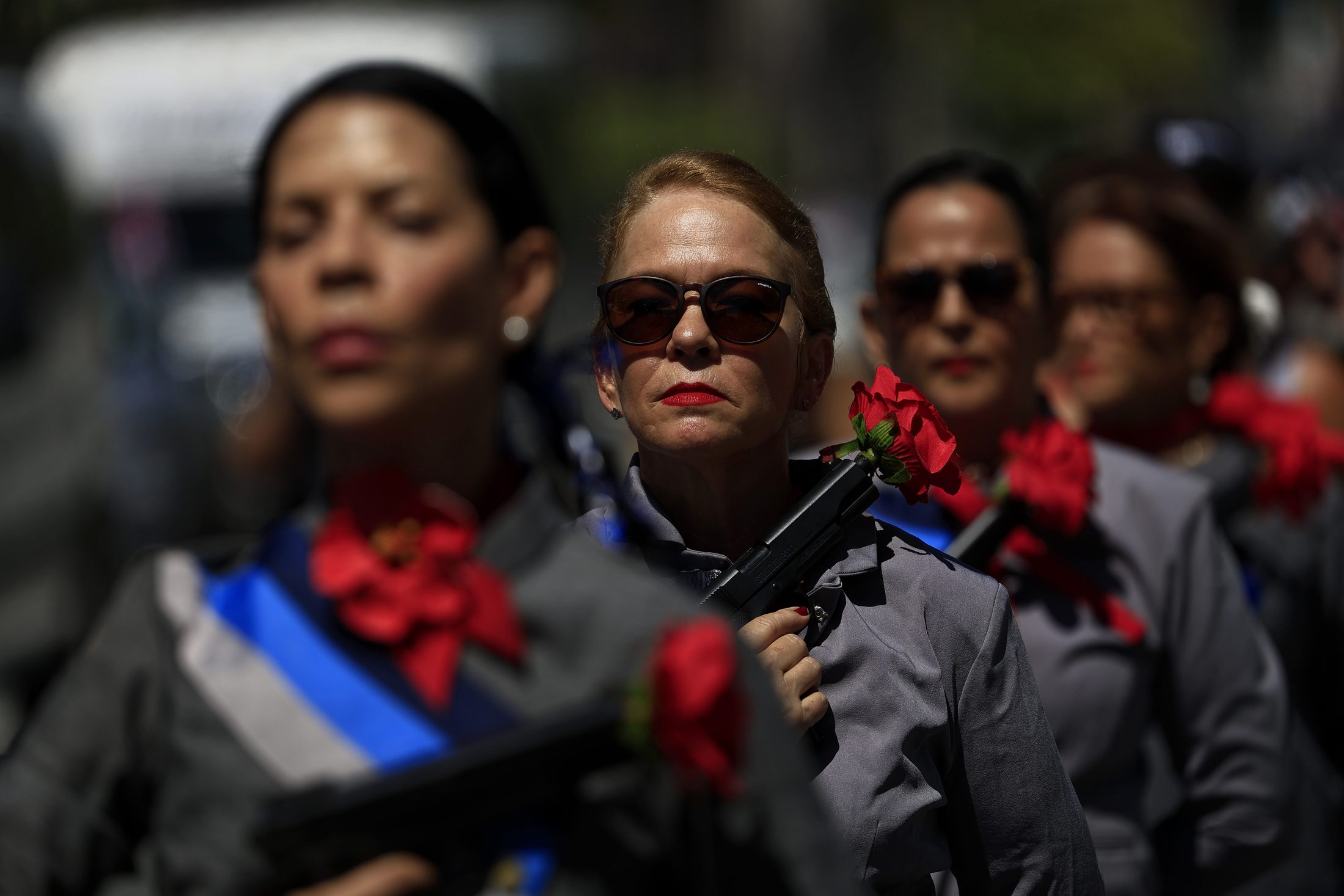
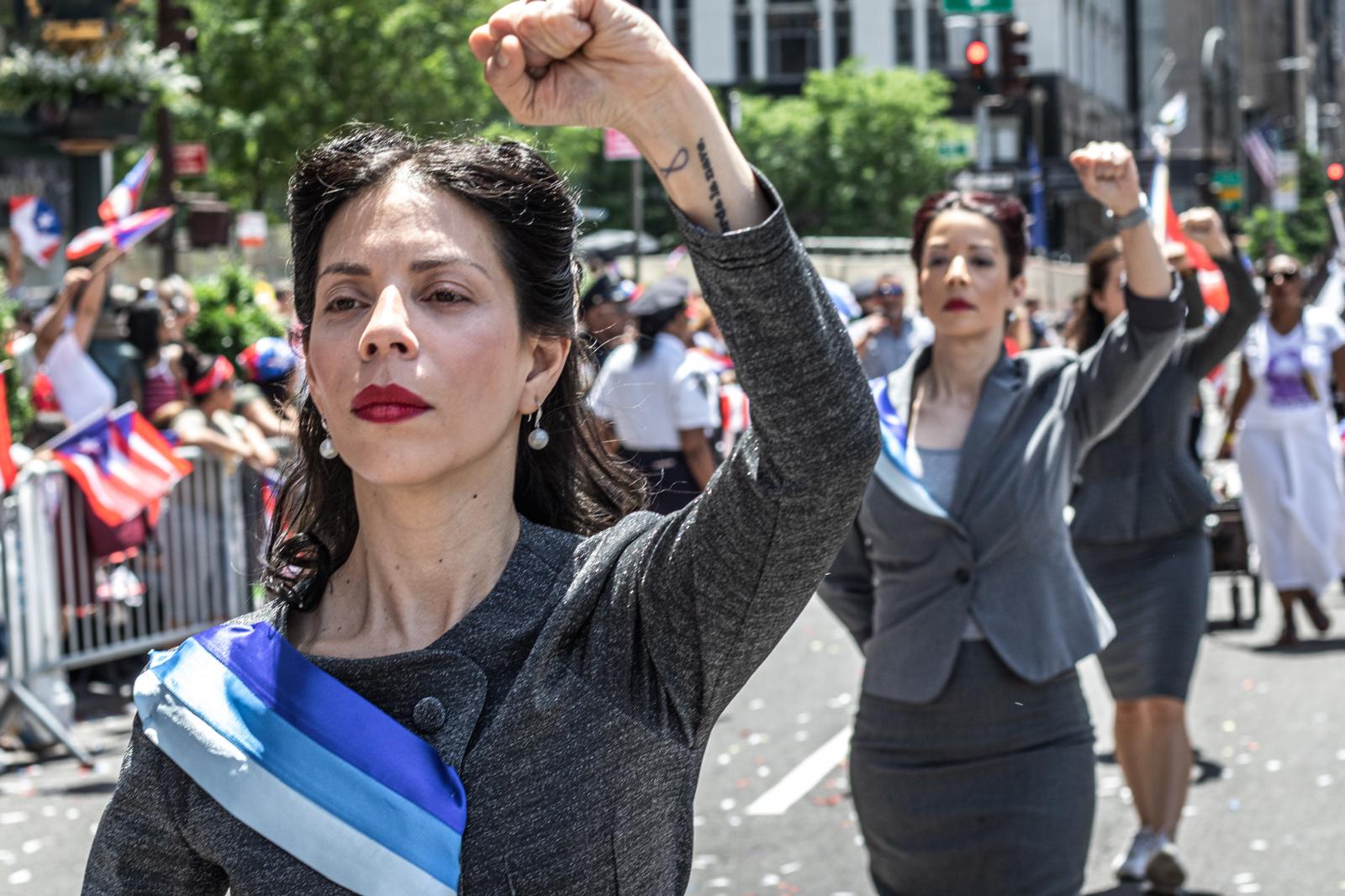
San Juan (PUERTO RICO), 06/25/2026. Las Lolitas march in the Independence march held on August 31, 2025, in San Juan. Las Lolitas are a feminist, pro-independence group that honors the nationalist Lolita Lebrón. The Parlor Magazine/Thais Llorca
When Lolita Lebrón crafted the outfit she would wear on March 1, 1954, to open fire inside the United States Congress, she believed she was sewing the shroud in which her body would be riddled with bullets. Seventy years later, that very same attire has taken on a new and powerful life in the streets. What began in 2018 at the Julia de Burgos Cultural Center in Spanish Harlem as a handful of theater makers and activists seeking to visibilize the female role in the anti-colonial struggle, has transformed into an undeniable aesthetic and political phenomenon: Las Lolitas Performeras (The Lolitas Performers), a trans-inclusive collective of women who claim the anti-colonial struggle as their own. From New York to Puerto Rico, this collective uses the art of performance to confront the neoliberalism that, they assert, is currently tearing their country to pieces.
The Birth of an Army of Art and Resistance: Yaraní del Valle Piñero
The Lolitas have their genesis in the Mujeres por Óscar López Rivera (Women for Óscar López Rivera) group. Óscar López Rivera is a Puerto Rican independence leader who served 35 years in United States federal prisons under charges of seditious conspiracy, until his sentence was commuted by President Barack Obama in 2017. To demand his release, as many women as the years he had been imprisoned would gather on the first Sunday of every month.
“We started with 31 women and each year we added one more woman, up to 35. Although there were more women who weren't official, and our male comrades as well,” recalls Yaraní del Valle Piñero, one of the many young artists who had to leave Puerto Rico during the 2008 economic crisis. Yaraní del Valle Piñero is an actress, arts educator, and cultural manager; she writes, acts, directs theater, and dedicates herself to developing and implementing community-based artistic projects with diverse populations. In Puerto Rico, before leaving, she worked with economically disadvantaged communities, establishing "real solutions from the trench of art." Upon arriving in New York, she immediately immersed herself in the theater circuit of Puerto Rican companies.
Yaraní comes from a family of independence activists: “For as long as I can remember, the independence of Puerto Rico has been spoken about in my home.” Her father, who was an active militant in the movement and a labor organizer, passed away during the pandemic. Her mother, a professor at the University of Puerto Rico, remains active today on the picket lines, “still fighting for the country.” Since her parents had also been part of the diaspora in New York during the 1970s, Yaraní wanted to become politically active as soon as she arrived in the city with her child. This is how she connected with the old guard of the independence movement—her parents' old friends—and joined the Mujeres por Óscar group, where she was active for four years.
“And when Óscar López was released, this group was already organized. We were more than 35 women, along with our male partners, children… and then the anniversary of Lolita Lebrón’s birth began to approach, and many of us started saying that we had to do something.” Lolita Lebrón is the most emblematic female figure of Puerto Rican nationalism, known for leading an armed assault on the United States Congress in 1954 to denounce the island's colonial status, an act for which she served 25 years in prison.
When the comrades in Puerto Rico announced in a press conference that they would celebrate the centennial of Lolita’s birth, the New York group was motivated to act. On December 19, 2018, they met at the Julia de Burgos Cultural Center in El Barrio (Spanish Harlem)—the neighborhood where the famous Puerto Rican poet lived and died on a nearby street, and which today houses organizations such as Los Pleneros de la 23 and Taller Boricua.
The main intention of the meeting was very clear: to make visible and "render undeniable the figure of women in the Puerto Rican independence movement." In a second meeting, they decided to carry out a cycle of political education activities with an educational purpose for the entire year. However, as the National Puerto Rican Day Parade approached, they became convinced that they needed to do something different from the traditional protest of "people wearing the same shirt and carrying banners."
Yaraní missed “that theatrical factor that so many of the demonstrations in Puerto Rico have.” She wanted to bring to the streets the theater she had learned on the island with Maritza Pérez and Rosa Luisa Márquez; from there, through a process of collective debate, emerged the idea of dressing exactly like Lolita on the day of the assault on Congress.
“We wanted to elevate her action as an act of patriotic political activism, not as an act of terrorism, which is how the actions of our most radical male and female comrades have often been interpreted,” Yaraní relates. “Because she went there thinking she was going to die, that she would be riddled with bullets. She wanted to draw attention; she didn't shoot anyone, she aimed upward, and she knew that this act would probably cost her life. That is why she left that note in her purse: 'I came to die for Puerto Rico'. She was a seamstress—can you imagine sewing an outfit that you designed to die in?”
Yaraní’s voice breaks as she recalls the scene, asserting that, through that lens, “that attire took on a whole new meaning.”
In this way, the Mujeres por Óscar marched in the parade dressed like Lolita on the day of the action in Congress, incorporating a choreography of very simple movements, ideal for an intergenerational group that included many older women. Some resisted at first—they didn't want to wear costumes to a political event. The organizers clarified: this wasn't dressing up as Lolita Lebrón, it was putting on the uniform of the Boricua women's liberation army
The response to the performance was immediate. The comrades from Puerto Rico who saw them in the parade were fascinated and, upon their return, mobilized one hundred women on the island. As Yaraní concludes about this cross-ocean feedback: “It was a mutual reinforcement. They inspired us to mobilize, and we inspired them in aesthetic terms."
From Aesthetics to Mysticism: Gradissa Fernández
That aesthetic spark ignited in the streets of New York found its perfect recipient in Puerto Rico: Gradissa Fernández. She was the one responsible for convening on the island, for the centennial of Lolita Lebrón’s birth in 2019, what they initially baptized as Las Lolitas Performeras (The Lolitas Performers).
“I saw the Lolitas of New York dressed just as Lola entered Congress, and it struck me as an image of great strength, great bravery, great presence, and dignity,” Gradissa relates. The atmosphere was already receptive: on the eve of the centennial, conferences, murals, and contests were being planned. In addition, actress Viviana Torres was performing a monologue about Lolita, and the Puerto Rican Independence Party (PIP) had introduced its own “Lolitas collective,” though the latter marched without the characteristic attire.
For Gradissa, the ground was already fertile thanks to a solid network of creators who had spent years using art as a tool for social critique. “It seems to me that the power to convene was already there among many of us, because here we have a collective of artists who have been working for many years on activities that feature this political denunciation,” she explains, recalling historic collective projects like Caballo de Troya (Trojan Horse). For this group—composed of creators like Pepín Lugo, Maritza Martínez, Rosabel Otón, Maritza Pérez, Rafi Trelles, Nick Quijano, Checo Cuevas, or Ariel Cuevas—the goal has always been the same: “that the activity of denunciation and demonstration also carry a nuance of art and symbolic transcendence, creating an image that transcends, one that is more powerful to the collective unconscious.”
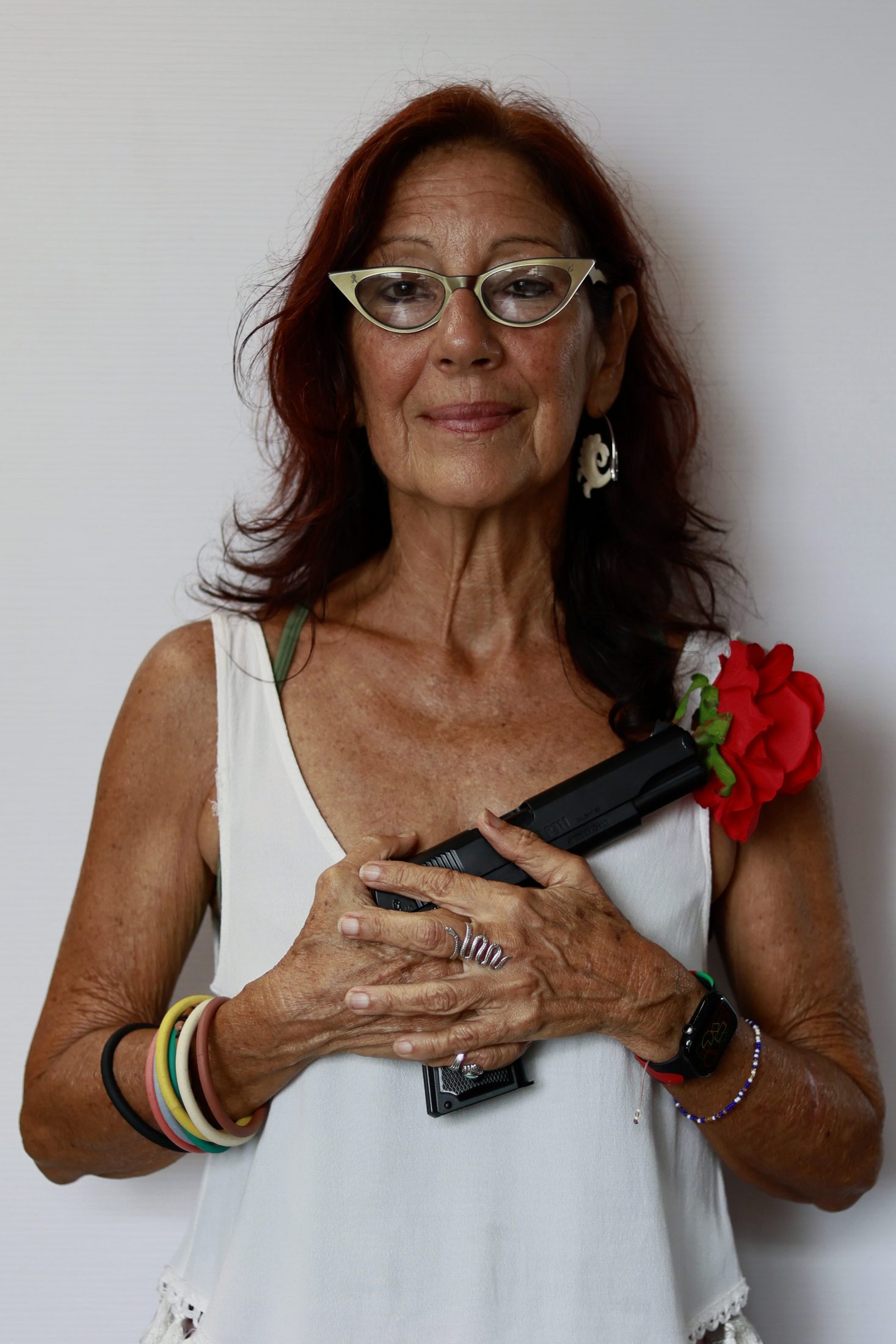
The definitive image arrived by way of a piece that visual artist Rafi Trelles created for the centennial: a gun with a flower. “Right away, I imagined an army of wonderful women with that strength, carrying the gun and the flower,” Gradissa recalls. That potent visual symbol allowed them, in turn, to work on action in motion and develop a choreography. Immediately, Gradissa shared the idea with Maritza Martínez and Rosabel Otón, and called upon Katy Vigo to direct the group, knowing that her experience with the Agua, Sol y Sereno collective and her training with the legendary Bread and Puppet theater company made her the ideal person to coordinate the movements of that crowd.
Beyond the attire and the choreography, Gradissa felt the movement required a deeper component. “An eagerness to also add a spiritual part to this, which Lola herself possessed. And we know that in these times, working for that energy is so very important because that is where we unite our hearts.”
To invoke that mysticism, the collective incorporated an ancestral element: the blowing of the conch shell (el toque del caracol) to open and close each of their demonstrations. “The conch shell represents the cycle. And that plunges everyone into an energy of commitment, of honoring what is best, of solemnity,” the organizer explains. Under this preparation, the members of the group advanced with impeccable steadfastness while repeating the mantra that defines them: “Las lolitas son bonitas y poderosas” (The Lolitas are beautiful and powerful). For Gradissa, the impact is evident: “Everyone takes it very seriously. It’s beautiful to watch because we get emotional seeing all of them in such a commitment, showing beauty within that firmness, and singing.”
The figure of Lolita Lebrón thus became the engine of a massive mobilization that ultimately surpassed the collective's own expectations. Although at first some women showed a certain resistance due to the historical hardness of the gun-and-flower symbol, over time they joined in massive numbers. “The symbol transcends and goes beyond us,” she reflects.
Even the group's name itself underwent a political evolution. Originally, the PIP baptized them as Las Lolitas Performeras to distinguish them from their other collective. Gradissa proudly defends the term against prejudices: “There are those who are afraid of the word performance because they think it's nothing more than theatrical banality, but a performance is a tremendous political act as well—an act of presence and political denunciation.” Over time, however, the conceptual barriers collapsed: today, the distinction has been left behind, and people on the street emphatically call them, simply, “Las Lolitas.”
Support independent journalism
Enjoy reading The Parlor?
Become a paid subscriber to get full access, early releases, and subscriber-only extras.
Become a paid subscriberThe Lolitas of Now: América Facundo
For América Facundo, professor at the UPR School of Medicine and Director of the Hispanic Center of Excellence, joining this deployment of women was both a natural and urgent response. "I subscribe to everything Gradissa said," she states to open her testimony, explaining that from the moment she learned of the first mobilization, she felt a moral obligation to be there. Her primary driver was active resistance against what she bluntly defines as "a fascist government."
"I thought it was extraordinary that a group of women would emerge under the name of Lolita Lebrón, which simultaneously honored her while presenting a form of opposition to the atrocities of the government we have now in Puerto Rico," relates América, who has since been present at every single one of the collective's demonstrations.
Asked whether she feels Lebrón's spiritual presence in the uniform, América answers that what she feels, above all, is the presence of the Lolitas of today. Nearly seven decades on, the mysticism of the past thins against the hard reality of the present. What sustains her and keeps her steadfast in the march is "not only the camaraderie, which alone is worth un millón de pesos (a million bucks), but that complicity of standing shoulder-to-shoulder against what is causing us so much harm."
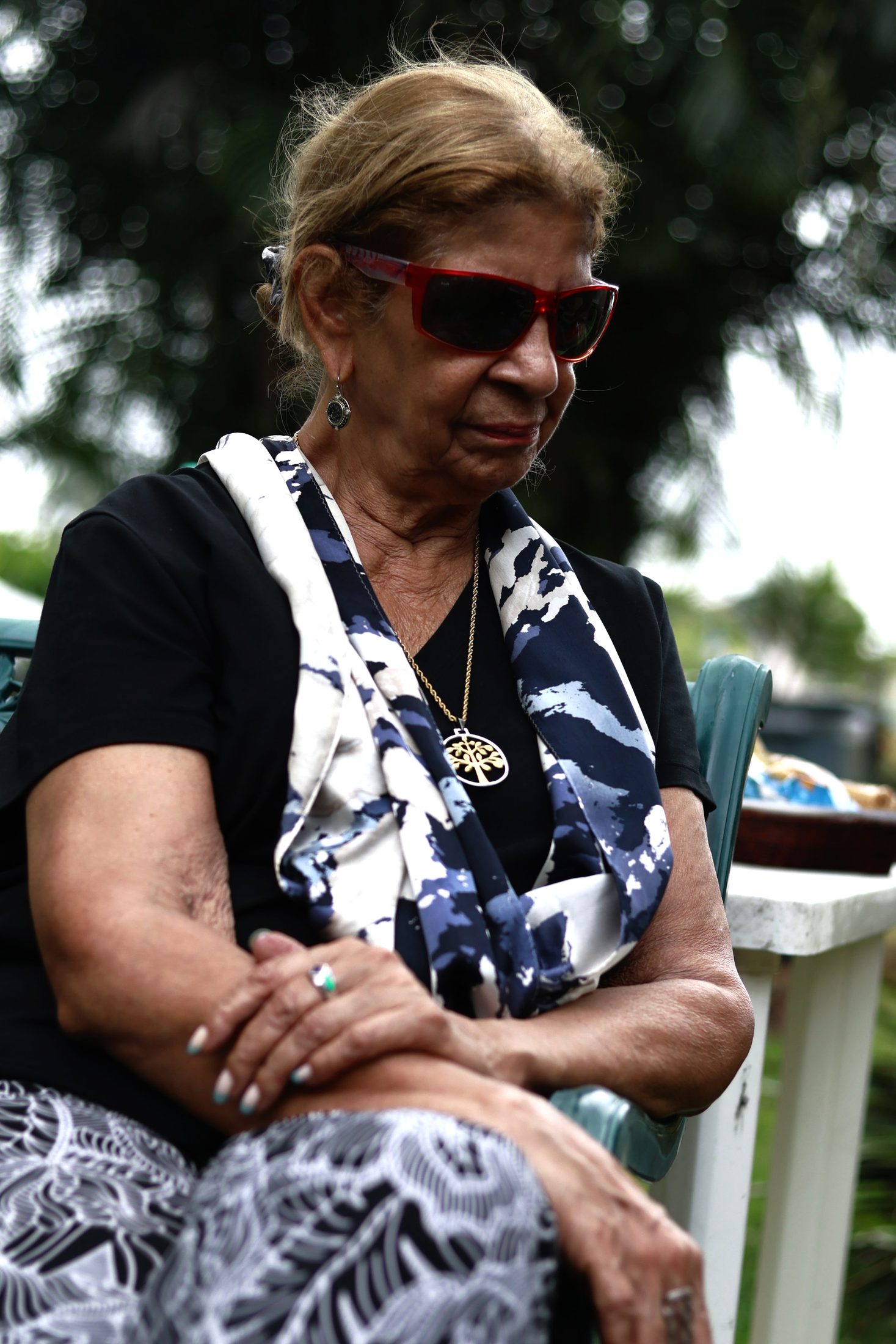
That commitment in today's Puerto Rico, however, is accompanied by deep historical indignation. It causes América great bitterness to contrast the sacrifice of Lolita Lebrón and the other nationalists—who paid with decades of prison, abuse, and humiliation for their devotion to the cause—with the current state of the island. She severely denounces an administration that seeks annexation to the United States—"a country with which we have nothing to do with. Not culturally, not linguistically, not racially... nothing"—while executing neoliberal policies that are "selling the country off a cantos (in pieces)."
Her warning about the direction of the country is sharp, and she does not hide her anguish regarding the immediate future: "I am very afraid that before the next elections, we will have very little left." For this reason, to América, the urgency of the struggle is not an exercise in historical nostalgia, but a battle of the present; hence her determination to march alongside her comrades: "I have felt the presence of the Lolitas of now more than the one from the 50s and 60s."
The Trench of the Classroom and the Weight of the Uniform: Ana Rosa Rivera Negrón
Ana Rosa Rivera Negrón, professor at the Inter American University and the School of Plastic Arts, defines herself as part of the “honorable lineage of the homeland.” Her family knew Lolita closely; the leader even stayed at her grandparents' house in Naranjito. As an artist—a facet she prioritizes over being an educator—Ana Rosa immediately joined the Lolitas collective, driven by the conviction that the power of an image endures in the collective memory.
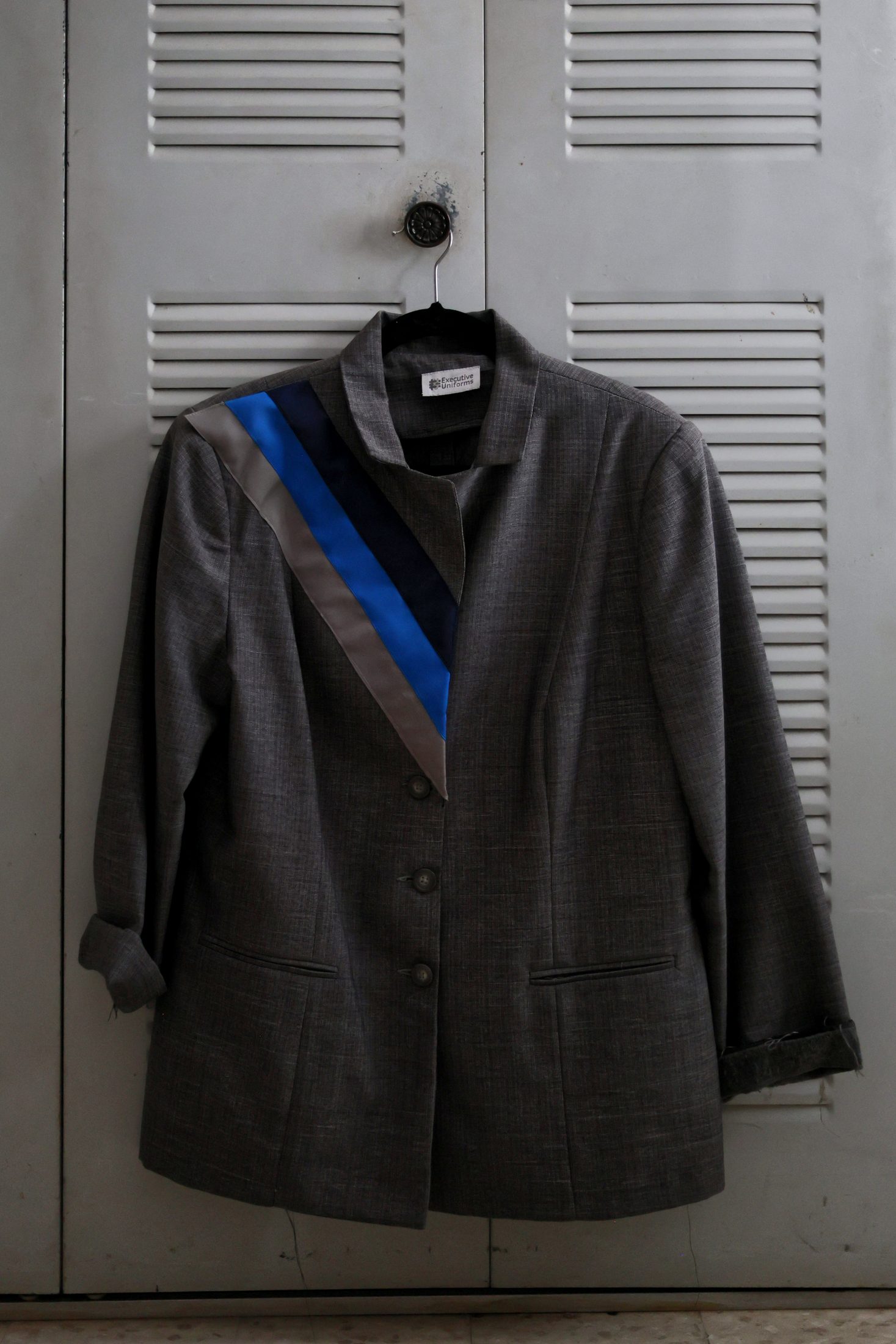
For her, the process of bringing the uniform to life was a creative and collaborative effort where each woman resolved the gray and blue attire according to her means and her body, whether with skirts or pants. But the true element of cohesion lay in the smallest details: “The red bow element gave us unity, and it was also a symbol of passion, of blood; it was just a little piece of cloth, but we wore makeup and we also drew Lolita's mole, and we drew it on the little girls too.” Wearing these symbols, far from being a superficial act, carries a rigorous ethical weight for Ana Rosa: “Dressing that way makes us responsible for a conduct that must be as close to unblemished as possible,” she explains, comparing the outfit to the respectable vestments of a nurse, a priest, or a judge.
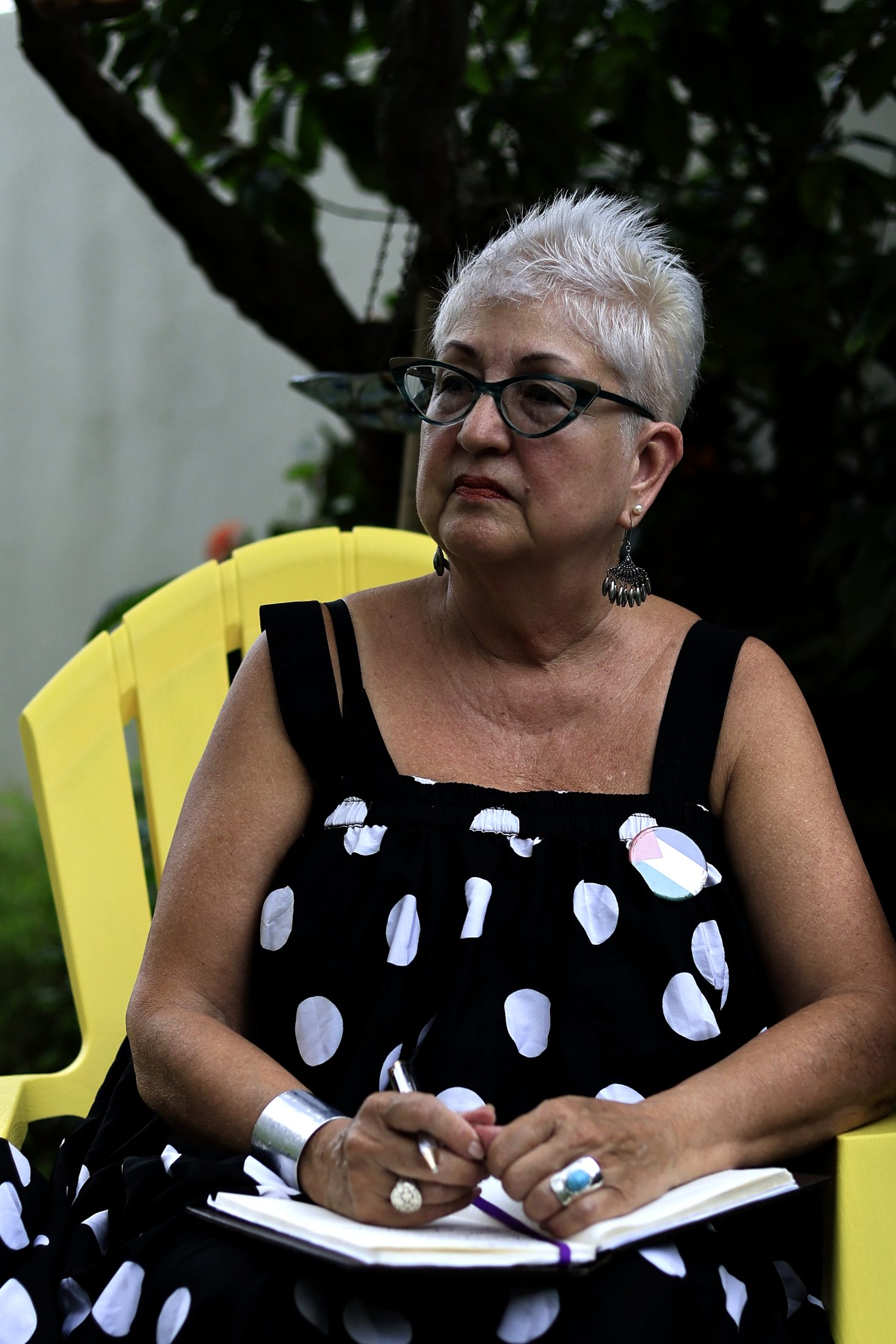
This solemnity was etched into the participants' memory during the first march in 2019, when they went to the cemetery to serenade the nationalist leader. “Many of us cried silent tears,” she recalls deeply moved, describing how their skin crawled with goosebumps when the women's voices intoned a hymn of struggle that echoed with impressive strength in the vault of the tunnel as they left the graveyard. This act of respect was, for the group, a way to honor a historical sacrifice that today is difficult to fully comprehend: “No matter how many biographies we read, we cannot imagine the torture of being there, that relatives died and she couldn't go to their funerals... the mistreatment, the humiliation, being a woman, to begin with.”
Beyond the street demonstration, Ana Rosa fights her own daily battle against what she denounces as an effective and systematic “politics of un-educating us,” alarmed that new university generations no longer recognize the country’s cultural touchstones, such as the artist Antonio Martorell or Mayor Doña Fela. “That is my trench,” she states with pride. “No student leaves my classes without knowing who Lolita Lebrón is. I play the revolutionary anthem for them, I make them stand up and copy it down. In my classroom, I definitely do my little things.”
The Beat of the Street and the Lolitas of the Future: Katy Vigo
Giving rhythm, movement, and cohesion to this "wonderful and powerful army" was the task entrusted to Katy Vigo, co-founder of the street theater collective Agua, Sol y Sereno. With a solid background in dance and public space interventions, Katy confesses that Gradissa's proposal to direct the group artistically scared her at first. “I was scared at the beginning because these are all incredibly powerful women, with so much devotion to the country, and I admire them a lot,” she relates. However, she took on the challenge inspired by the determination of the nationalist leader herself: “I’m going to shoulder it with great honor, just as Lolita did. If Lolita went to Congress over there and did what she did for all of us, why can’t I direct them?”
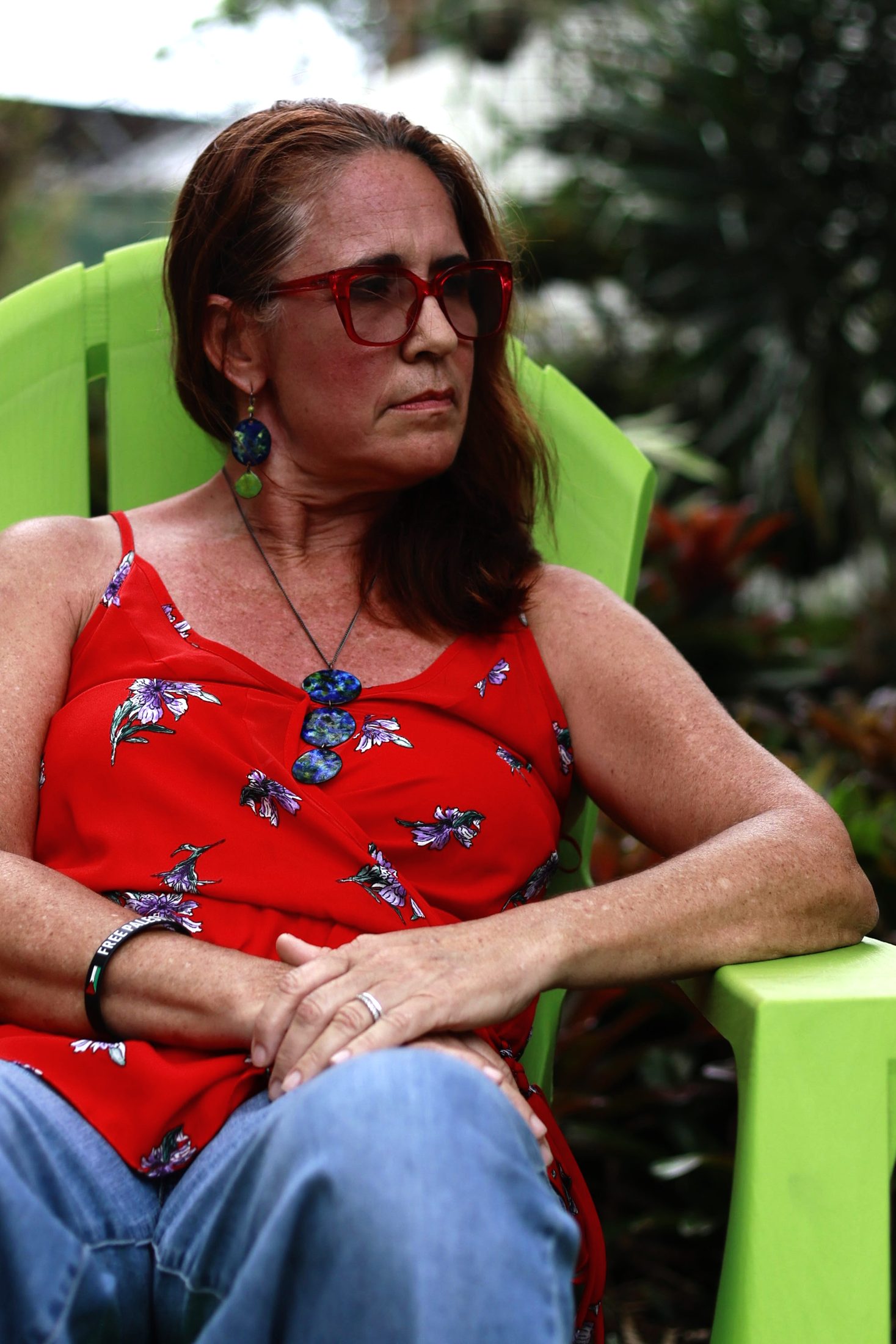
For the music, they used a song by the young singer-songwriter iLe, whose force and protest lyrics matched the group's message — and cut across the age differences among the members. The real challenge lay in structuring a choreography suitable for a diverse group that would only have a single dress rehearsal. “How do you run a rehearsal without making the women feel intimidated because they don't know how to dance, or feel like they can't sing and dance at the same time?” Katy explains. To solve this, she recorded a practice video with her theater collective to send to the participants. The key was designing movements that were simple yet deeply symbolic: “A choreography that is simple, so we can follow each other, that doesn’t intimidate anyone, but is strong—showing bravery, courage, and firmness.” Under that premise of mutual trust, everything flowed naturally.
For Katy, the meaning of the uniform is constantly being rewritten: “We are the embodiment of Lolita now in the present.” This conviction took on an endearing dimension when it transformed into a direct family legacy. In the first demonstration, held just before the pandemic, her three daughters participated—with the eldest being pregnant at the time. In the recent parade, the heritage expanded to include her two young granddaughters, aged five and six, who learned the songs and choreography with total enthusiasm. Seeing three generations of her own blood marching together reaffirms the permanent nature of the struggle: “I am more than honored because I have my family... they are part of this army that I think will keep going. There will be Lolitas for the future. My granddaughters already feel like Lolitas.”
Provocation, Art, and the Weight of an Absolute Devotion: Maritza Martínez Planell
Maritza Martínez Planell—a choreographer, artist, and realtor—is part of the original Lolitas convened from the very beginning by Gradissa. With a long history of attending demonstrations since her high school and university years, Maritza explains that she reached a point of exhaustion with conventional protests, feeling the need to seek new avenues of expression. “There comes a moment when you say: what else can I do? This does nothing. This is just another demonstration. And so, in this other way, looking for something that sets it apart, doing a performance... you feel like you are reaching perhaps another group, a different crowd, and that is important to me.”
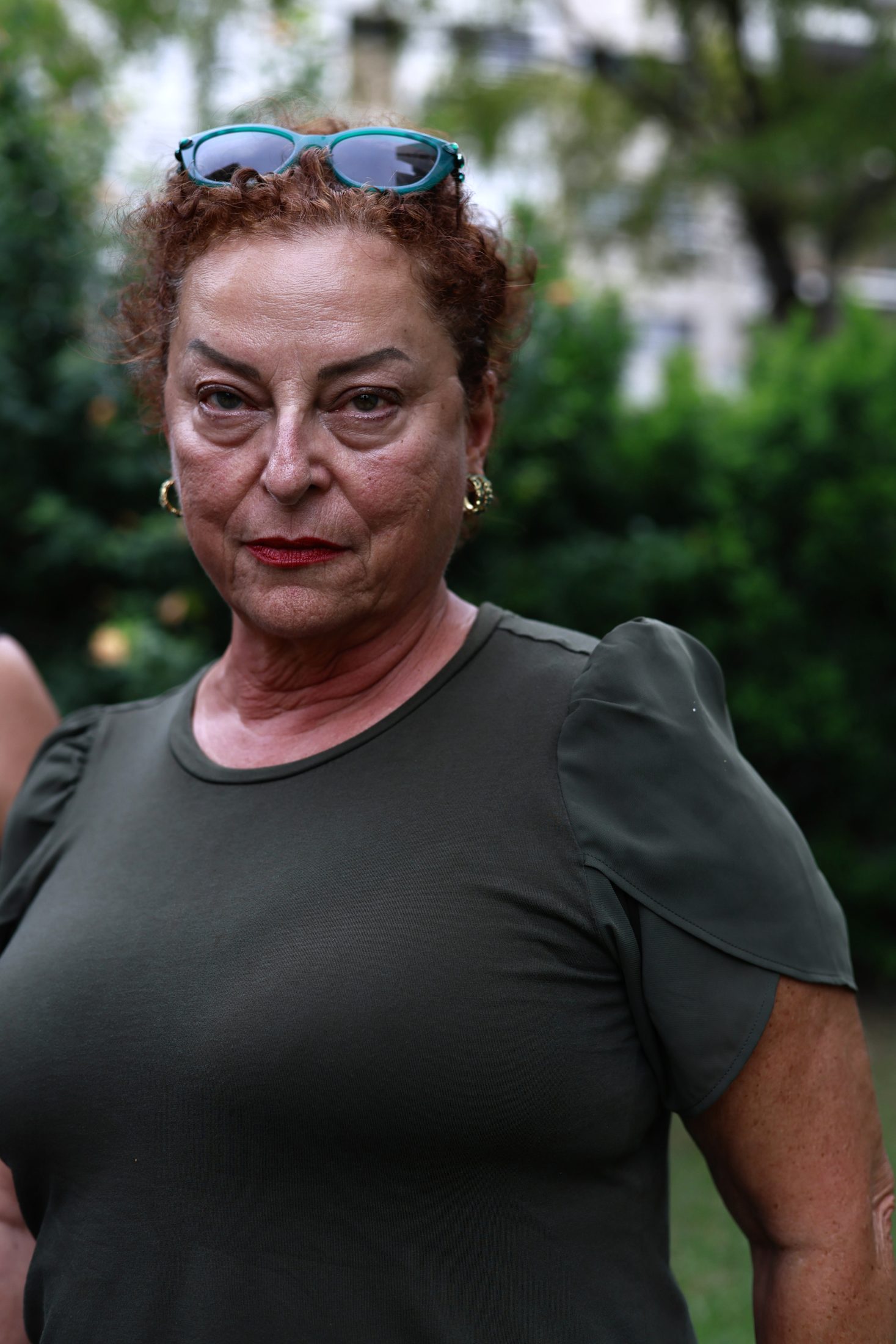
For Maritza, the Lolitas' strength is the way they burst into public space — through visual provocation and theatrical props — to jolt the collective conscience.“that is precisely what [The Lolitas] does with this mobilization. And it doesn’t just set out to provoke, it is also making a call to the Puerto Rican woman, who is cojonuda (ballsy), a fighter, to step up to the front.” She points to the political force of the sight itself: an all-women contingent advancing with strength, purpose, and a shared uniform, while the men take on support tasks, carrying water and bags.
Despite the effort and dedication that the collective demands, Maritza approaches her work with deep humility when contrasting it with the historical sacrifice of the nationalist leader. “Never in my life could I have made a sacrifice so extraordinary as leaving my children, leaving my country, and leaving my entire life behind to make a statement like that. So, of course, we make our statement in our own way, a tiny one, because compared to that other one, carajo, you know, it’s tiny.”
From the Old Guard to the New Allies: Norma Rodríguez
That very same indignation at the island's colonial reality and the desire to find new forms of protest is what led Norma Rodríguez, one of the latest additions to the Lolitas, to join the group. A solitary demonstrator for many years after the breaking point brought about by Law 7, Norma used to pack her backpack with water and protection in case trouble arose on the streets, navigating her husband's constant worry. Her first participation with the collective took place at the Sixto Escobar Park following an invitation; although she didn't have the complete uniform, they lent her a T-shirt so she could integrate. "For me, it was a brutal source of pride—I never thought I could be in this group," she confesses with deep emotion.
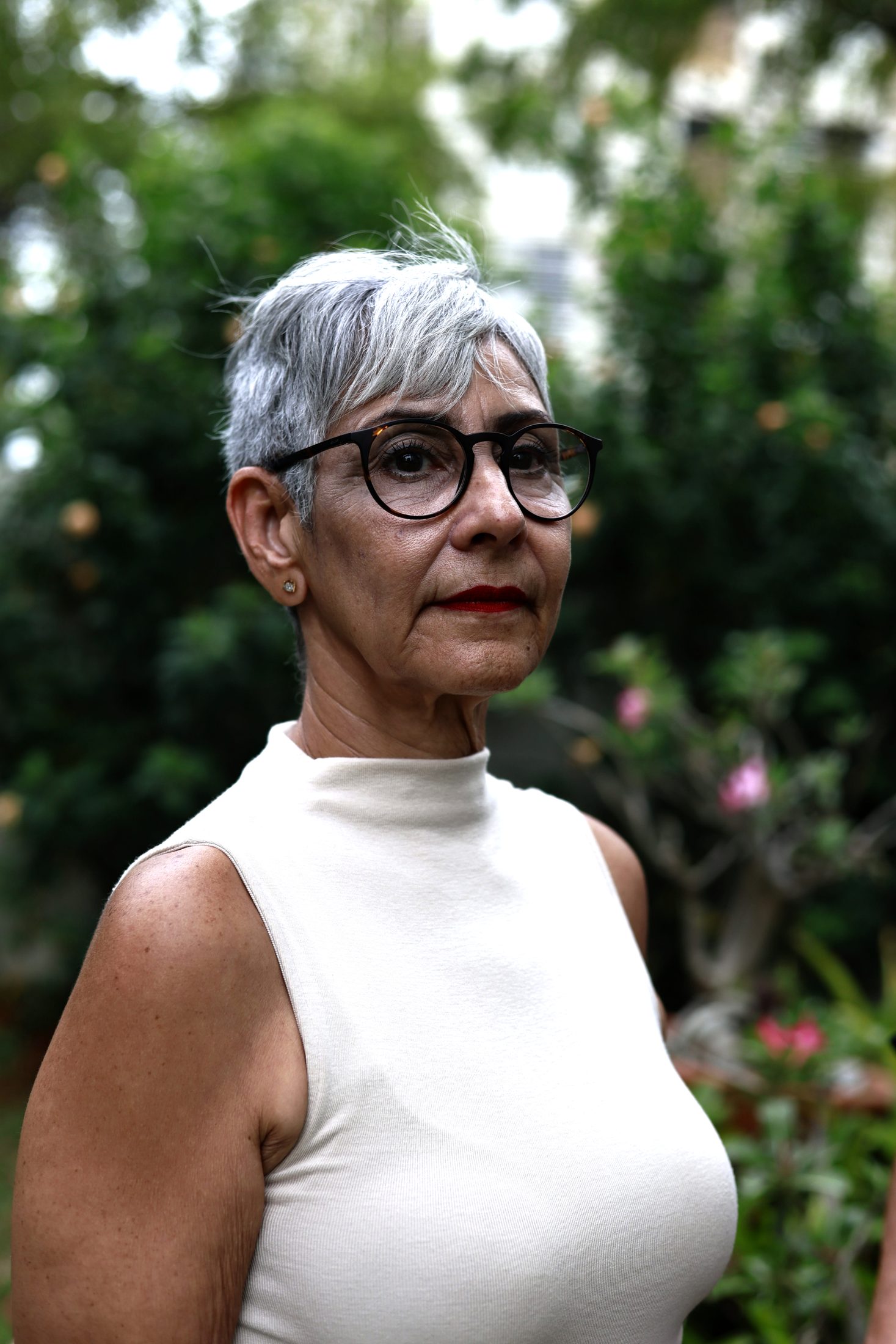
Norma is not religious — unlike Lebrón, whose devotion ran deep enough that she was confined to a psychiatric facility after describing her visions — but Lebrón's dignity and mettle before her jailers move her deeply. “When she was handcuffed people would ask: 'Why are you so polite? Why do you have to say thank you?' and she would respond, 'Because they are human beings, and because I love them too,'” she recalls with admiration.
What sharpens Norma's urgency is the sense that the country is at a legal and political dead end, its government and its courts answering to outside interests. “They are pulling the rug out from under us, they have made the laws to take the whole country away... We will keep fighting because this is our country. I believe there are many injustices, and countries must be allowed to choose, to be sovereign, and to decide their own destinies,” she concludes.
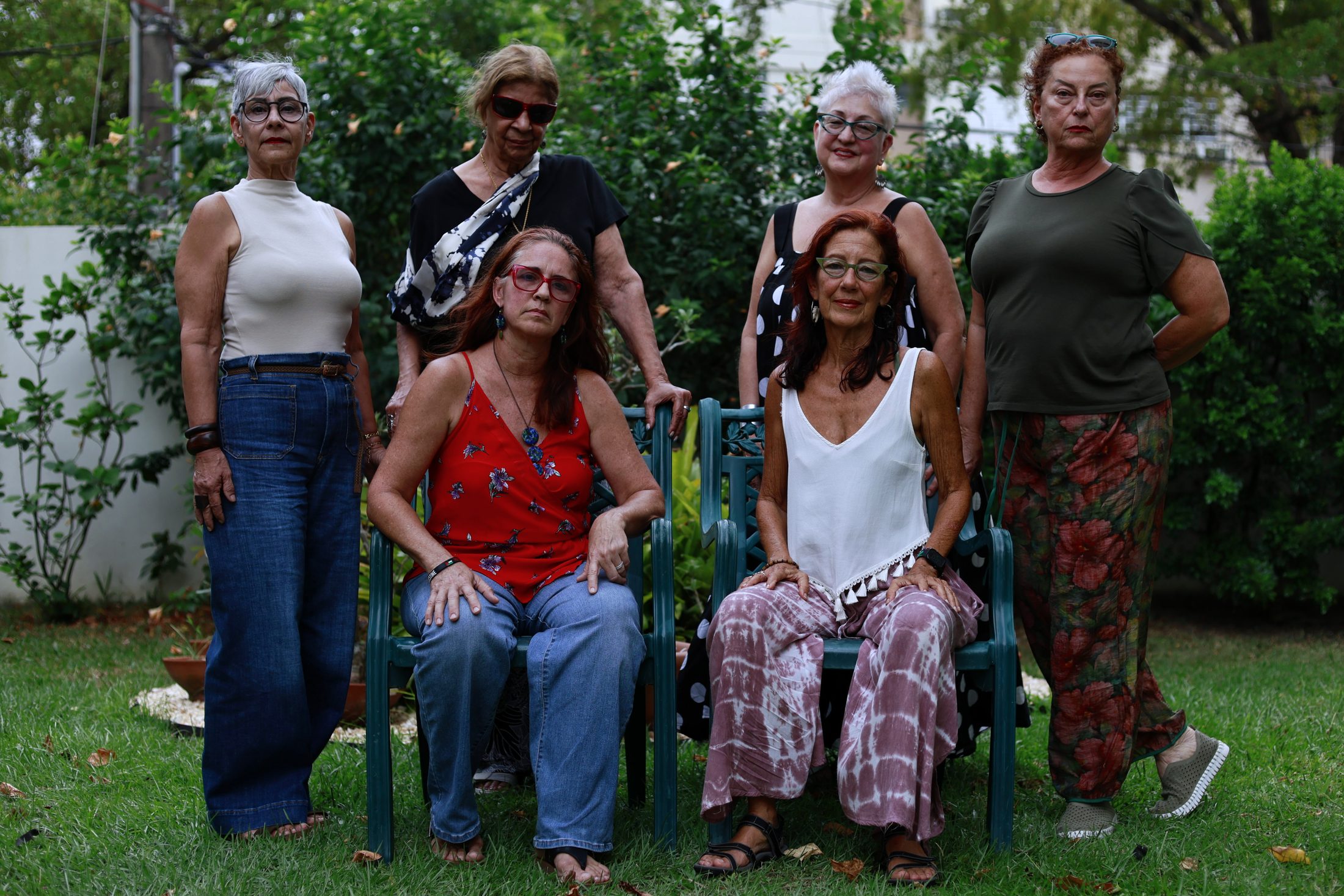
Las Lolitas in action:


About the author
Iñaki Estivaliz
Iñaki Estívaliz is an independent journalist with 25 years of experience publishing in both major and alternative media across several continents, focusing on stories of human interest. He lived in Puerto Rico for 17 years, writing for a wide range of media outlets on the island. His reporting has taken him to border regions in Panama and Colombia, El Paso and Ciudad Juárez, Standing Rock, and Iceland, as well as to elections and conflicts in Venezuela, Bolivia, and Mexico. Over the past year and a half, he has reported from Libya, Syria, and Palestine.
Conversation
A space for Parlor members. Be generous, be real.
Loading…