
The Language of Silence
In a Himalayan village known as India's "Silent Village," conversation has never stopped
Luqmaan Zeerak
July 26, 2026
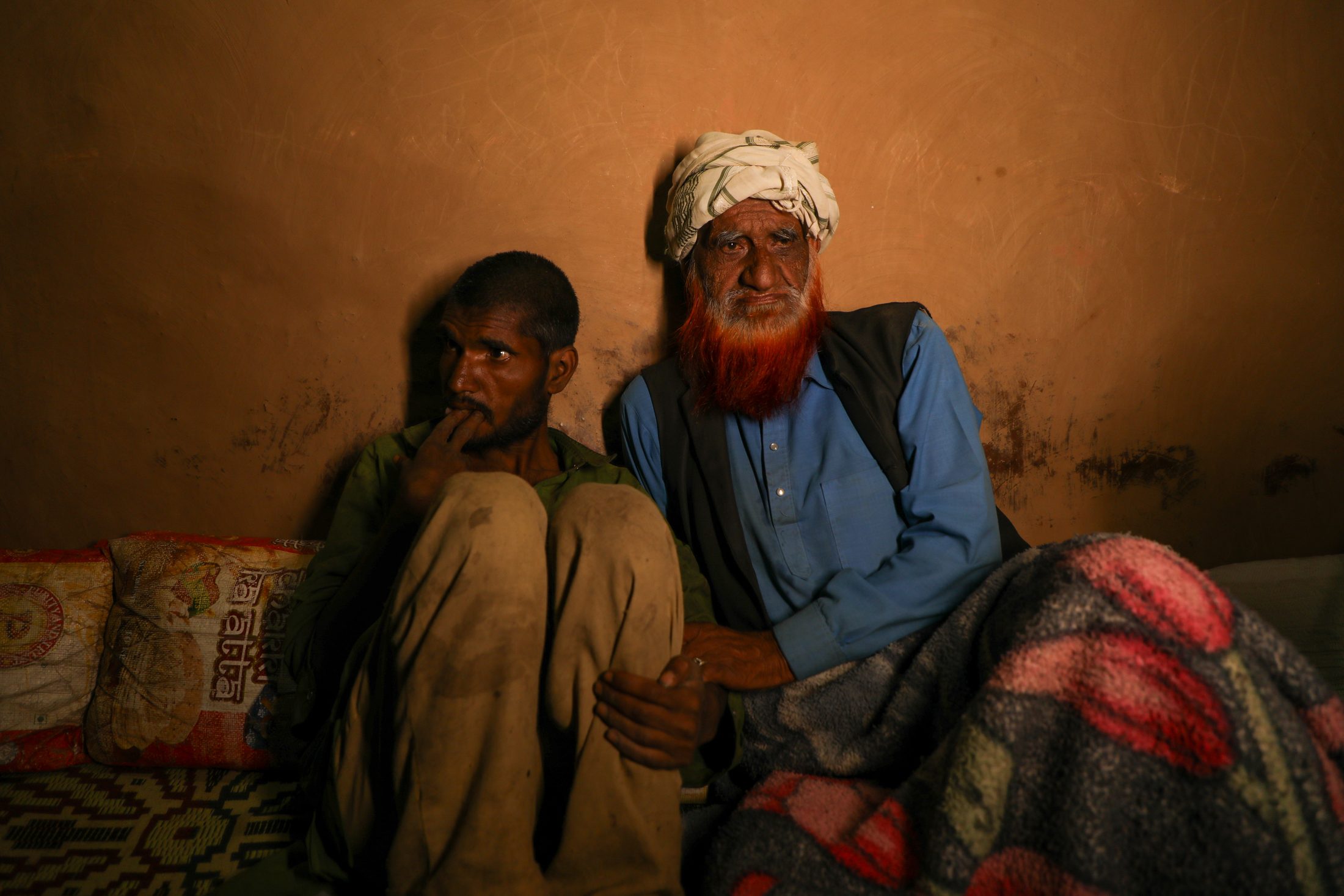
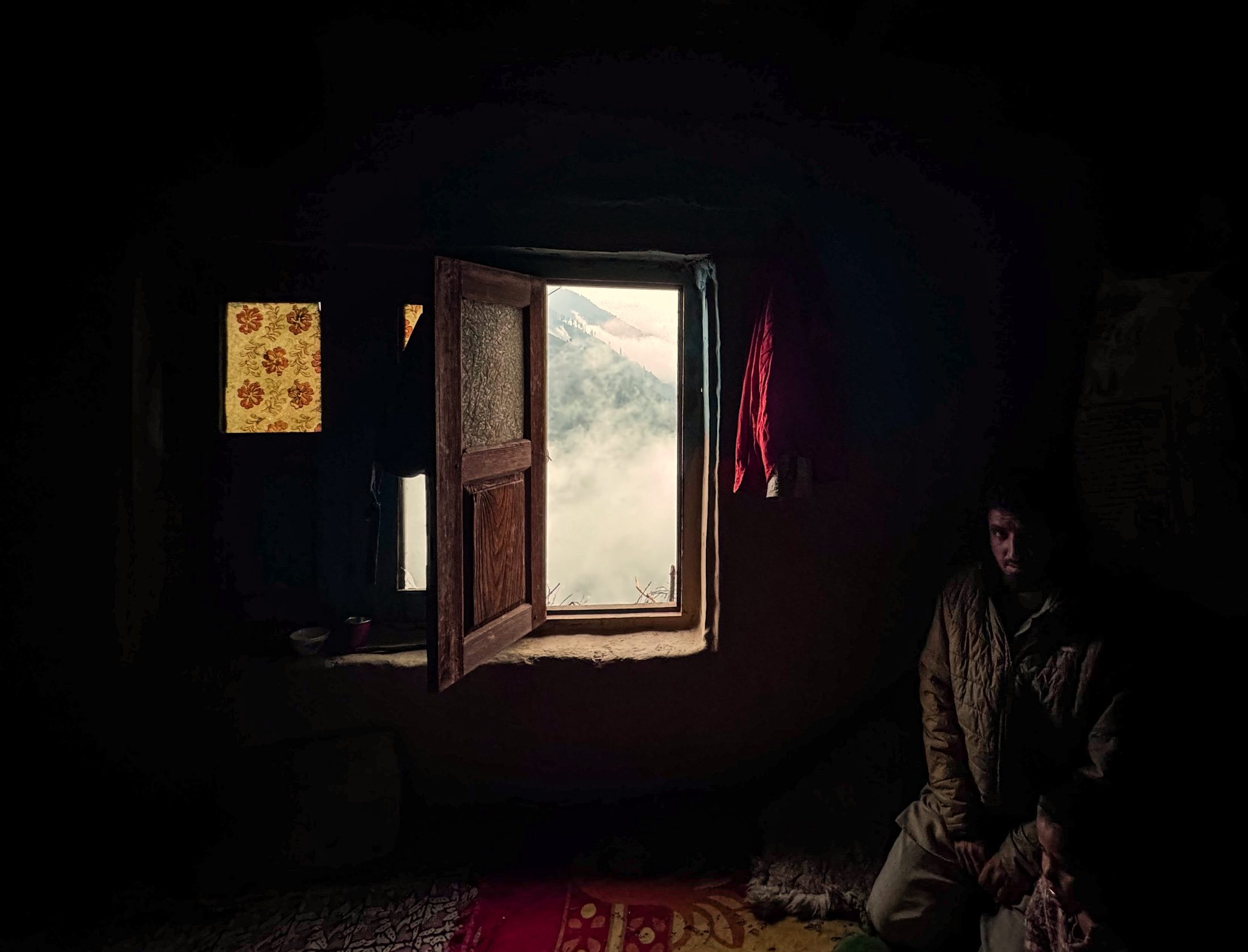
Dhadkai (INDIA), 07/26/2026. An elderly resident sits inside his home in Dhadkai, in Jammu and Kashmir's Doda district. Generations of hereditary deafness in Dhadkai have given rise to a locally developed sign language used by hearing and deaf residents alike. The Parlor Magazine/Luqmaan Zeerak
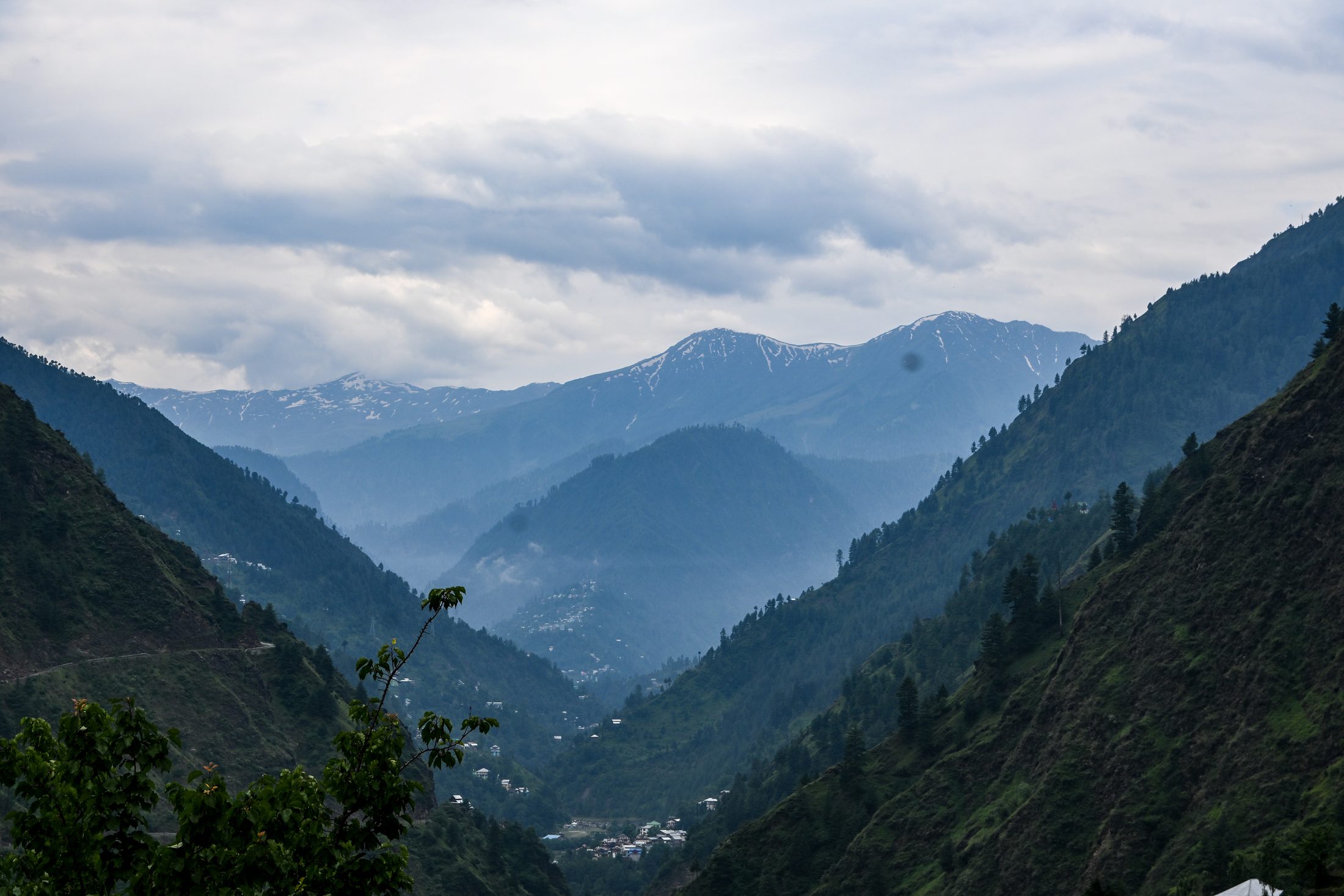
Perched high in the mountains of Jammu and Kashmir’s Doda district, Dhadkai looks much like countless Himalayan villages. Stone houses cling to steep slopes. Narrow footpaths wind between homes. Shepherds guide their livestock towards alpine pastures while children race across terraced fields with the confidence of those who have known these mountains all their lives.Nothing about the landscape prepares you for what lies ahead. The silence doesn’t announce itself when you arrive. It hides beneath the ordinary sounds of village life, the crunch of footsteps on loose gravel, cowbells drifting across the valley, birds circling overhead and mountain streams rushing through the forest below. It is only after spending time here that you begin to notice something different.
A woman standing outside her home raises her hand ever so slightly. Her daughter turns immediately. Two girls burst into laughter, their fingers moving faster than their smiles. An elderly man catches his neighbour’s attention with nothing more than a glance and a gesture. No one hesitates. No one pauses to translate. This is simply how conversation happens.
For generations, families in Dhadkai have built a language that is rarely written down and never formally taught. Children learn it at home, not because someone decides to teach them, but because life here quietly demands it. Parents invent gestures that become habits. Siblings understand one another before they can explain why. Over time, those small gestures become a language shared by an entire community.
Only then does the village’s reputation begin to make sense. For decades, Dhadkai has been known across India as the “Silent Village.” The name has drawn neurologists, geneticists, journalists and documentary crews into these mountains, all searching for the same answer. Why are so many children here born deaf and unable to speak? Scientific studies have shown that hereditary genetic mutations play a significant role. Researchers have identified several recessive gene variants associated with profound hearing loss, suggesting that the condition is genetically diverse rather than the result of a single inherited mutation. Their work also documented something equally remarkable: both hearing and deaf residents communicate through a locally developed sign language understood across the village.
Science explains inheritance. It does not explain what inheritance feels like. That answer is found elsewhere. It is found inside kitchens where mothers instinctively understand every movement of their children’s hands. It is found in fathers who quietly watch every newborn, wondering whether the child will one day hear their voice. And it is found in homes where silence has never meant the absence of conversation.
Mohammad Akhter has lived with those questions for most of his life. A former Block Development Council member, Akhter remembers Dhadkai long before researchers arrived carrying notebooks and genetic theories. “We belong to the Gujjar community,” he says. “Our forefathers settled here generations ago.” He remembers the explanations that came and went. “When doctors came, politicians came and scientists came,” he says, “everyone had a different explanation.” Some believed the water was responsible; others blamed marriages within the community. Researchers collected blood samples and traced family histories. “The studies happened,” Akhter says. “But we were still here.”
Outside his home, children run past us before disappearing down a narrow mountain path. Goats wander between stone walls while women return carrying bundles of grass on their backs. The village moves at its usual pace, almost indifferent to the questions outsiders continue asking. After a long pause, Akhter looks toward the hills. “We thank Allah,” he says. “Whatever He has given us is by His will.” Faith, it becomes clear, is not offered here as an explanation. It is a way of living with uncertainty. Yet faith cannot replace roads, schools or specialised healthcare. “It is the twenty-first century,” Akhter says. “Our children still don’t have a school where they can learn in their own language.”
His frustration is quiet and measured. He has repeated these words before, perhaps to visiting officials, perhaps to journalists. Today, once again, they are written into another reporter’s notebook.
Inside the Homes
The front door to Mohammad Hussain’s house stands open. Sunlight falls across the floor as neighbours pass along the narrow path outside. Inside, Hussain sits beside his son, speaking quietly as though explaining something he has explained countless times before. His son watches the room with gentle curiosity, occasionally glancing towards the unfamiliar faces gathered around him before looking away again. Hussain tears a small piece of bread from a fresh roti and places it gently into his son’s hand. He doesn’t call his name or ask him to eat. He simply waits. A moment later, the young man begins eating. Watching them together, it becomes clear that this small ritual has been repeated countless times. It needs no explanation between them.
“He doesn’t speak,” Hussain says softly. “He can hear only a little.” After a brief pause, he continues. “He doesn’t understand who his father is. He doesn’t understand who his mother is. He doesn’t understand brothers or sisters.”
There is no attempt to dramatize his son’s condition. The words are spoken plainly, without self-pity or bitterness. They belong to a father who has long learned to live with a reality he never chose. Outside, children run past the house, their footsteps echoing along the narrow path, while a flock of goats wanders between the stone walls. Inside, Hussain gently straightens the shawl resting on his son’s shoulder before turning back to me. “When a child is born here,” he says, lowering his eyes for a moment, “every family has the same fear. We wonder whether this child will hear.” It is not a fear anyone speaks about openly. It settles quietly into the room after every birth, carried in the minds of parents who have watched the same uncertainty pass from one generation to the next.
Across the village, Hajra waits outside her home and invites me to sit. “We are poor people,” she says. Her elder son works in Punjab, sending money home whenever he can. Her younger son never left. She watches him as we speak. “He cannot speak,” she says. “He doesn’t ask for food. He doesn’t even ask for water.” Every few moments, her eyes leave our conversation and follow him across the courtyard. Years have taught her to watch without appearing to watch.
She smiles when he walks back into view. Then her expression changes. “When someone dies,” she says quietly, “the sorrow is great. But after some time, you accept it.” She falls silent before looking towards her son again. “But this pain never leaves.” No one interrupts. The room remains still. Some sentences are too complete to be followed by another question.
A short walk away, Bashir Ahmad greets me outside his home. Before speaking about himself, he introduces the people standing beside him. “This is Ayesha Bano. She is twenty-eight.” “This is Asra Bano. She is sixteen.” “And this is Reshma Bano. She is fourteen.” All three of his daughters were born deaf. “When they were born,” he says, “only Allah and we knew what was in our hearts.” He remembers wondering how they would grow up. How would they tell him they were hungry? How would they ask for help? Who would understand them when he no longer could?
Support independent journalism
Enjoy reading The Parlor?
Become a paid subscriber to get full access, early releases, and subscriber-only extras.
Become a paid subscriberThose questions slowly gave way to routine. Inside the house, every movement has its own meaning. One gesture asks for food. Another means it is time to bathe. A different movement gathers everyone for prayer. No one remembers when these signs became part of everyday life. They simply did. As we talk, the three sisters carry on their own conversation nearby. Their hands move quickly, interrupted by smiles and bursts of laughter. I cannot understand what they are saying. They understand every word.
“In our village,” Bashir says, “if a deaf boy is born, people call him Latta. If a deaf girl is born, they call her Latti.” The words have existed in the local dialect for generations. For some, they are simply descriptions. For others, they are reminders of a condition that has shaped the identity of the village. Watching the sisters together, however, those labels seem almost irrelevant. They are doing what sisters everywhere do, laughing, interrupting one another and sharing stories. Only the language is different.
One of the most memorable conversations I witnessed in Dhadkai happened without a single spoken word. Through an interpreter, I asked one of the village’s deaf residents how he felt about the life he had been given. He smiled before answering.
“I was born this way,” he signed. “If Allah made me like this, then this is how He wanted me to be.” He continued. “We pray. We fast. We do everything ourselves.” Then he smiled again. “We have no complaints.”
For a moment, no one in the room spoke. No one needed to. Outside, the village carried on as it always had. Children ran along the footpaths while women returned from the hills carrying bundles of grass. Somewhere, a mother caught her daughter’s attention with nothing more than the movement of her hand. In Dhadkai, conversations are rarely interrupted by silence. They are simply carried by it.
Beyond the Silence
For decades, people have travelled to Dhadkai searching for answers.. Among the first to draw national attention to the village was neurologist Dr. Sushil Razdan, whose research highlighted the unusually high prevalence of hereditary hearing loss among families here. Later genetic studies identified several recessive mutations associated with profound deafness, reinforcing what many researchers had come to believe, that the condition was inherited rather than caused by the environment. The research also documented something that could never be measured in a laboratory: the people of Dhadkai had created their own language. Not a formally recognised sign language, but one shaped by everyday life, shared gestures, expressions and movements understood across the community. Hearing and deaf residents alike had become fluent in it, blurring the line between disability and communication. Science had answered one question. Life continued asking another: “What happens after you leave?”
The question surfaces often in conversations with villagers. “Teams came from Delhi,” one resident tells me. “Others came from Bengaluru. Some came from Mumbai. They took blood samples. They carried out their studies.” Then he shrugs. “They left.” His disappointment is not directed at the researchers themselves. It is directed at what never followed.
The road into the village remains narrow and difficult, particularly during winter. Healthcare is limited. Parents still travel long distances to seek specialised treatment, often spending more than they can afford. Education remains one of the deepest concerns. “Our girls have to walk nearly ten or eleven kilometres,” the villager says, pointing towards the winding mountain road that disappears over the ridge. “After matriculation, many cannot continue.” Without a nearby higher secondary school and without specialised support for children with hearing impairments, opportunities become increasingly scarce. “There is talent here,” he says. “Our children could become doctors.” The sentence lingers. It is neither a complaint nor a dream. It is simply a possibility waiting for the right circumstances.
Yet for all the challenges that remain, bitterness is remarkably difficult to find. Again and again, conversations return to faith. “We thank Allah,” Mohammad Akhter had told me earlier. “Whatever He has given us is by His will.” The same sentiment echoes across the village. Parents speak of hardship without surrender. Deaf residents speak of their lives without asking for pity. Families speak about one another not through the language of disability, but through the language of responsibility, love and faith.
That perspective quietly reshapes the way Dhadkai should be understood. For years, headlines have called it India’s Silent Village. The description is memorable. It is also incomplete. Spend a few days here and another picture begins to emerge. Children still quarrel. Neighbours still exchange jokes. Mothers still call their children home for meals—sometimes with a voice, sometimes with a wave of the hand. Fathers return from the hills at dusk carrying bundles of grass while conversations continue in courtyards and kitchens, spoken and unspoken at the same time. There is laughter here. There is grief. There is celebration. There is ordinary life unfolding in extraordinary circumstances. The language is different. The humanity is not.
As I left Dhadkai, the mountains slowly swallowed the village from view. Around another bend, the houses disappeared. Then the narrow footpaths. Then the people whose stories had quietly unsettled so many of my assumptions. I thought of Mohammad Hussain placing bread into his son’s hand without saying a word. Of Hajra watching Bashir from the doorway even while we spoke. Of three sisters laughing together in a language I could not understand but somehow did not need translated. For years, scientists have come here searching for the origins of silence. I left thinking about something else entirely, not what these families had lost, but what they had built.
The road to Dhadkai does not simply lead into a village. It leads to a community that reminds us that language is not defined by sound, and that understanding has never belonged to words alone. Long after the mountains disappear in the rear-view mirror, it is not the silence that stays with you. It is the conversations.
Watch the mini documentary:
About the author
Luqmaan Zeerak
Luqmaan is a multimedia journalist dividing his time between Kashmir and Delhi. Through visual, audio, and written reporting, he documents the human impact of conflict and the evolving dynamics of society.
Conversation
A space for Parlor members. Be generous, be real.
Loading…