
The Love of the Femme
Sophie Lewis on Femmephilia, Enemy Feminisms, and the Politics of Care

Lindsey Brock Morales
May 6, 2026
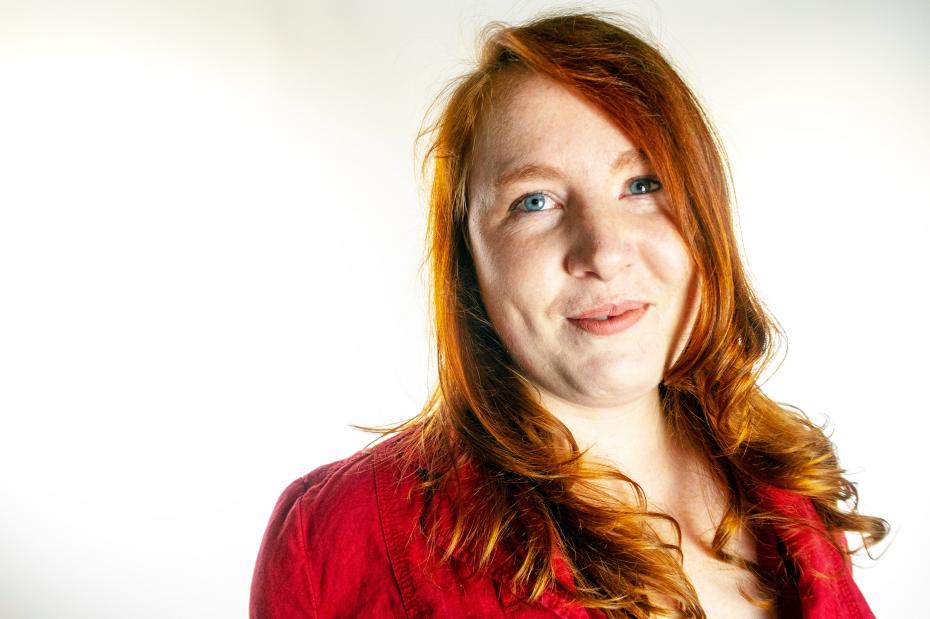
By Thomthomthomthom - Own work, CC BY-SA 4.0
Sophie Lewis is a feminist theorist, author, and utopian thinker whose work spans reproductive politics, family abolition, and the radical possibilities of care. Her books — Full Surrogacy Now, Abolish the Family, and Enemy Feminisms — have made her one of the most provocative and rigorous voices in contemporary left feminism. Her latest, Femmephilia, out this year, examines femininity itself: what it is, who it has been weaponized against, and why embracing it might be the most radical act in modern feminism.
The Parlor spoke with Lewis about why some forms of feminism are inherently fascist, the politics of femme vs. the idea of femininity under patriarchy, what a liberatory kinship structure might actually look like, and why she thinks asking for two meals a day with flowers and piano music is a perfectly reasonable political demand.
Four Books, One Thread
Lewis notes that the progression of her four books — from the utopian provocation of Full Surrogacy Now through the starkness of Abolish the Family to the critical taxonomy of Enemy Feminisms and now the affirmative vision of Femmephilia — is not quite the journey from negative to positive it might appear on the surface.
"I think in all of my work, there is a willingness to sit with the kind of hatred of one's enemies and hatred of what destroys us," she says. "I think negativity is a huge part of utopianism." Lewis describes utopia as an ongoing method, perfected over time, and defined by a sustained refusal to accept things as they are. "I'm not interested in utopias that have a map of a society where everything is fine. I'm interested in the utopian as a kind of willingness to constantly hold on to the rejection of the premise that this is how things have to be."
This dialectical sensibility has been there from the beginning. Full Surrogacy Now, despite its title alarming people who never got past the cover, is not a celebration of commercial surrogacy.
"Full Surrogacy Now — although maybe some people think that sounds very dystopian — I'm talking about surrogacy in the sense of gestational holding that is shared among many. It's not a call to say commercial gestational contract pregnancy, yay. No, not at all. In fact, I'm extremely critical of that. Womb farms, in the most exploitative possible, neo-colonial, racially supremacist sense — absolutely not."
Lewis explains that it is instead a utopian manifesto that emerges from a place of genuine awe at the labor of pregnancy — and a corresponding fury that we ask people to perform something so physically extraordinary, and medically complex, against their will. The distinction between a surrogate and a mother who gestates within a nuclear household begins to dissolve once you take seriously the radical communalization of responsibility for all children. Both are performing gestational labor; the difference is who it is officially "for."
Abolish the Family clarified the political stakes of that labor. In it, Lewis argues that family abolition is not a fringe idea but a tradition as old as the word feminism itself, rooted in the insight that care cannot function well when organized into "tiny little cells of private property." She defines the "family unit" in broad terms, as the privatization of care in a class society, into spaces where a couple unit and a biogenetically centered notion of kinship determine whether and how people survive. Abolition, she is at pains to stress, is not a prescription against any particular kind of relationship. It is a demand that your relationships stop having consequences for your access to the basic necessities of life.
Enemy Feminisms then turned to face an uncomfortable truth about the feminist tradition itself. Since her previous work uncovered the family form as one of the primary mechanisms through which capitalism extracts free labor, Lewis wanted to understand why so much of feminism's long history had not only failed to challenge that extraction, but actively reinforced it.
Some Feminisms are Fascist
"There's no such thing as feminism," Lewis says simply. "It's only feminisms." And some of those feminisms are not merely flawed or compromised but are genuinely, coherently aligned with white supremacy, colonialism, imperialism, eugenics, transphobia, and fascism.
This goes further than the "white feminism" discourse that gained momentum around 2018 and 2021. According to Lewis, framing the problem as "white feminism" – something individual white women could apologize for and learn from – let the more fundamental question slide: whether feminism as a project could ever be extracted from its historical entanglement with whiteness as a political structure, and what to do when the answer is no.
"The classic thing we want to do is to say trans exclusionary feminists, Islamophobic feminists, girl boss lean-in feminism — that's not real feminism," Lewis explains. "My book is about saying, OK, we might have to let go of that move because it's actually doing us more harm than good."
She defines feminism as any project that holds some concept of women's liberation, some idea that women are oppressed and that this should change. By that definition, a feminism can be genuinely liberatory for some women while being violently oppressive toward colonized women, queer women, trans women, sex workers or poor women. "It can be genuinely feminist and genuinely fascist," she says. "This is a very difficult thing to swallow at first."
As Lewis points out that the KKK was formally critical of male sexism and required its members to pledge commitments to women's equality — within the strict understanding that "women" meant white, Anglo-Saxon, Protestant, non-Catholic, non-Jewish, non-Black women, and that their elevation served a eugenic white supremacist project. The organization was the only religious institution in the United States to support Alice Paul's Equal Rights Amendment when it was first introduced. In Italy, Mussolini's movement initially recruited through an explicit "fascisti-feministi" appeal before pivoting sharply anti-feminist once power was secured. And in Britain, the British Union of Fascists found its most fertile recruiting ground among the ranks of the WSPU — the Women's Social and Political Union, the militant suffragette organization behind the bombing campaigns of 1908 to 1913. After Emmeline Pankhurst dissolved her paramilitary operation into patriotic support for the government, many of the young women who had envisioned revolutionary change were recruited by fascist organizers with the message that only fascism would truly liberate women.
"It sounds unfamiliar," Lewis acknowledges, "but I think it's really important for us in the 21st century to notice these forms." Today, she argues, the dynamic has shifted slightly: much of the far right now presents its pro-woman politics as opposition to feminism, framing anti-feminist politics in the language of women's liberation. "You kind of have to understand it as a kind of anti-feminist feminism."
Lewis says that once the left can accept this, it can stop tying itself in knots, trying the defend ideologies that would otherwise be un-defendable. "If you're willing to acknowledge that some feminisms are simply your political enemies, you can oppose them full-throatedly without the paralysis of feeling like you're somehow betraying the feminist cause," she says. "We need an anti-fascist feminism more than anything right now."
Femme vs. Femininity Under Patriarchy
Femmephilia, Lewis's fourth book, draws an important distinction: femininity and femme are not the same thing, even though they are connected.
Support independent journalism
Enjoy reading The Parlor?
Become a paid subscriber to get full access, early releases, and subscriber-only extras.
Become a paid subscriberAs she explains it, femininity is a historically variable but broadly continuous category — a set of traits and behaviors that have been assigned to womanhood across cultures. It has to do with caregiving, with receptivity over agency, with beauty and nurturance. "There are some broad continuities over time," Lewis says, "even if different cultures have different tweaks."
Femme, by contrast, is the political taking up of femininity. The key word is political, but Lewis "doesn't mean it in a narrow, capital-P sense." She means that femme is femininity done consciously, performed ad publicly exhibited. "Femme is when you don't try and invisibilise your femininity. You don't try and pass it off as nature... It is a valuation of femininity. It is a refusal to imagine that it's somehow given. It is an insistence that femininity is a labor."
This is not a celebration of femininity as it currently exists under patriarchy. Lewis makes it clear that femme, precisely because it insists on femininity as labor rather than essence, is actually opposed to many dominant forms of femininity — particularly those forms that have been central to projects of empire and white supremacy. The "good woman" of colonial ideology is selflessly maternal, beautiful, wageless, sexually untainted by money: her femininity is a mechanism for policing all the womanhoods that don't conform. Femme, by making femininity conscious and claimed, refuses that policing.
The book is also a critique of what Lewis calls "femmephobia" — a hostility to femininity that has been central to a certain strand of second-wave feminist thinking. She names a few writers as examples: Robin Morgan, Germaine Greer, Betty Friedan, Sheila Jeffreys, Janice Raymond. "Their rage and contempt for feminine women," Lewis says, is more central to their project than their anger at rapists or at the structures of householding.
This femmephobia, finds its sharpest and most revealing expression in the long history of trans-exclusionary "radical" feminism's disgust toward trans women. Lewis suggests that examining that disgust gives us a set of tools to see how broadly femmephobia operates — and how much it costs everyone.
But femmephilia is not just advocacy for femme-identified people. It is a broader argument about what happens when you treat care, pleasure, and excess — the things historically coded as feminine — as primary rather than supplementary. "There is something almost about the purposelessness of art that femme evokes," Lewis says. "The recognition that the things that make life worth living are, in our current economic system, rendered almost the least valuable and important thing. Whereas in a just universe, they would be the central pursuit."
Against the Nuclear Household
Lewis's critique of the nuclear family is prevalent throughout her work. Her main argument is that it privatizes care into a structure that isolates individuals, obscures labor, and channels extraordinary human need into a form that serves capital rather than people. When some feminist writing describes motherhood as a trap or a form of imprisonment, Lewis thinks it is getting something right but misdirecting its critique: the problem is not caregiving or the labor of raising children, but the conditions under which that labor is performed.
"Motherhood, right — do you mean the labor of life-making, of comradely relationship with children? Or do you mean the deal?" she asks. "The deal, which is that you as a sort of single unit will be bought off by having some kind of property relation to a child of your own, and in exchange for that dubious kind of sense that you own something, you will have near total responsibility for the reproduction of this human being's life."
Lewis instead advocates for a communalization of care, something that she cites as more inherently natural to our evolutionary needs as a species. She imagines a future in which at least six people are genuinely committed to tending a new baby — "because one or two is nuts" — and in which who you live with and love has no consequence for your access to shelter, food, and healthcare. She cites historical precedent: the British Restaurants of World War II where working-class people ate together with flowers and piano music for pennies or nothing, and gave people hope that things could be otherwise.
"The goal is not to make people not need things," she says, drawing on the radical Black lesbian welfare rights tradition. "It's to make people need more things. We want to become rich in needs."
Family abolition, is not about telling people which relationships to have, but rather "It's about saying that your relationships should not have consequence for your access to life-making necessities." And far from opposing autonomy and freedom, she argues that genuine freedom is only possible through sufficiently good care. "Freedom is not freedom from people — it's freedom through people. You only have freedom insofar as you are with and held by others."
What She Hopes Readers Take Away
Lewis wants readers of Femmephilia to come away with two things: a renewed appetite for radical transformation, and genuine pleasure.
"I really like to write beautiful sentences as best I can and to put jokes on every page," she says. "I think being funny is a really, paradoxically vital, maybe indispensable part of being dead serious." The essays range across TV shows and movies, octopuses and psychedelia, ancient Greek myths and genocidal transphobic policy, Andrea Dworkin-style anti-sex feminism and the current moment. The breadth is intentional. "You don't have to make thinking seriously about stuff a separate task from the work of living and making life."
Her next project, already underway, is a book for Penguin called The Liberation of Children — a natural extension of a thread that has run through all her work: what we owe to children, and what it might mean to take their care, their autonomy, and their full humanity seriously.
Watch The Parlor's full interview with Sophie Lewis here:
About the author
Lindsey Brock Morales
Lindsey is the Founder and Editor-in-Chief of The Parlor. After over a decade in humanitarian aid and community organizing, she founded The Parlor in 2025 to build a publication rooted in the belief that the people most affected by power are the most qualified to describe it. She is based between Washington, D.C. and Bologna, Italy.
Conversation
A space for Parlor members. Be generous, be real.
Loading…