
Who Gets to Save the Planet?
The women making climate research more inclusive

Elisa Shoenberger
May 26, 2026
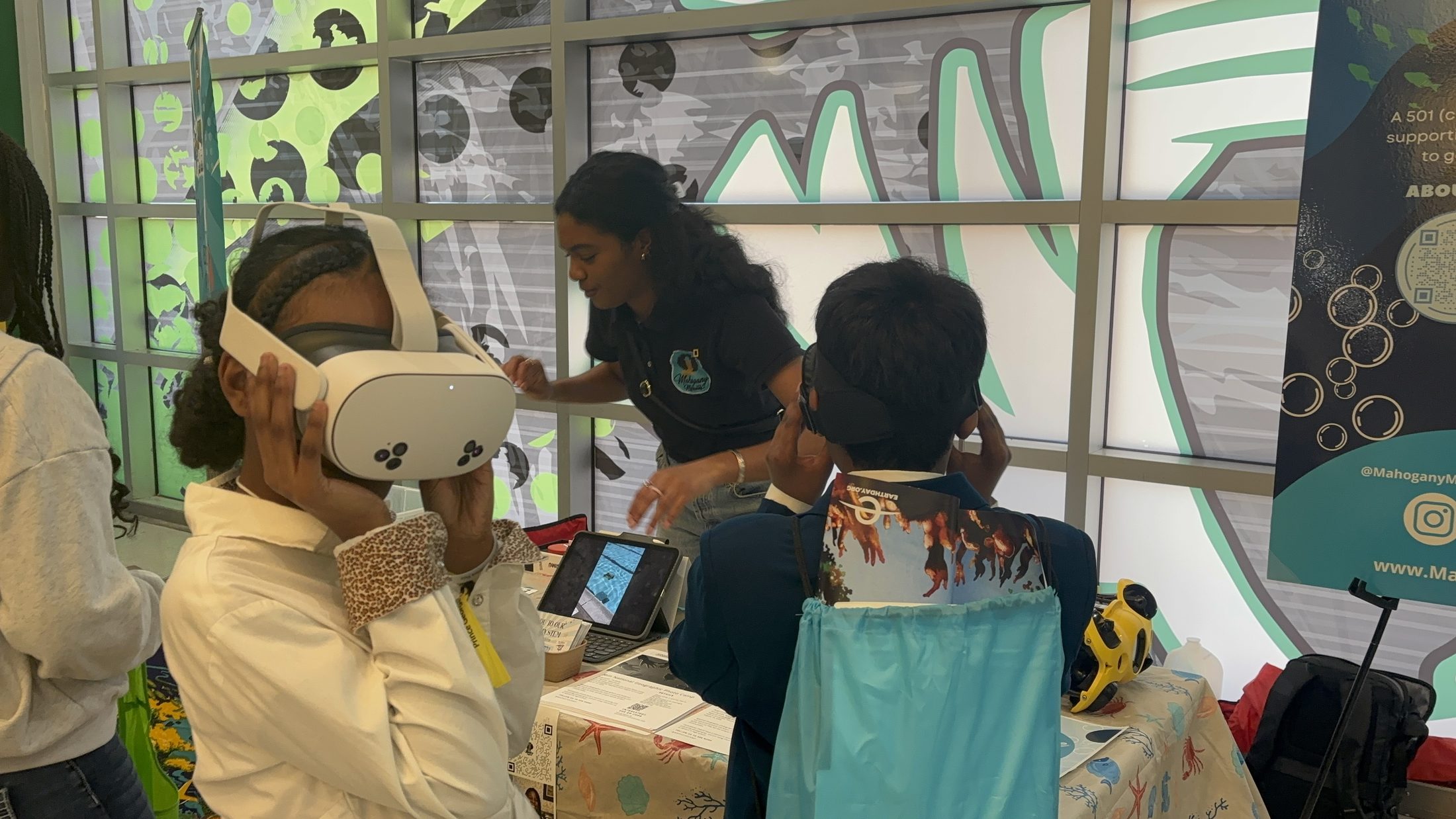
Mahogany Mermaids, 2025
Each year, we see stronger and stronger hurricanes devastating coastal cities and towns, (as well as interior cities) and longer and more severe droughts throughout the world. Once in a hundred year old weather events are starting to become annual events. Now, even more than ever, we need more people studying the impact of climate change and how it can be mitigated.
To ensure that we bring the best and brightest minds to these world-wide problems, it’s critical that the climate science field needs to become more inclusive, especially of women and other marginalized communities.
Two Nat Geo Explorers, Erin Pettit, Ph.D. and Aliyah Griffith, Ph.D. have founded their own nonprofits to teach and work with people from marginalized communities to foster new possibilities and futures for women, non-binary folks, and people of color. The Parlor had the opportunity to speak with both women about their work.
Inspiring Girls* Expedition and Girls* on Ice
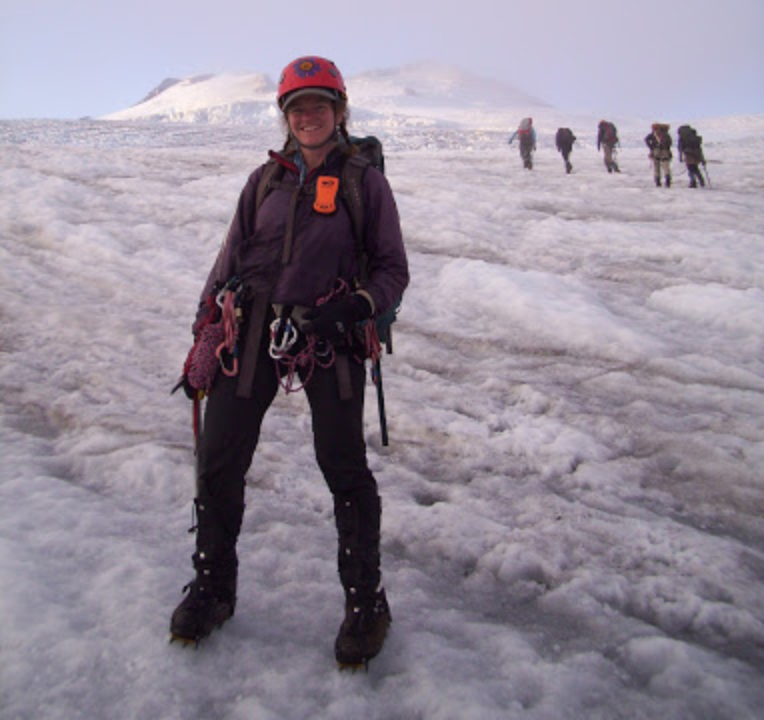
Erin Pettit, Ph.D., glaciologist and founder of Inspiring Girls* Expedition, recognized a gap in field science and outdoor leadership. There were few programs that combined authentic science work and the technical backcountry activities, especially for women and other disadvantaged groups, such as kids from the inner city. “It’s still a constant everyday battle to gain respect,” Pettit said, “It's true for every female* scientist, basically anyone that doesn't fit gender norms and especially in a field like glaciology and really geology as a whole.”
Some programs focused on frontcountry skills— the frontcountry is considered land that is more accessible and are more popular areas— but not many programs focused on backcountry skills, which required wilderness training. “I just wanted to see both of those things [field science experience and backcountry skills] being filled because they just seem[ed] like huge gaps” in the field, Pettit said.
In 1999, Pettit started her first expedition under the name of the South Cascade Glacier Field School, which was run through the University of Washington. She had been doing a lot of informal science education with an outdoor component in Seattle with the Pacific Science Center and Sierra Club in Los Angeles. She was inspired by her time in Los Angeles when she took children from Compton and other neighborhoods to see tidal pools and learned that many of them had never been to the beach before, despite living a few miles from it. “This is something that needs to change,” Pettit said.
Pettit wanted to create a program to bring children to natural environments and use her Socratic teaching style to get students to think on their own.
Similar to the children from LA and the ocean, many people living in Seattle had never touched a glacier. In the 1990s, climate scientists already knew glaciers were changing but it wasn’t well-publicized until after Al Gore’s movie An Inconvenient Truth (2006).
Pettit’s idea was simple; she wanted to take kids up onto a glacier and get them excited about science. At the time, the field of outdoor education was still growing; most people were self-taught. With her first cohort, Pettit had not anticipated that only girls signed up for it, despite not being advertised as a girls trip. She thinks that people read the instructor’s names and bios in the expedition description and young women were more comfortable going into the wilderness with women. “When we got up there, I realized how powerful it was to have just girls on that first expedition,” she said.
After the success of the first expedition, Pettit connected with the North Cascades Institute and kicked off the program fully for girls and women. The program became known as Girls on Ice, though it is open to non-binary people, trans women, and boys. (The asterisk in the name is an acknowledgement of the broader view of who can participate. Pettit wants people to bring their authentic selves to the program).
For each expedition, there are three instructors; usually the expeditions are staffed by two scientists and a professional mountain guide. (Occasionally there’ll be one artist and one scientist.) Pettit explained that they “insist that our instructors are professionals in their field,” like a scientist rather than someone who is an expert in outdoor education who teaches science. She aims to model these trips after field research expeditions.
Generally, the expeditions have the participants and instructors go to a remote place, and learn how to be safe outdoors, whether it’s kayaking or roping up a glacier. Pettit explained that each expedition has three “peak challenges” that “require them to find courage to try something new and then feel the reward of accomplishment,” explained Pettit. The first is a physical goal to navigate and climb in the wilderness.
Second, there is an intellectual goal where they work in groups of three to create their own science experiment, collect data, and then present it. It’s important for Pettit that the students come up with their own ideas, make observations, and figure out the known and unknown variables. Then they’ll set up an experiment where the participants observe and collect data. After the eight days in the backcountry, the students process the data and present their findings publicly.
Finally, there’s “an individual leadership or social goal, that we design for and with each team member,” Pettit explained, “That might be challenging an overly talkative team member to listen more, challenging a shy team member to step into a leadership role, or challenging a teens to revisit their internal narrative “I’m not good at science.”
One of Pettit’s favorite experiments practically came out of nowhere. The expedition was on Mount Baker, where there is a volcano and a glacier. Pettit said, “These participants wanted to know: what happens when a volcano erupts and lava comes down on top of the ice?” While they weren’t going to see a volcanic eruption during the trip (hopefully not!), they were able to find a way to observe elements of it. They decided to collect lava rocks, heat them up as much as possible on a stove, and then dump them on snowy and/or solid ice parts and watch what happens.
When the students returned from the trip to put together their presentation about the experiment, they discovered that a scientist at Syracuse University had just posted a video doing the very same thing. “Literally, these real scientists had had the exact same idea that the participants did out in the field, and that was the piece that was huge for these girls,” Pettit said.
Since Girls* on Ice formally began in 2001, it has expanded throughout the United States and the rest of the world. In 2012, Pettit added Girls* on Ice Alaska; several years later, there was Girls* on Ice Switzerland and Girls* on Ice Canada. They also expanded their offerings to Girls* on Rock, Girls* on Icy Fjords, etc. Given the different programs, Pettit thought there needed to be an overarching name. That’s how all the programs came under an umbrella of Inspiring Girls* Expedition. Most of the U.S. branches have been affiliated with universities; while many of the international branches are split off as independent nonprofits. But the organization as a whole is more like a collective than a formal program so that people could make their own twist on the program.
There’s even a program in Kyrgyzstan called High Mountain Asia, which has a different name and targets an older population than the other programs. It invites women in the age bracket of 19-25 instead of teenagers.
Alumni of Girls* on Ice have gone on to be successful in a variety of fields. Several alumni have gone on to get their Ph.Ds. in environmental sciences; at least two more were working on Ph.Ds. in glaciology.
But the program has huge life-changing effects on its students beyond encouraging them to go into a science field. For instance, one participant was in foster care and was having issues with succeeding in school. She went on the Girls* on Ice trip and it gave her the gumption to finish high school and later became a nurse.
Support independent journalism
Enjoy reading The Parlor?
Become a paid subscriber to get full access, early releases, and subscriber-only extras.
Become a paid subscriberThese programs are absolutely critical for the next generation of scientists. “All the research shows that diversity of people on the team generates diversity of ideas. Diversity of ideas means that you come up with creative solutions, and you get more creative answers, and you move the science forward faster,” Pettit explained. This idea has been known in the research community for decades, but it has been ignored.
Pettit knows that there is still a lot of need for programs like this. While reviewing applications, Pettit noted that many of the students are still writing the same things as their counterparts in the 2000s before them. The phrasing may be different, but the issues about race, gender, and LGBTQIA+ are fundamentally still around. Pettit summed it up: I have learned that teenage girls are strong, courageous, and thrive when you give them a space to be whomever they want to be outside of society’s gender norms.
While Pettit has taken a step back from formally leading the program, she reflected that the organization overall “made me a better scientist. It's made me a better leader of my own research expedition… I like to feel like it has changed some of the field of glaciology, because I've provided a different perspective on how to do good quality field leadership when you're in remote places.”
Mahogany Mermaids
While Inspiring Girls* Expedition works to bring young people to learn science and outdoor skills, Mahogany Mermaids aims to inspire and support children of color, specifically Black and African American, in the aquatic sciences. Founder and CEO Aliyah Griffith, Ph.D. wanted to ensure that the Black and African American children could see themselves as the next generation of explorers and scientists.
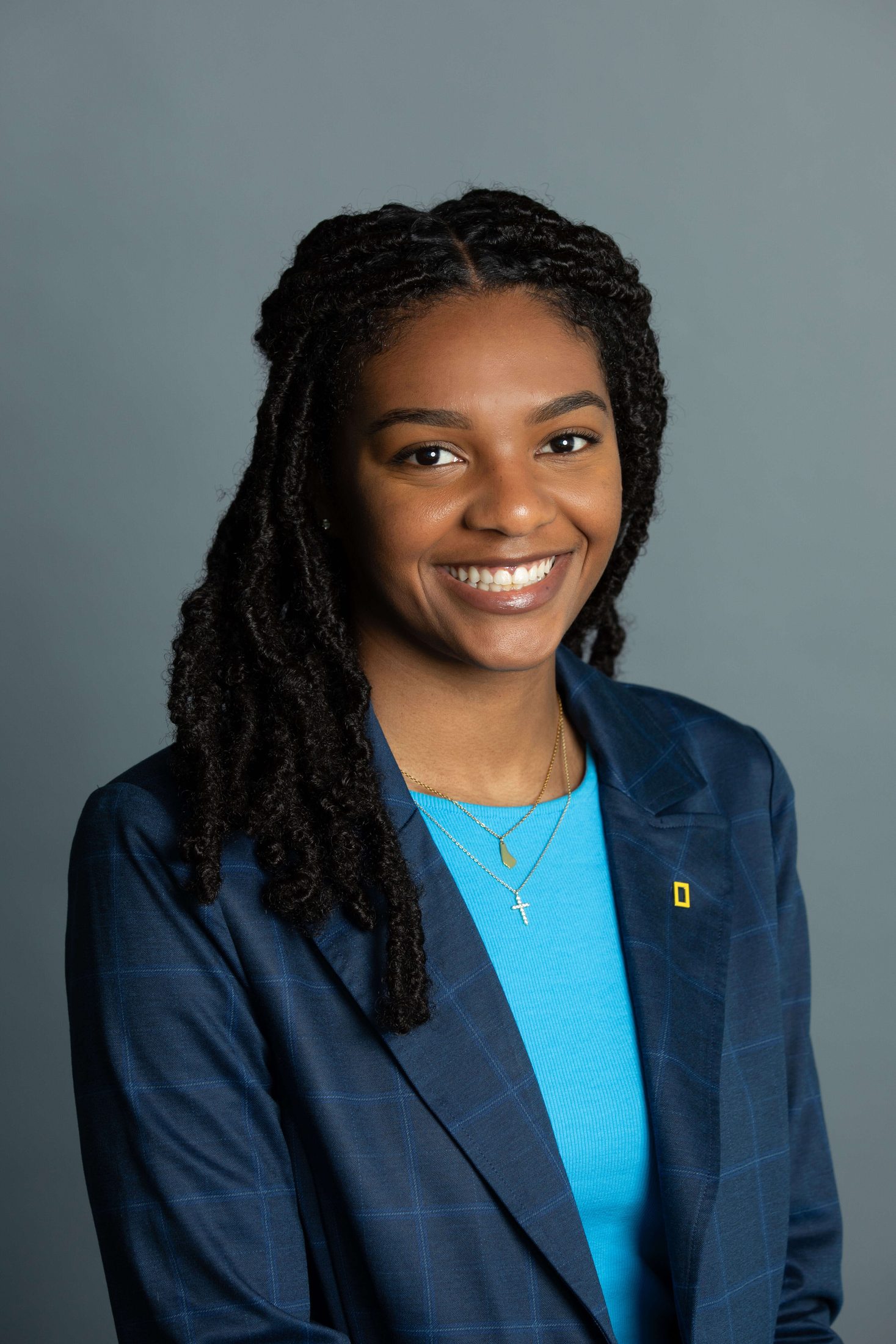
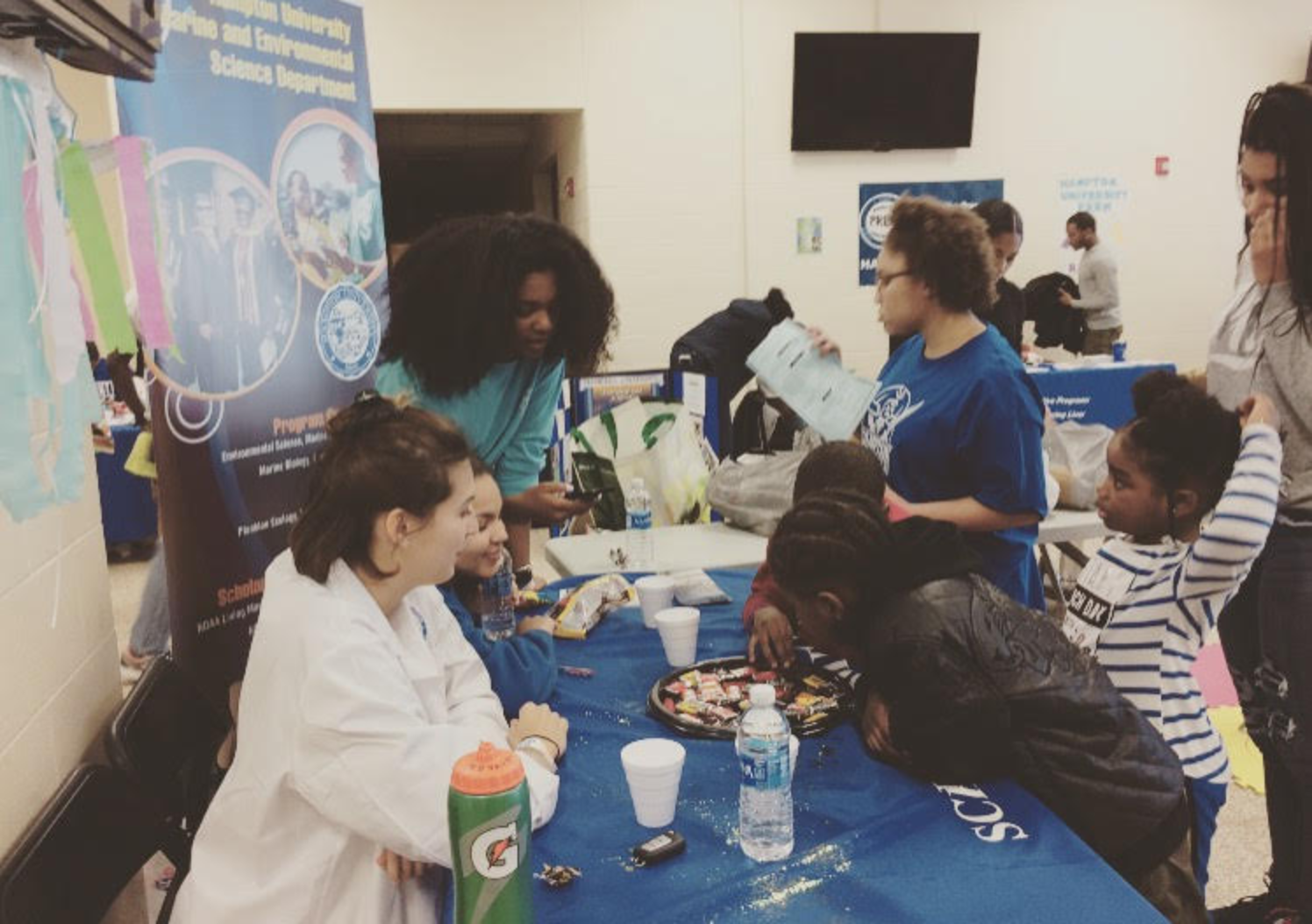
Griffith came up with the idea for the nonprofit after she completed an internship when she was an undergraduate at Hampton College. She participated in a Pathways to Ph.D. program that paired students at Historically Black Colleges and Universities (HBCU) with various career opportunities; through the program, she became Open Water Certified to Scuba Dive and learned how to do scientific diving as well.
Traveling the furthest from home in her life, Griffith had the opportunity to conduct research in French Polynesia. “That was the first time I’d ever officially been on a coral reef. After that, I basically never wanted to leave,” Griffith said. It made her think about what she might have been able to accomplish earlier if she had the opportunity like that at an earlier age. “I wanted to provide that for younger people in my position,” Griffith explained, including offering information but also places for young people to go for guidance.
Since founding Mahogany Mermaids in 2016, the nonprofit has changed structure to a more mobile operation. Initially, the organization did pop up events and educational games at community events. But when everything went virtual with COVID-19, the nonprofit worked on uploading virtual resources on the website, creating inclusive coloring book pages and lesson plans for parents and educators.
Mahogany Mermaids also provides professional development tools, like building a resume or curriculum vitae (CV) and the difference between them. The organization has had an extensive social media offering, but due to people’s social media fatigue, the nonprofit is focusing on Instagram right now.
In the past few years, the organization has returned to Science Technology Engineering Mathematics (STEM) Fairs and festivals where Mahogany Mermaids presents different activities and games to encourage curiosity and wonder. Griffith recalled a recent event where kids got to practice their skills with an underwater robot.
Virtual Reality is another part of the organization’s offerings. Participants can put on the headset and become fully immersed in water environments. These events have been geared towards K-12.
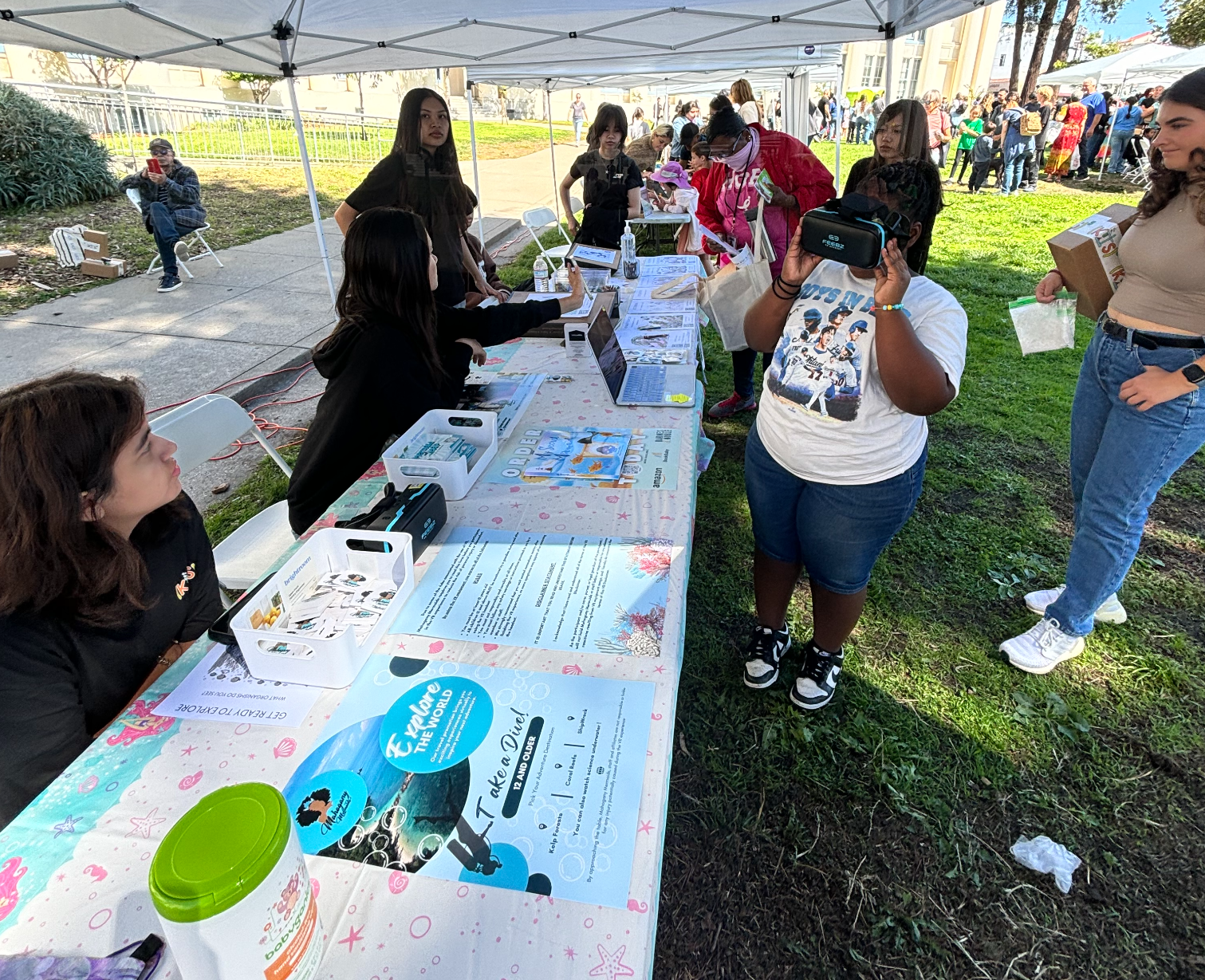
Thanks to the work of Mahogany Mermaids, she’s been able to introduce children to the ocean through VR as well as helping young people unlearn preconceived notions about sharks. “I get to let them know that sharks need better PR,” Griffith recalled, “It shouldn't be something that should stop them from exploring the ocean.”
She’s also worked to reassure children about swimming: “You don’t necessarily need to be the next Michael Phelps in order to scuba dive.” You just need to be comfortable underwater and learn how to float, she explained.
In the past year, Mahogany Mermaids has brought on a few interns who help put on pop ups and other activities. “All of their internships are personally curated to meet their professional development goals that they have and want to learn,” Griffith said. The internships are intended for Black and African American undergraduates as well as early career scientists. Previously Mahogany Mermaids offered scholarships, but there’s a slight pause on that right now.
Last summer, the organization was able to partner with National Geographic in a photo camp. It mixed environmental science with photography and allowed participants to “incorporate their own stories and storytelling to be able to truly understand what was going on in their backyard,” Griffith explained. The summer camp will also be held again this summer.
Since 2016, Griffith has been able to follow up with teachers and educators that she’s worked with, either in classroom visits or met along the way. She’s learned that there are high school students who are looking into majoring in photography or marine science. Griffith spoke with North Carolina students who now wanted to take swimming lessons and/or become marine scientists.
“It's definitely humbling and also reassuring knowing that there is a place for Mahogany Mermaids,” Griffith said, “We can make an impact; we’re able to still provide a sense of community in a field that people may not initially think of or think about.”
In the future, she’s hoping to build up even more community and streamline the events. She hopes to provide more professional development skills to a wider audience as well as deep their work with international organizations.
It’ll be exciting to see how these organizations grow and continue to encourage and promote climate sciences and adjacent fields for women and under-resourced communities.
About the author
Elisa Shoenberger
Elisa Shoenberger is a freelance writer and journalist in Chicago. She also has written for the Boston Globe, Huffington Post, WIRED Magazine, Slate, and others. She writes regularly for Book Riot, Murder & Mayhem, Library Journal, and Cheese Professor. She’s obsessed with dogsledding, murder mysteries, and cheese.
Conversation
A space for Parlor members. Be generous, be real.
Loading…